Kim Tae Myoung, Shin Sang-Kyung, Kim Tae-Wang, Youm So-Young, Kim Dae Joong, Ahn Byeongwoo
College of Veterinary Medicine, Chungbuk National University, Cheongju 361-763, Korea.
J Vet Sci. 2012 Mar;13(1):7-13. doi: 10.4142/jvs.2012.13.1.7.
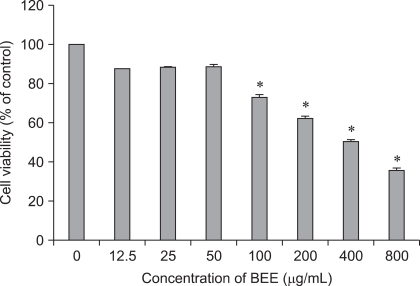
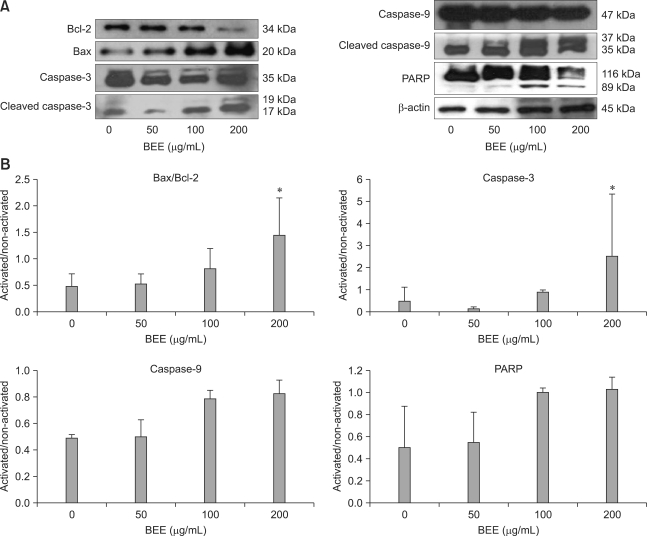
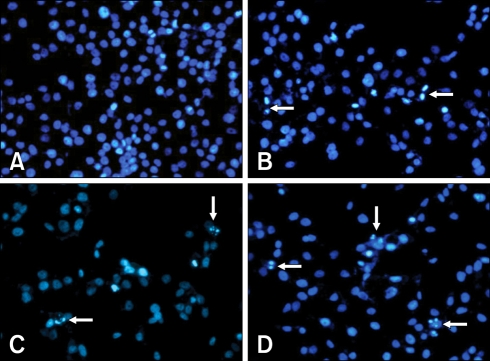
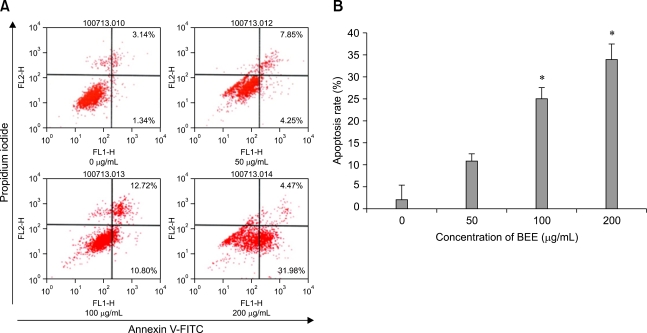
Control of inflammation is widely accepted as an important strategy for cancer chemoprevention. Anti-inflammatory effects of bark extracts of elm tree (BEE) have been amply reported. Therefore, BEE may be a good candidate cancer chemopreventive agent. Considering the high incidence of hepatic cancer and limited therapeutic approaches for treating this disease, it is important to develop liver cancer-specific chemopreventive agents. To evaluate the chemopreventive potential of BEE, we investigated the growth inhibition effect of BEE on the HepG2 human hepatocellular carcinoma cell line. We performed a cell counting kit-8 assay to determine cell viability, and 4,6-diamino-2-phenylindole staining and flow cytometry to measure apoptotic cell death. Finally, the expression levels of pro- and anti-apoptotic proteins were measured. BEE inhibited the growth of HepG2 cells and induced apoptosis in a dose-dependent manner. Pro-apoptotic activity was promoted via the mitochondrial pathway of apoptosis, as demonstrated by the activation of pro-apoptotic proteins Bax, caspase-9, caspase-3, and poly (ADP-ribose) polymerase as well as the down-regulation of the anti-apoptotic protein Bcl-2. These results suggest that BEE may have potential use in hepatic cancer chemoprevention by suppressing cancer cell growth via pro-apoptotic activity.
炎症控制作为癌症化学预防的重要策略已被广泛接受。榆树树皮提取物(BEE)的抗炎作用已有大量报道。因此,BEE可能是一种很好的癌症化学预防候选剂。鉴于肝癌的高发病率以及治疗该疾病的治疗方法有限,开发肝癌特异性化学预防剂非常重要。为了评估BEE的化学预防潜力,我们研究了BEE对HepG2人肝癌细胞系的生长抑制作用。我们进行了细胞计数试剂盒-8测定以确定细胞活力,并进行了4,6-二氨基-2-苯基吲哚染色和流式细胞术以测量凋亡细胞死亡。最后,测量了促凋亡和抗凋亡蛋白的表达水平。BEE以剂量依赖性方式抑制HepG2细胞的生长并诱导凋亡。促凋亡蛋白Bax、caspase-9、caspase-3和聚(ADP-核糖)聚合酶的激活以及抗凋亡蛋白Bcl-2的下调表明,促凋亡活性通过凋亡的线粒体途径得以促进。这些结果表明,BEE可能通过促凋亡活性抑制癌细胞生长,从而在肝癌化学预防中具有潜在用途。