Edwin L. Steele Laboratory for Tumor Biology, Department of Radiation Oncology, Massachusetts General Hospital (MGH) and Harvard Medical School, Boston, Massachusetts, USA.
Nat Protoc. 2012 Mar 22;7(4):763-70. doi: 10.1038/nprot.2012.032.
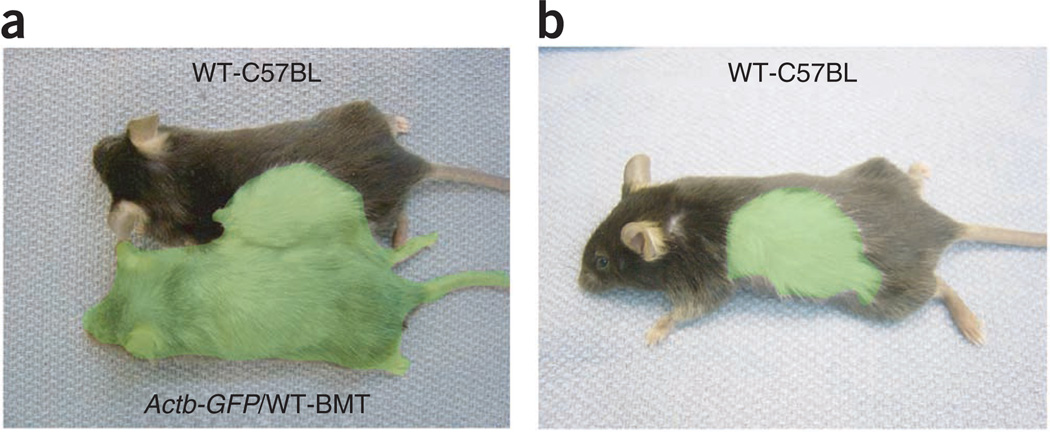
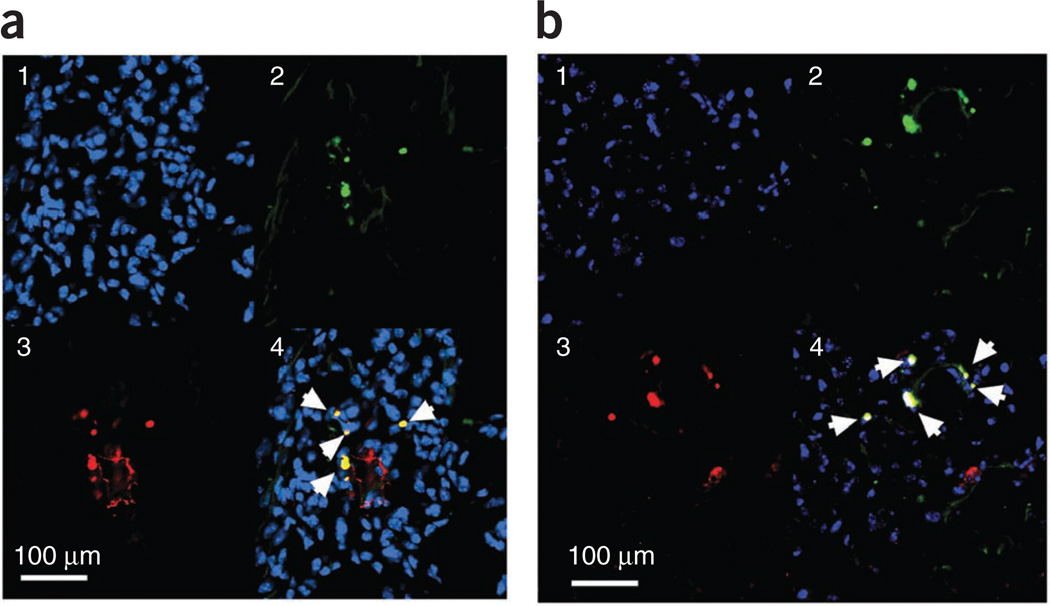
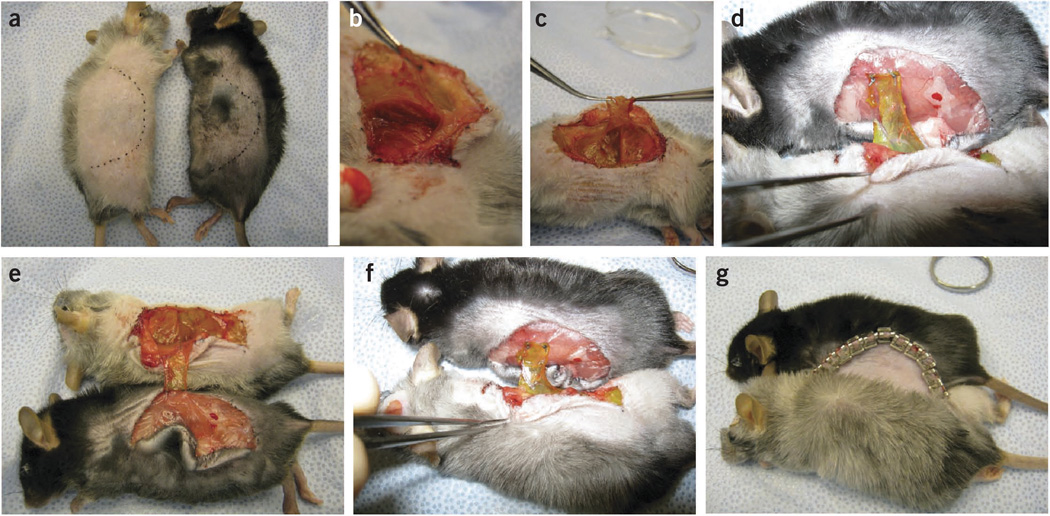
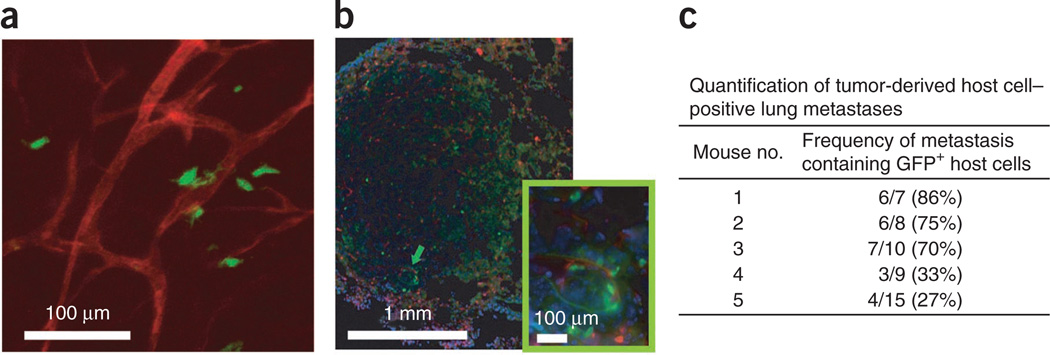
Parabiosis-conjoined surgery to provide a shared circulation between two mice-has been previously developed to study the hematopoietic system. This protocol describes the use of parabiosis for efficient transplantation of skin from a transgenic to a wild-type mouse. It can be used to study the role of stromal cells in a spontaneous model of distant cancer dissemination (metastasis). We have recently shown that primary tumor-derived stromal cells may facilitate metastasis by providing a provisional stroma at the secondary site. Studying the role of primary tumor-derived stroma cells requires methods for distinguishing and targeting stromal cells originating from the primary tumor versus their counterparts in the metastatic site. Parabiosis may also be used, taking advantage of the shared circulation between the parabiosed mice, to study tumor metastasis from one parabiont to another, or to investigate the role of circulating inflammatory cells or stem cells. Studying the role of stromal cells in metastasis using this model typically takes up to 11 weeks.
联体手术将两只小鼠的血液循环连接起来,这在以前是用来研究造血系统的。本方案描述了利用联体手术将转基因皮肤高效移植到野生型小鼠的方法。该方法可用于研究基质细胞在自发性远处癌症转移(转移)模型中的作用。我们最近表明,原发性肿瘤衍生的基质细胞可能通过在继发性部位提供临时基质来促进转移。研究原发性肿瘤衍生的基质细胞的作用需要区分和靶向源自原发性肿瘤的基质细胞与转移部位的基质细胞的方法。利用联体小鼠之间的共享循环,联体也可用于研究从一个联体到另一个联体的肿瘤转移,或研究循环炎症细胞或干细胞的作用。使用这种模型研究基质细胞在转移中的作用通常需要长达 11 周的时间。