Institute of Anatomy, TU Dresden, Dresden, Germany.
PLoS One. 2012;7(3):e33195. doi: 10.1371/journal.pone.0033195. Epub 2012 Mar 22.
Tunneling nanotubes (TNTs) may offer a very specific and effective way of intercellular communication. Here we investigated TNTs in the human retinal pigment epithelial (RPE) cell line ARPE-19. Morphology of TNTs was examined by immunostaining and scanning electron microscopy. To determine the function of TNTs between cells, we studied the TNT-dependent intercellular communication at different levels including electrical and calcium signalling, small molecular diffusion as well as mitochondrial re-localization. Further, intercellular organelles transfer was assayed by FACS analysis.
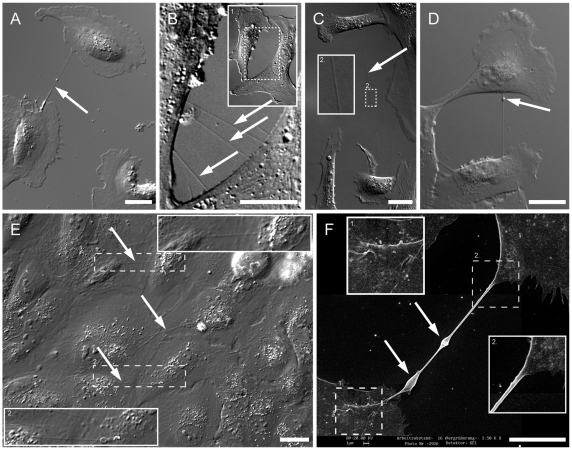
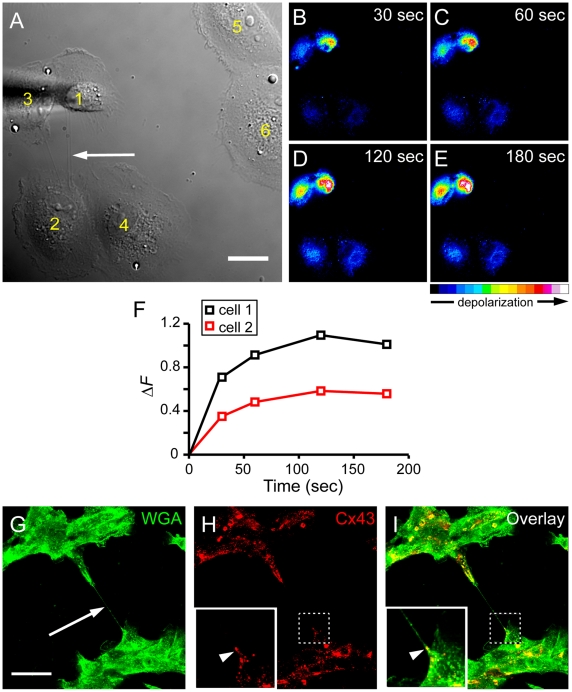
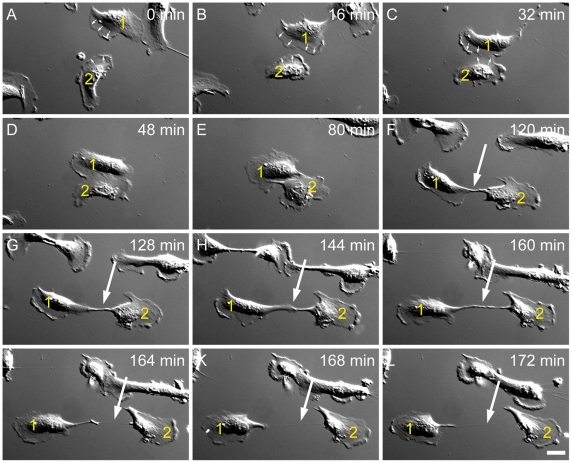
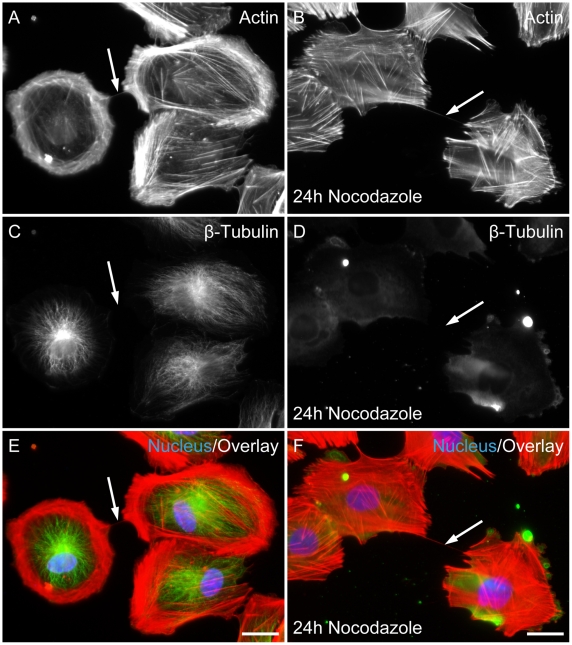
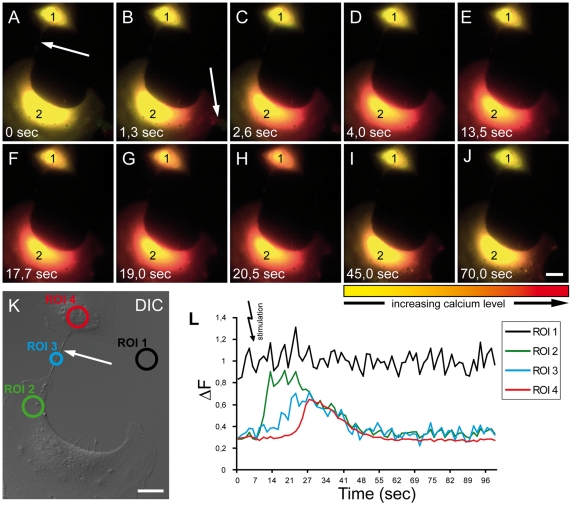
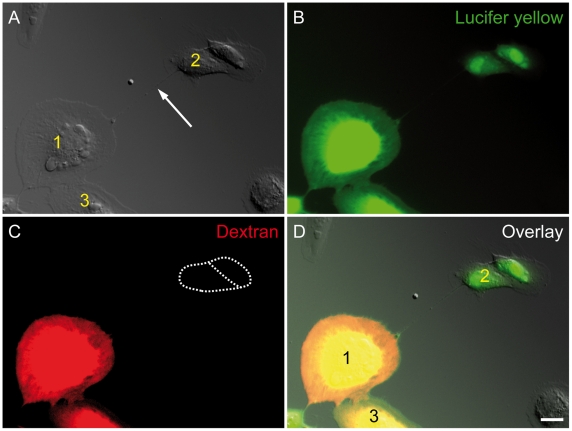
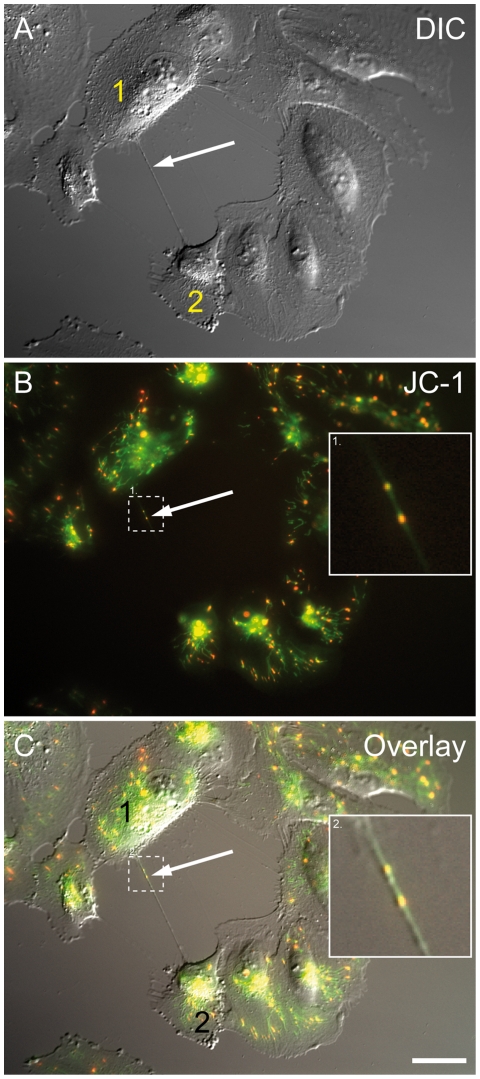
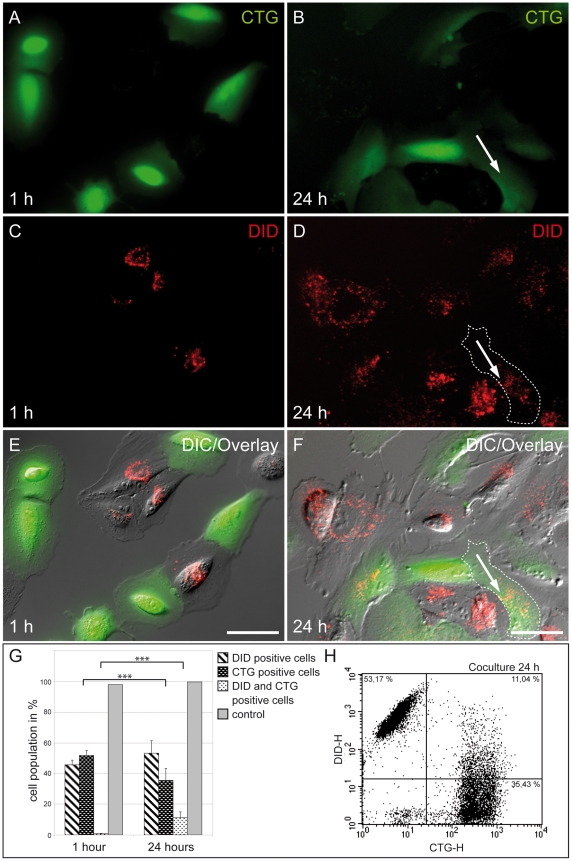
Microscopy showed that cultured ARPE-19 cells are frequently connected by TNTs, which are not attached to the substratum. The TNTs were straight connections between cells, had a typical diameter of 50 to 300 nm and a length of up to 120 µm. We observed de novo formation of TNTs by diverging from migrating cells after a short time of interaction. Scanning electron microscopy confirmed characteristic features of TNTs. Fluorescence microscopy revealed that TNTs between ARPE-19 cells contain F-actin but no microtubules. Depolymerisation of F-actin, induced by addition of latrunculin-B, led to disappearance of TNTs. Importantly, these TNTs could function as channels for the diffusion of small molecules such as Lucifer Yellow, but not for large molecules like Dextran Red. Further, organelle exchange between cells via TNTs was observed by microscopy. Using Ca²⁺ imaging we show the intercellular transmission of calcium signals through TNTs. Mechanical stimulation led to membrane depolarisation, which expand through TNT connections between ARPE-19 cells. We further demonstrate that TNTs can mediate electrical coupling between distant cells. Immunolabelling for Cx43 showed that this gap junction protein is interposed at one end of 44% of TNTs between ARPE-19 cells.
Our observations indicate that human RPE cell line ARPE-19 cells communicate by tunneling nanotubes and can support different types of intercellular traffic.
隧道纳米管(TNTs)可能提供了一种非常特殊和有效的细胞间通讯方式。在这里,我们研究了人视网膜色素上皮(RPE)细胞系 ARPE-19 中的 TNTs。通过免疫染色和扫描电子显微镜检查 TNTs 的形态。为了确定细胞间 TNTs 的功能,我们研究了包括电信号和钙信号、小分子扩散以及线粒体再定位在内的不同水平的 TNT 依赖性细胞间通讯。此外,通过 FACS 分析检测细胞间细胞器的转移。
显微镜显示,培养的 ARPE-19 细胞经常通过 TNTs 连接,而 TNTs 不附着在基质上。TNTs 是细胞之间的直连接,直径典型为 50 至 300nm,长度可达 120µm。我们观察到,在短时间的相互作用后,从迁移细胞中分支出来的 TNTs 会新形成。扫描电子显微镜证实了 TNTs 的特征。荧光显微镜显示,ARPE-19 细胞之间的 TNTs 含有 F-肌动蛋白,但没有微管。用 Latrunculin-B 诱导 F-肌动蛋白解聚,导致 TNTs 消失。重要的是,这些 TNTs 可以作为小分子如 Lucifer Yellow 扩散的通道,但不能作为 Dextran Red 等大分子的通道。此外,通过显微镜观察到细胞间通过 TNTs 进行细胞器交换。通过钙成像,我们显示了钙信号通过 TNTs 在细胞间的传递。机械刺激导致细胞膜去极化,这种去极化通过 ARPE-19 细胞之间的 TNT 连接扩展。我们进一步证明 TNTs 可以介导远距离细胞之间的电偶联。免疫标记 Cx43 显示,这种间隙连接蛋白位于 ARPE-19 细胞之间的 44%的 TNTs 的一端。
我们的观察表明,人 RPE 细胞系 ARPE-19 细胞通过隧道纳米管进行通讯,并可以支持不同类型的细胞间物质运输。