Salt Lake City VA Geriatric Research, Education and Clinical Center, Salt Lake City, Utah, USA.
Am J Med Genet A. 2012 May;158A(5):1135-44. doi: 10.1002/ajmg.a.35372. Epub 2012 Mar 30.
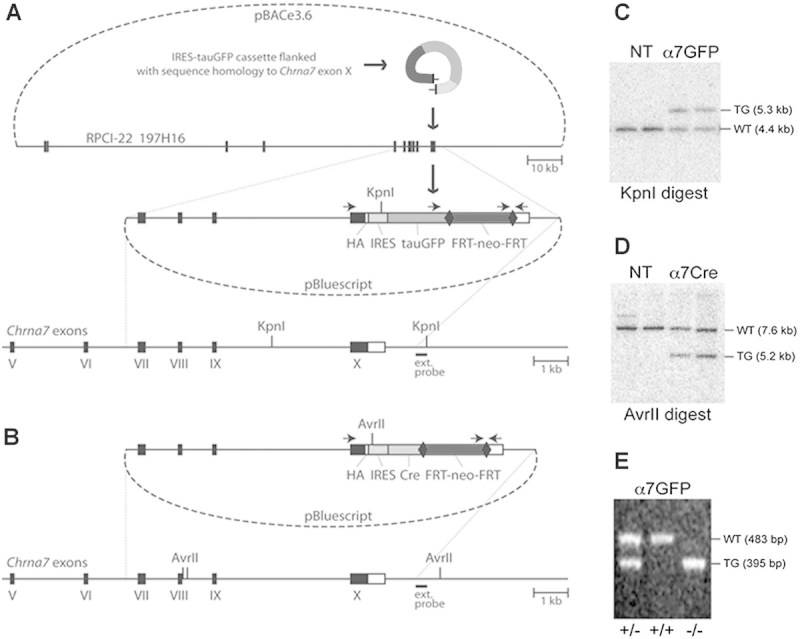
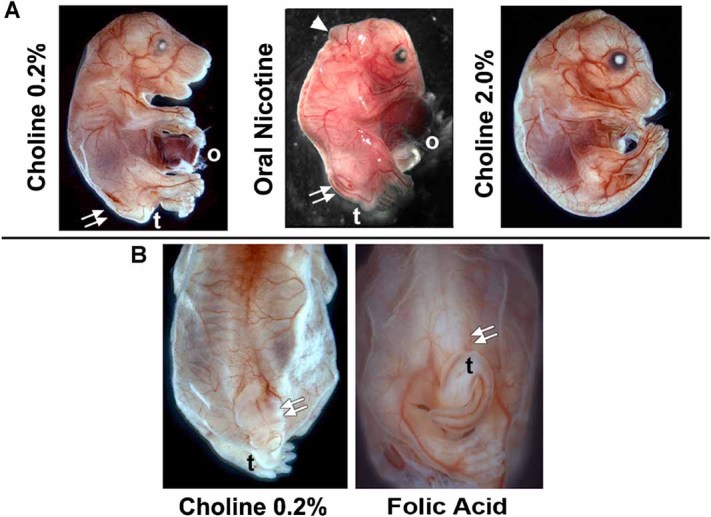
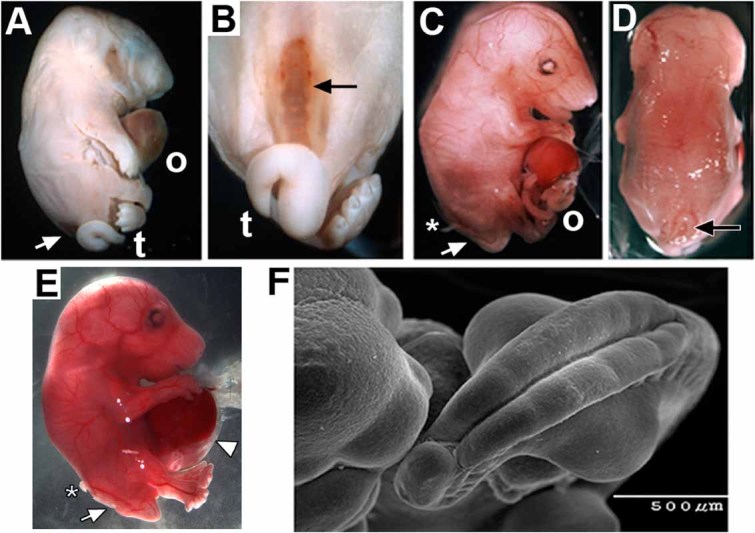
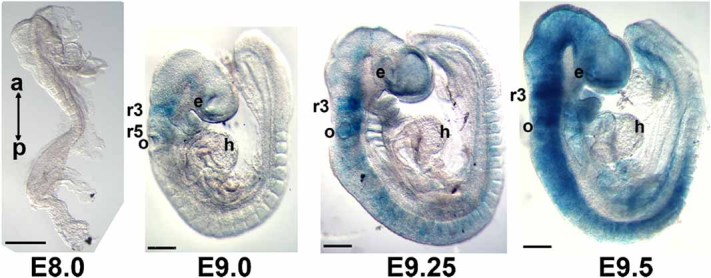
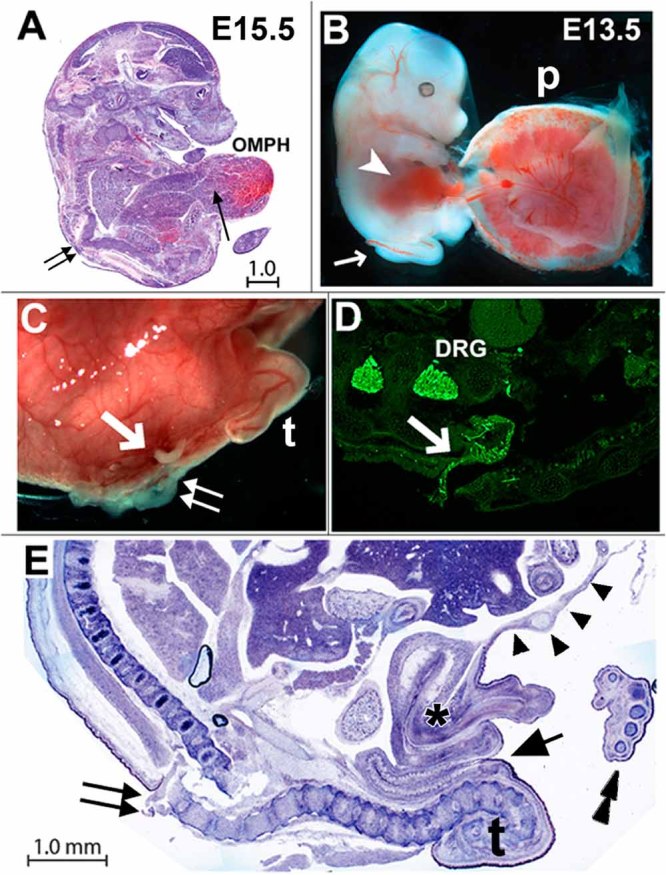
Lumbosacral spina bifida is a common debilitating birth defect whose multiple causes are poorly understood. Here, we provide the first genetic delineation of cholinergic nicotinic receptor alpha7 (Chrna7) expression and link the ablation of the Chrna7 cell lineage to this condition in the mouse. Using homologous recombination, an IRES-Cre bi-cistronic cassette was introduced into the 3' noncoding region of Chrna7 (Chrna7:Cre) for identifying cell lineages expressing this gene. This lineage first appears at embryonic day E9.0 in rhombomeres 3 and 5 of the neural tube and extends to cell subsets in most tissues by E14.5. Ablation of the Chrna7:Cre cell lineage in embryos from crosses with conditionally expressed attenuated diphtheria toxin results in precise developmental defects including omphalocele (89%) and open spina bifida (SB; 80%). We hypothesized that like humans, this defect would be modified by environmental compounds not only folic acid or choline but also nicotine. Prenatal chronic oral nicotine administration substantially worsened the defect to often include the rostral neural tube. In contrast, supplementation of the maternal diet with 2% choline decreased SB prevalence to 38% and dramatically reduced the defect severity. Folic acid supplementation only trended towards a reduced SB frequency. The omphalocele was unaffected by these interventions. These studies identify the Chrna7 cell lineage as participating in posterior neuropore closure and present a novel model of lower SB that can be substantially modified by the prenatal environment.
腰骶部脊柱裂是一种常见的使人虚弱的出生缺陷,其多种病因尚未被很好地理解。在这里,我们首次对胆碱能烟碱型受体 alpha7(Chrna7)的表达进行了遗传描述,并将 Chrna7 细胞谱系的缺失与小鼠的这种情况联系起来。我们利用同源重组,将一个 IRES-Cre 双顺反子盒引入 Chrna7 的 3'非编码区(Chrna7:Cre),用于鉴定表达该基因的细胞谱系。该谱系最早出现在胚胎第 9 天的神经管的菱脑节 3 和 5 中,并在胚胎第 14.5 天扩展到大多数组织中的细胞亚群。Chrna7:Cre 细胞谱系在与条件表达减弱的白喉毒素交叉的胚胎中的缺失导致精确的发育缺陷,包括脐膨出(89%)和开放性脊柱裂(SB;80%)。我们假设,像人类一样,这种缺陷不仅会受到叶酸或胆碱等环境化合物的修饰,还会受到尼古丁等环境化合物的修饰。产前慢性口服尼古丁给药大大加重了这种缺陷,通常包括颅神经管。相比之下,用 2%胆碱补充母体饮食将 SB 的患病率降低到 38%,并显著降低了缺陷的严重程度。叶酸补充仅显示出降低 SB 频率的趋势。这些干预措施对脐膨出没有影响。这些研究确定 Chrna7 细胞谱系参与了后神经孔闭合,并提出了一种新的低 SB 模型,该模型可以通过产前环境得到极大的修饰。