Laboratoire 'Caractérisation Génomique des Plantes', Faculté des Sciences , Université Saint-Joseph , Campus Sciences et Technologies , Mar Roukos, Mkalles, BP 1514 Riad el Solh, Beirut 1107 2050 , Lebanon.
AoB Plants. 2011;2011:plr003. doi: 10.1093/aobpla/plr003. Epub 2011 Jan 21.
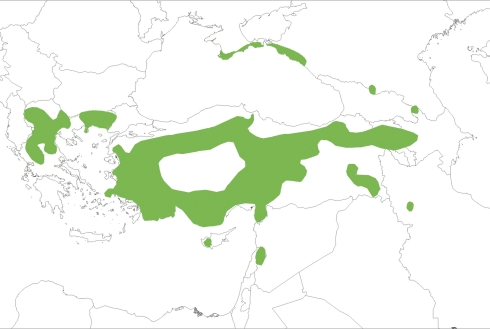
Juniperus excelsa is an important woody species in the high mountain ecosystems of the eastern Mediterranean Basin where it constitutes the only coniferous species found at the tree line. The genetic diversity within and among J. excelsa populations of the eastern Mediterranean Basin is studied in the light of their historical fragmentation.
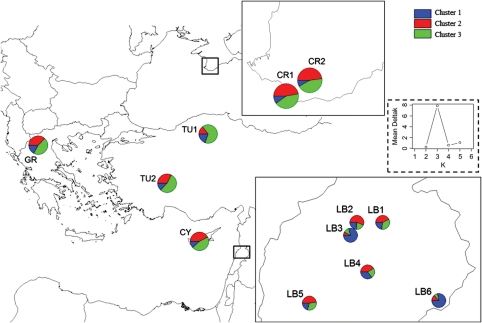
Nuclear microsatellites originally developed for Juniperus communis and J. przewalskii were tested on 320 individuals from 12 different populations originating from Lebanon, Turkey, Cyprus, Greece and the Ukraine.
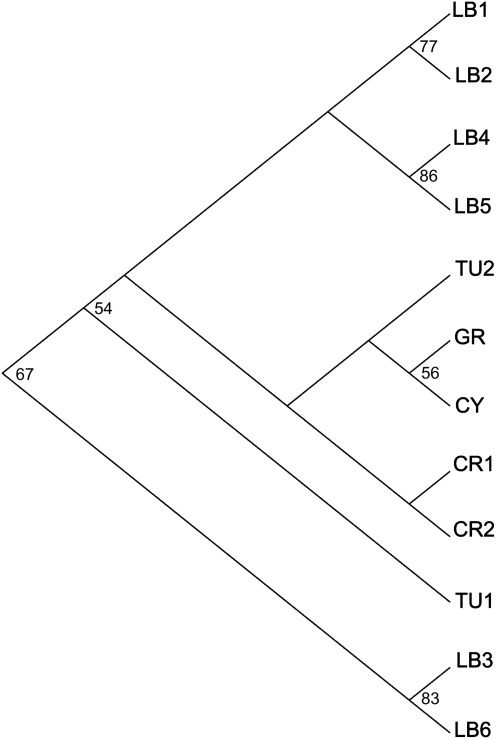
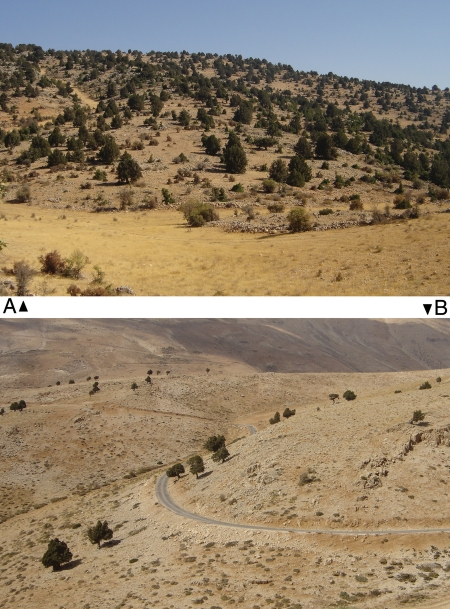
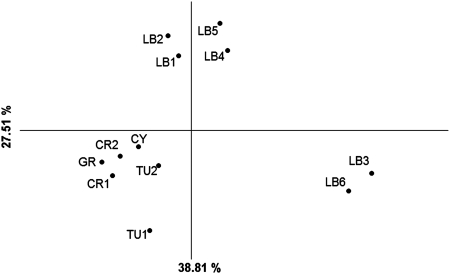
Among the 31 nuclear microsatellite primers tested, only three produced specific amplification products, with orthology confirmed by sequence analysis. They were then used for genetic diversity studies. The mean number of alleles and the expected heterozygosity means were N(a)=8.78 and H(e)=0.76, respectively. The fixation index showed a significant deviation from Hardy-Weinberg equilibrium and an excess of homozygotes (F(IS)=0.27-0.56). A moderate level of genetic differentiation was observed among the populations (F(ST)=0.075, P<0.001). The most differentiated populations corresponded to old vestigial stands found at the tree line (>2000 m) in Lebanon. These populations were differentiated from the other populations that are grouped into three sub-clusters.
High levels of genetic diversity were observed at species and population levels. The high level of differentiation in the high-mountain Lebanese populations reflects a long period of isolation or possibly a different origin. The admixture observed in other populations from Lebanon suggests a more recent separation from the Turkish-southeastern European populations.
刺柏是东地中海盆地高山生态系统中的一种重要木本物种,是在树线处唯一发现的针叶树种。本研究根据其历史片段化情况,研究了东地中海盆地刺柏种群的内部和种群间的遗传多样性。
最初为 Juniperus communis 和 J. przewalskii 开发的核微卫星在来自黎巴嫩、土耳其、塞浦路斯、希腊和乌克兰的 12 个不同种群的 320 个个体上进行了测试。
在测试的 31 个核微卫星引物中,只有 3 个产生了特异性扩增产物,通过序列分析证实了同源性。然后,它们被用于遗传多样性研究。平均等位基因数和期望杂合度均值分别为 N(a)=8.78 和 H(e)=0.76。固定指数显示出与 Hardy-Weinberg 平衡的显著偏差和同型合子的过剩(F(IS)=0.27-0.56)。种群间观察到中等水平的遗传分化(F(ST)=0.075,P<0.001)。最具分化的种群对应于黎巴嫩树线(>2000 米)处发现的古老遗迹种群。这些种群与其他分为三个亚群的种群存在分化。
在物种和种群水平上观察到高水平的遗传多样性。高山黎巴嫩种群的高度分化反映了一个长期的隔离期或可能的不同起源。在黎巴嫩其他种群中观察到的混合表明,它们与土耳其-东南欧种群的分离时间较近。