Product Development Cell, National Institute of Immunology, Aruna Asaf Ali Marg, New Delhi, India.
PLoS One. 2012;7(3):e33951. doi: 10.1371/journal.pone.0033951. Epub 2012 Mar 29.
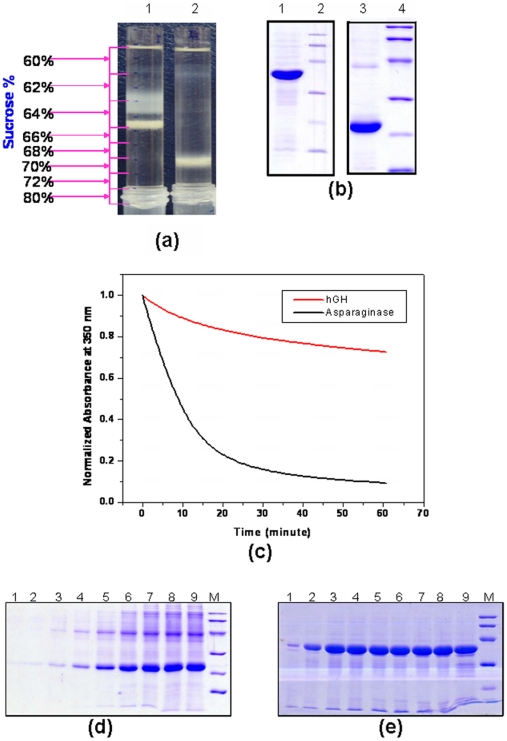
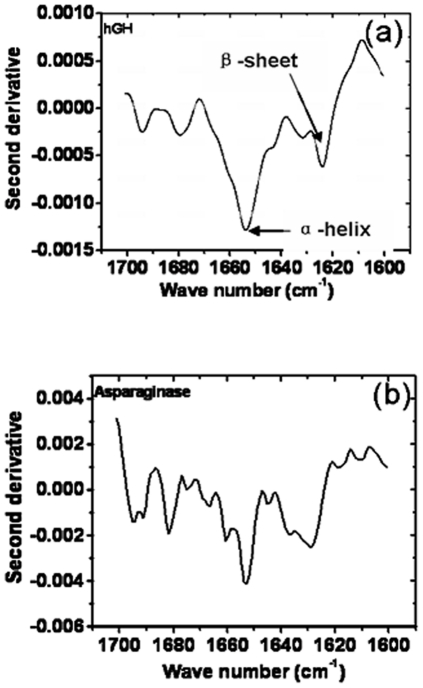
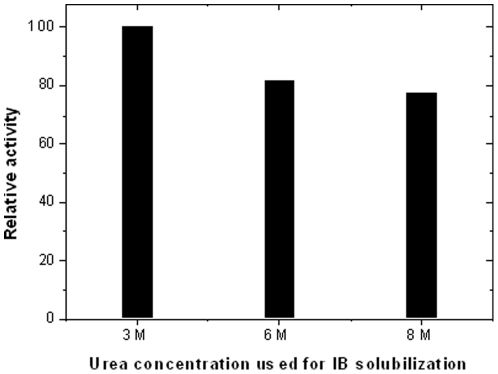
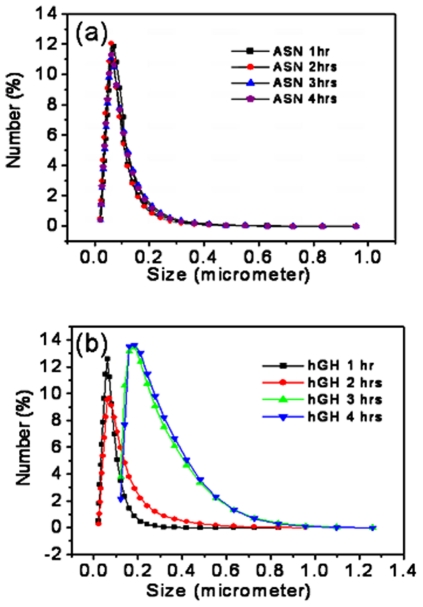
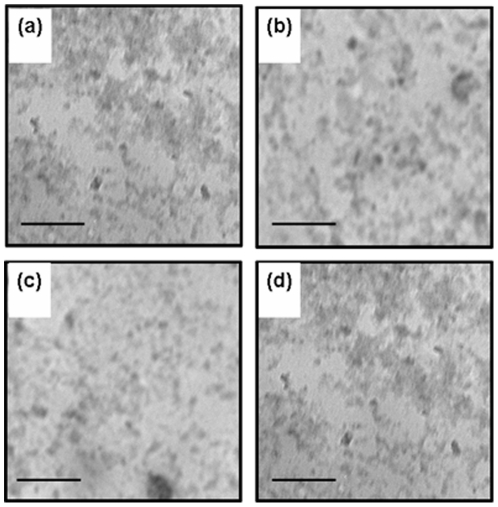
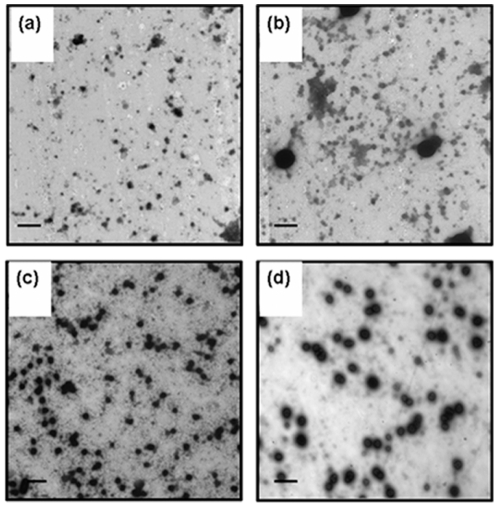
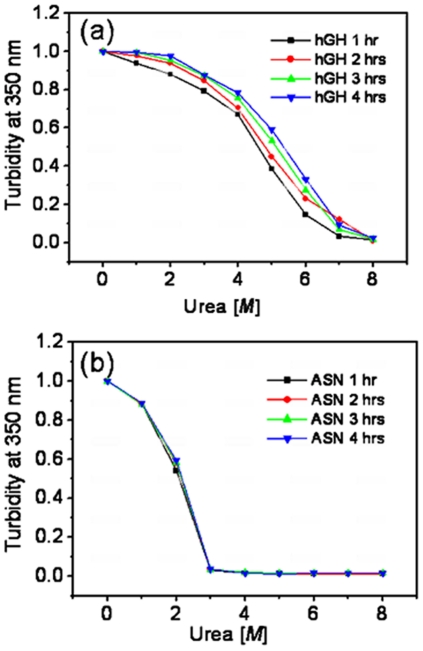
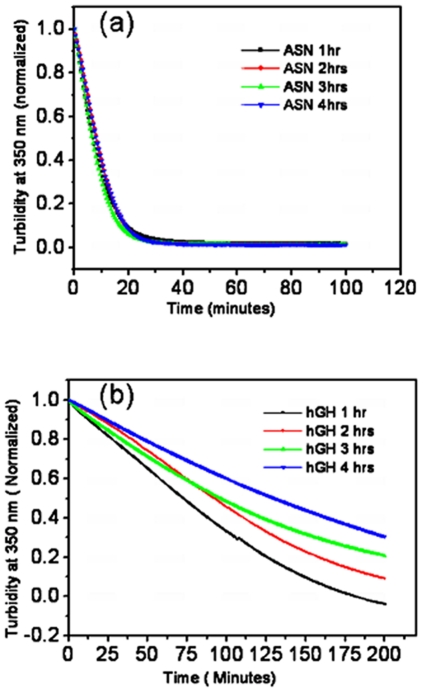
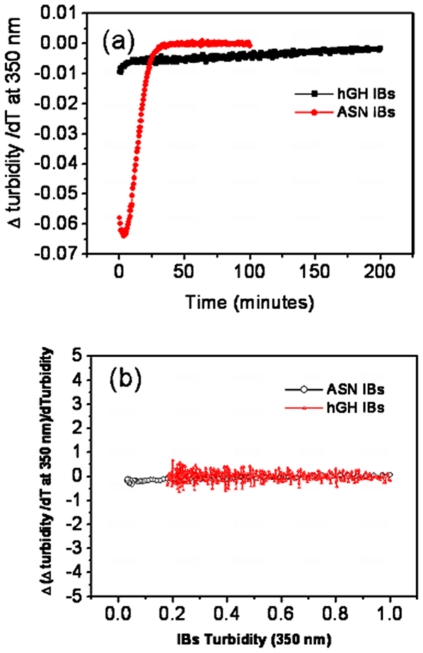
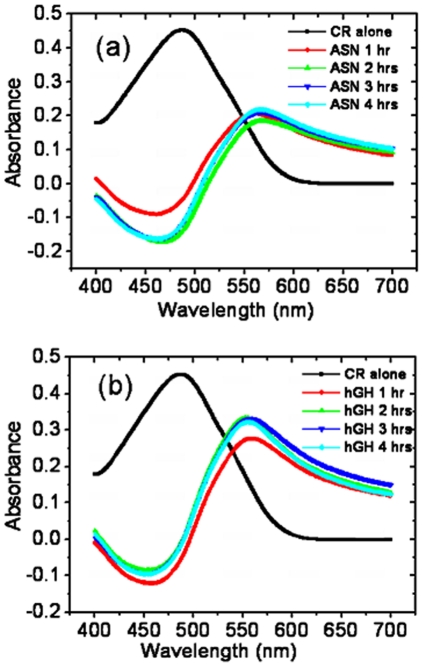
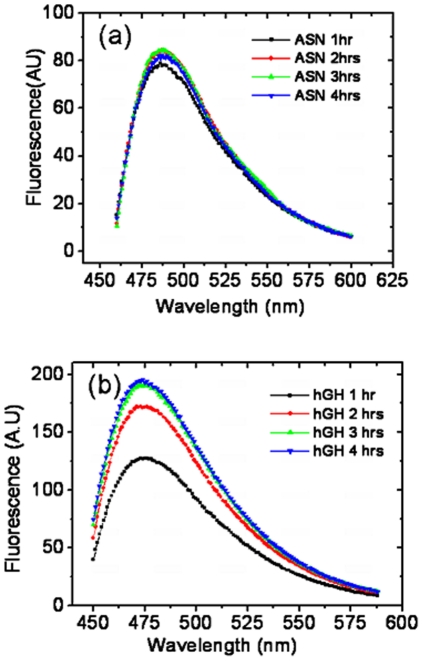
The objective of the research was to understand the structural determinants governing protein aggregation into inclusion bodies during expression of recombinant proteins in Escherichia coli. Recombinant human growth hormone (hGH) and asparaginase were expressed as inclusion bodies in E.coli and the kinetics of aggregate formation was analyzed in details. Asparaginase inclusion bodies were of smaller size (200 nm) and the size of the aggregates did not increase with induction time. In contrast, the seeding and growth behavior of hGH inclusion bodies were found to be sequential, kinetically stable and the aggregate size increased from 200 to 800 nm with induction time. Human growth hormone inclusion bodies showed higher resistance to denaturants and proteinase K degradation in comparison to those of asparaginase inclusion bodies. Asparaginase inclusion bodies were completely solubilized at 2-3 M urea concentration and could be refolded into active protein, whereas 7 M urea was required for complete solubilization of hGH inclusion bodies. Both hGH and asparaginase inclusion bodies showed binding with amyloid specific dyes. In spite of its low β-sheet content, binding with dyes was more prominent in case of hGH inclusion bodies than that of asparaginase. Arrangements of protein molecules present in the surface as well as in the core of inclusion bodies were similar. Hydrophobic interactions between partially folded amphiphillic and hydrophobic alpha-helices were found to be one of the main determinants of hGH inclusion body formation. Aggregation behavior of the protein molecules decides the nature and properties of inclusion bodies.
本研究旨在探究在大肠杆菌中表达重组蛋白时导致蛋白质聚集形成包涵体的结构决定因素。重组人生长激素(hGH)和天冬酰胺酶在大肠杆菌中以包涵体的形式表达,并对其聚集形成的动力学进行了详细分析。天冬酰胺酶包涵体的粒径较小(200nm),且其粒径不会随诱导时间的延长而增加。相比之下,hGH 包涵体的成核和生长行为是连续的、动力学稳定的,且其粒径随诱导时间从 200nm 增加到 800nm。与天冬酰胺酶包涵体相比,hGH 包涵体对变性剂和蛋白酶 K 降解具有更高的抗性。天冬酰胺酶包涵体在 2-3M 尿素浓度下即可完全溶解,并可复性为有活性的蛋白质,而 hGH 包涵体则需要 7M 尿素才能完全溶解。hGH 和天冬酰胺酶包涵体均与淀粉样蛋白特异性染料结合。尽管 hGH 包涵体的β-折叠含量较低,但与染料的结合比天冬酰胺酶更明显。包涵体表面和核心中蛋白质分子的排列方式相似。部分折叠的两亲性和疏水性α-螺旋之间的疏水相互作用是导致 hGH 包涵体形成的主要决定因素之一。蛋白质分子的聚集行为决定了包涵体的性质和特性。