South Australian Museum, Adelaide, South Australia, Australia.
PLoS One. 2012;7(3):e34260. doi: 10.1371/journal.pone.0034260. Epub 2012 Mar 30.
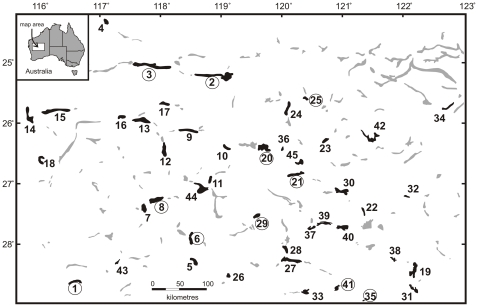
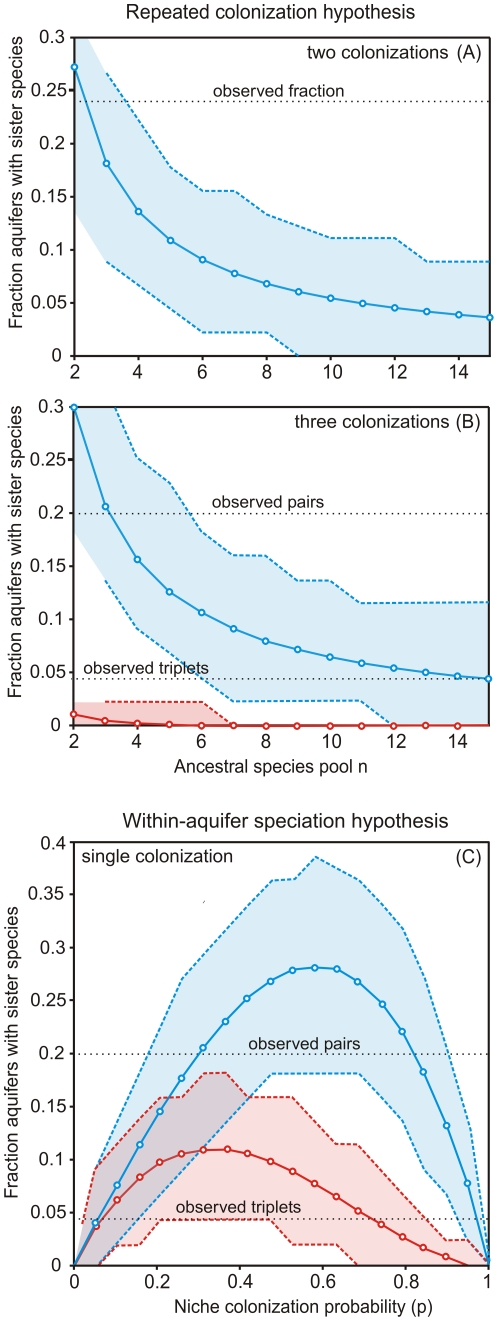
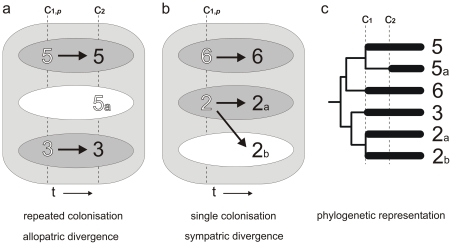
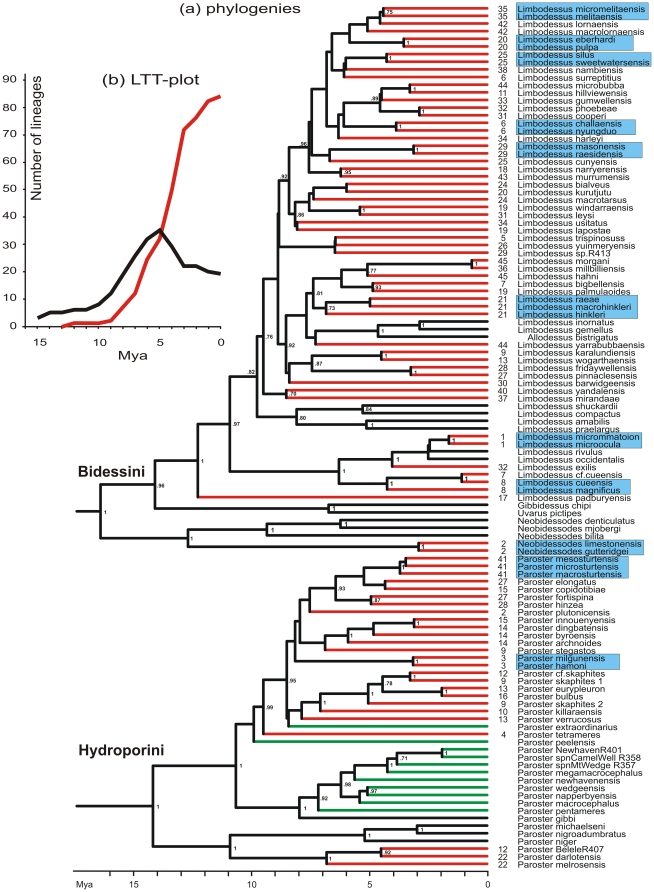
Evidence is growing that not only allopatric but also sympatric speciation can be important in the evolution of species. Sympatric speciation has most convincingly been demonstrated in laboratory experiments with bacteria, but field-based evidence is limited to a few cases. The recently discovered plethora of subterranean diving beetle species in isolated aquifers in the arid interior of Australia offers a unique opportunity to evaluate alternative modes of speciation. This naturally replicated evolutionary experiment started 10-5 million years ago, when climate change forced the surface species to occupy geographically isolated subterranean aquifers. Using phylogenetic analysis, we determine the frequency of aquifers containing closely related sister species. By comparing observed frequencies with predictions from different statistical models, we show that it is very unlikely that the high number of sympatrically occurring sister species can be explained by a combination of allopatric evolution and repeated colonisations alone. Thus, diversification has occurred within the aquifers and likely involved sympatric, parapatric and/or microallopatric speciation.
越来越多的证据表明,不仅异域物种形成,而且同域物种形成也可能在物种进化中发挥重要作用。同域物种形成最令人信服的证据来自于对细菌的实验室实验,但基于现场的证据仅限于少数案例。最近在澳大利亚干旱内陆孤立的含水层中发现的大量地下潜水甲虫物种,为评估替代物种形成模式提供了独特的机会。这种自然复制的进化实验始于 1000 万至 500 万年前,当时气候变化迫使地表物种占据地理上孤立的地下含水层。通过系统发育分析,我们确定了含有密切相关姐妹种的含水层的频率。通过将观察到的频率与来自不同统计模型的预测进行比较,我们表明,仅仅通过异域进化和重复殖民的组合,就很不可能解释大量同域发生的姐妹种的出现。因此,多样化是在含水层内发生的,可能涉及同域、邻域和/或微异域物种形成。