Fiocchetti Marco, Ascenzi Paolo, Marino Maria
Department of Biology, University Roma Tre Roma, Italy.
Front Physiol. 2012 Apr 5;3:73. doi: 10.3389/fphys.2012.00073. eCollection 2012.
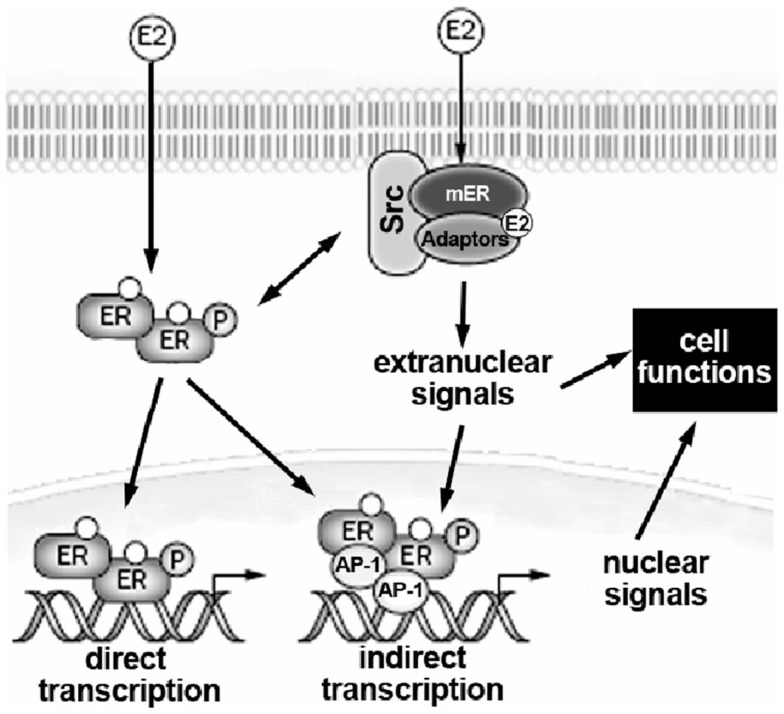
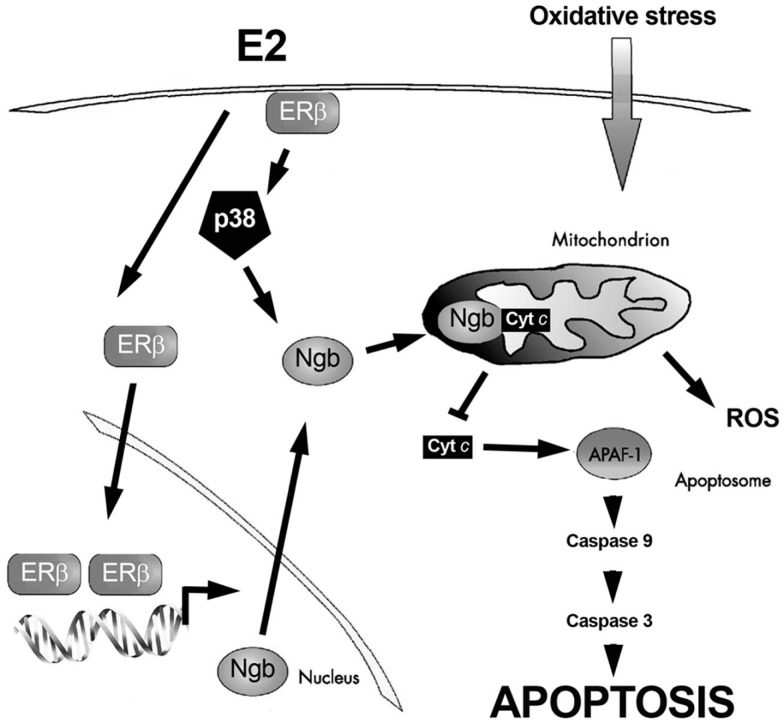
Besides its crucial role in many physiological events, 17β-estradiol (E2) exerts protective effects in the central nervous system. The E2 effects are not restricted to the brain areas related with the control of reproductive function, but rather are widespread throughout the developing and the adult brain. E2 actions are mediated through estrogen receptors (i.e., ERα and ERβ) belonging to the nuclear receptor super-family. As members of the ligand-regulated transcription factor family, classically, the actions of ERs in the brain were thought to mediate only the E2 long-term transcriptional effects. However, a growing body of evidence highlighted rapid, membrane initiated E2 effects in the brain that are independent of ER transcriptional activities and are involved in E2-induced neuroprotection. The aim of this review is to focus on the rapid effects of E2 in the brain highlighting the specific role of the signaling pathway(s) of the ERβ subtype in the neuroprotective actions of E2.
除了在许多生理事件中发挥关键作用外,17β-雌二醇(E2)在中枢神经系统中也具有保护作用。E2的作用并不局限于与生殖功能控制相关的脑区,而是广泛分布于发育中的大脑和成年大脑。E2的作用是通过属于核受体超家族的雌激素受体(即ERα和ERβ)介导的。作为配体调节转录因子家族的成员,传统上,ERs在大脑中的作用被认为仅介导E2的长期转录效应。然而,越来越多的证据表明,E2在大脑中具有快速的、膜起始的效应,这些效应独立于ER转录活性,并参与E2诱导的神经保护作用。本综述的目的是关注E2在大脑中的快速效应,突出ERβ亚型信号通路在E2神经保护作用中的特定作用。