Grupo de Micobactérias, Unidade de Microbiologia Médica, Instituto de Higiene e Medicina Tropical, Universidade Nova de Lisboa (IHMT/UNL), Lisboa, Portugal.
PLoS One. 2012;7(4):e34538. doi: 10.1371/journal.pone.0034538. Epub 2012 Apr 6.
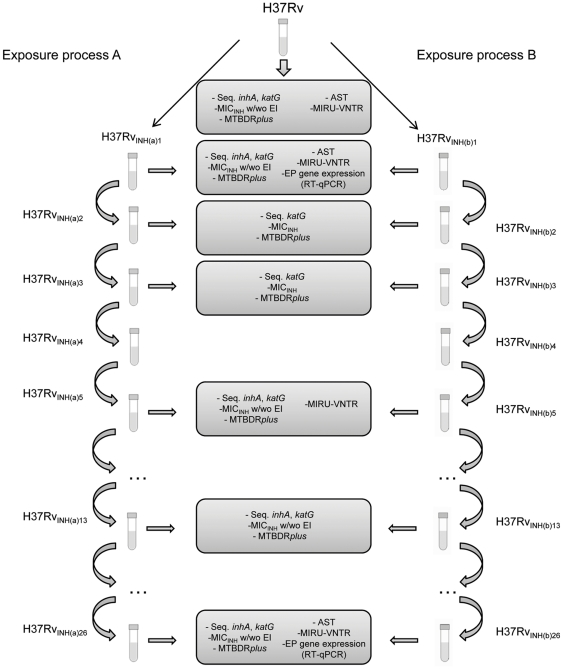
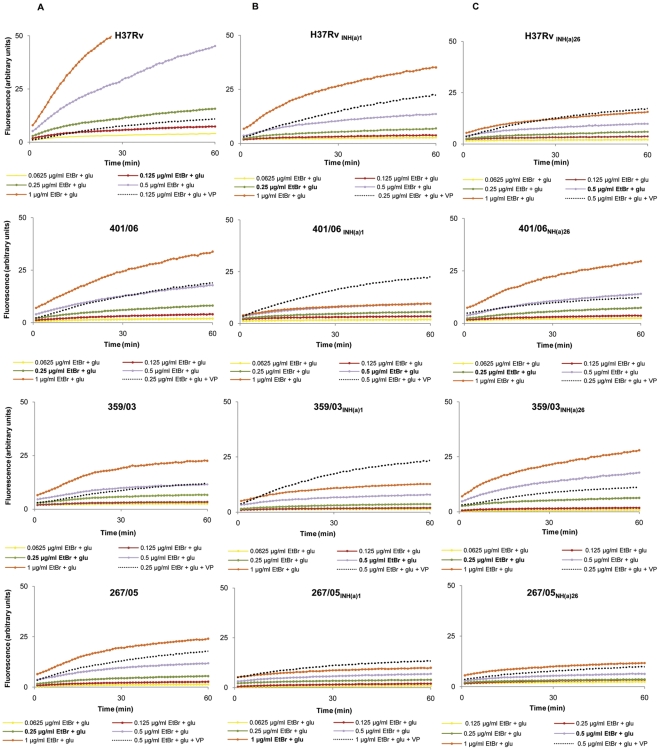
Multidrug resistant (MDR) tuberculosis is caused by Mycobacterium tuberculosis resistant to isoniazid and rifampicin, the two most effective drugs used in tuberculosis therapy. Here, we investigated the mechanism by which resistance towards isoniazid develops and how overexpression of efflux pumps favors accumulation of mutations in isoniazid targets, thus establishing a MDR phenotype. The study was based on the in vitro induction of an isoniazid resistant phenotype by prolonged serial exposure of M. tuberculosis strains to the critical concentration of isoniazid employed for determination of drug susceptibility testing in clinical isolates. Results show that susceptible and rifampicin monoresistant strains exposed to this concentration become resistant to isoniazid after three weeks; and that resistance observed for the majority of these strains could be reduced by means of efflux pumps inhibitors. RT-qPCR assessment of efflux pump genes expression showed overexpression of all tested genes. Enhanced real-time efflux of ethidium bromide, a common efflux pump substrate, was also observed, showing a clear relation between overexpression of the genes and increased efflux pump function. Further exposure to isoniazid resulted in the selection and stabilization of spontaneous mutations and deletions in the katG gene along with sustained increased efflux activity. Together, results demonstrate the relevance of efflux pumps as one of the factors of isoniazid resistance in M. tuberculosis. These results support the hypothesis that activity of efflux pumps allows the maintenance of an isoniazid resistant population in a sub-optimally treated patient from which isoniazid genetically resistant mutants emerge. Therefore, the use of inhibitors of efflux should be considered in the development of new therapeutic strategies for preventing the emergence of MDR-TB during treatment.
耐多药结核病是由结核分枝杆菌对异烟肼和利福平耐药引起的,这两种药物是结核病治疗中最有效的两种药物。在这里,我们研究了异烟肼耐药性发展的机制,以及外排泵的过度表达如何有利于异烟肼靶标突变的积累,从而建立 MDR 表型。该研究基于通过延长结核分枝杆菌菌株对临界浓度异烟肼的连续暴露,体外诱导异烟肼耐药表型,该临界浓度用于确定临床分离株中的药物敏感性测试。结果表明,暴露于该浓度的敏感和利福平单耐药菌株在三周后对异烟肼产生耐药性;并且这些菌株中的大多数观察到的耐药性可以通过外排泵抑制剂来降低。外排泵基因表达的 RT-qPCR 评估显示所有测试基因的过度表达。还观察到溴化乙锭(一种常见的外排泵底物)的增强型实时外排,这表明基因的过度表达与外排泵功能的增加之间存在明显关系。进一步暴露于异烟肼导致 katG 基因中自发突变和缺失的选择和稳定,同时持续增加外排活性。总之,结果表明外排泵是结核分枝杆菌异烟肼耐药的因素之一。这些结果支持这样一种假设,即外排泵的活性允许在治疗中处于亚最佳治疗的患者中维持异烟肼耐药群体,从而使异烟肼遗传抗性突变体出现。因此,在开发新的治疗策略以防止在治疗期间出现 MDR-TB 时,应考虑使用外排泵抑制剂。