Institute of Medical Virology, University of Zurich, Zurich, Switzerland.
PLoS Pathog. 2012;8(4):e1002634. doi: 10.1371/journal.ppat.1002634. Epub 2012 Apr 5.
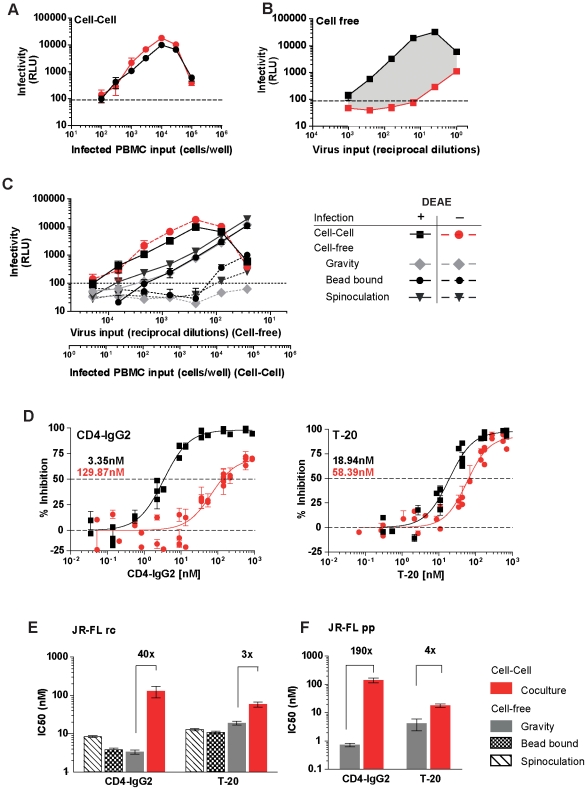
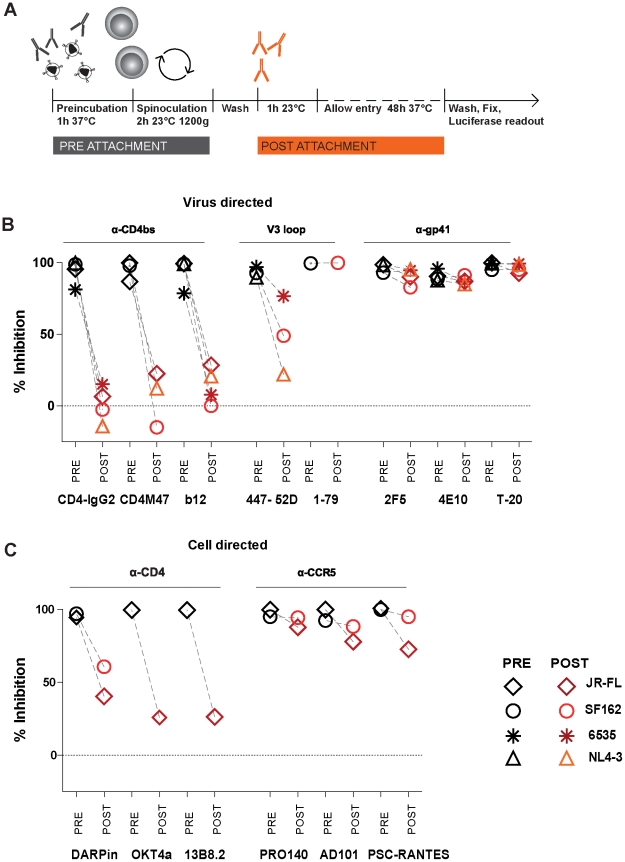
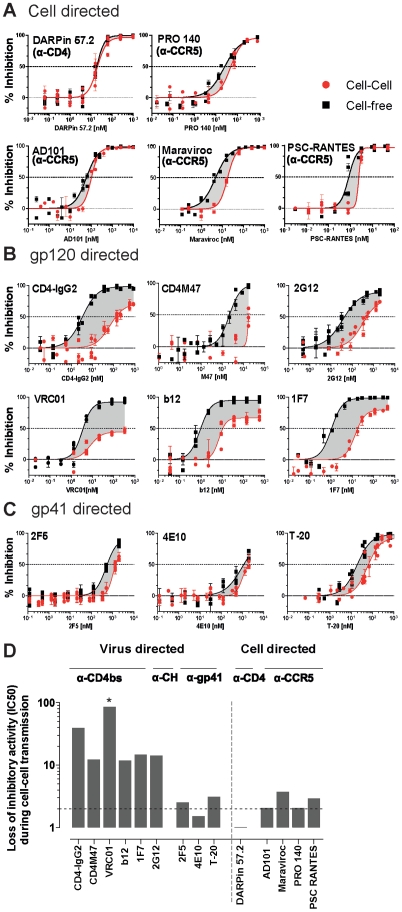
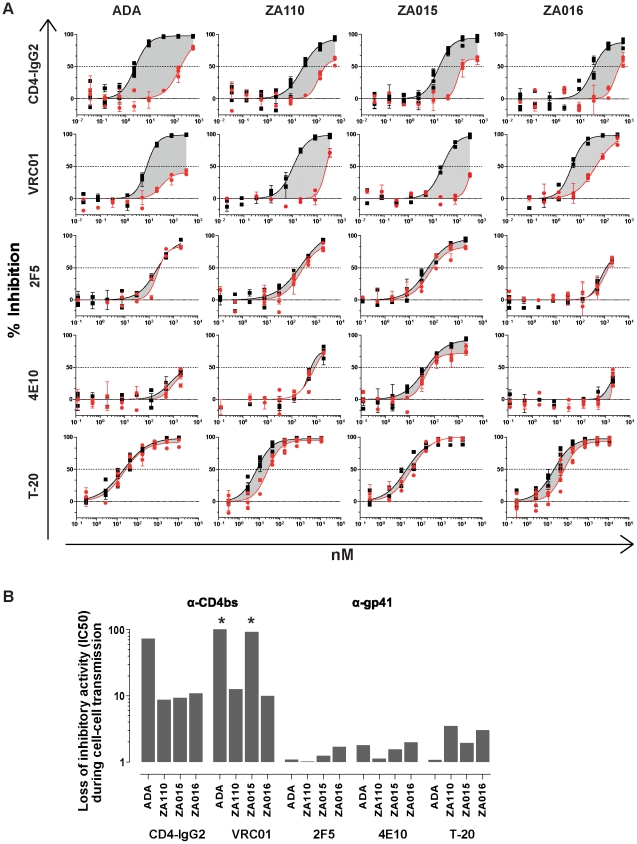
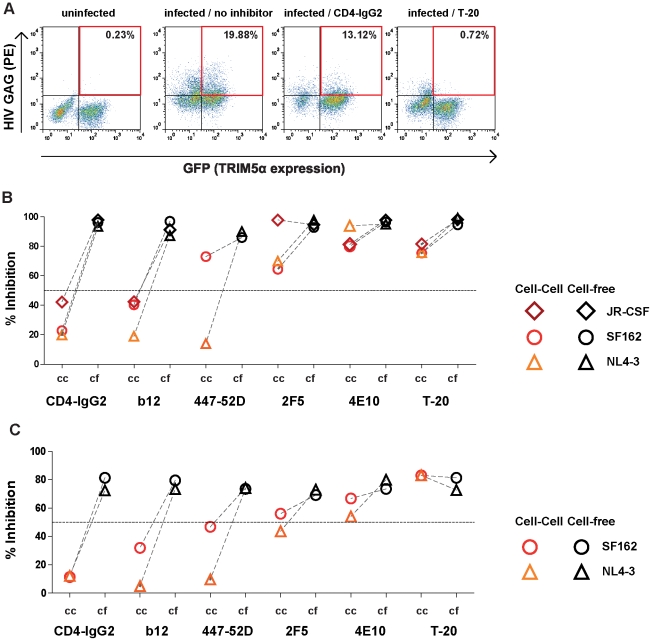
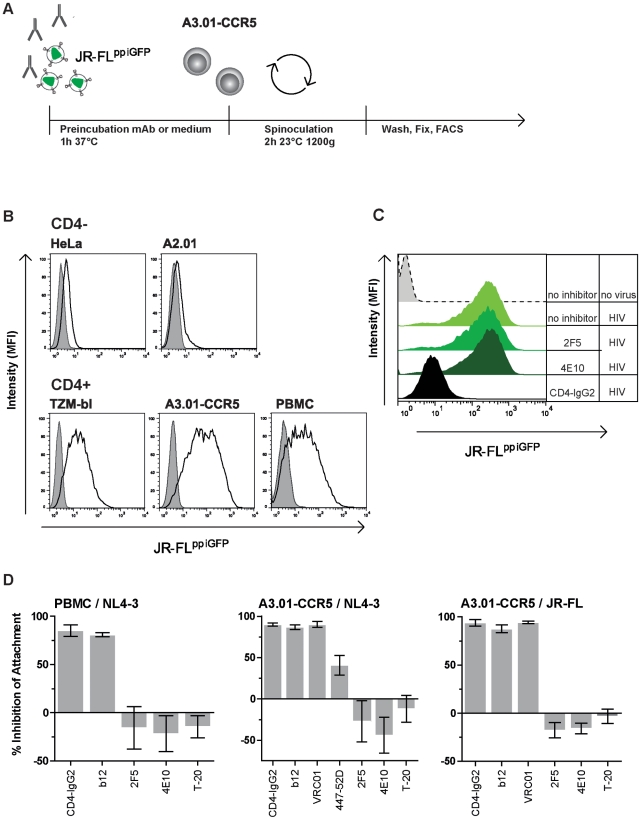
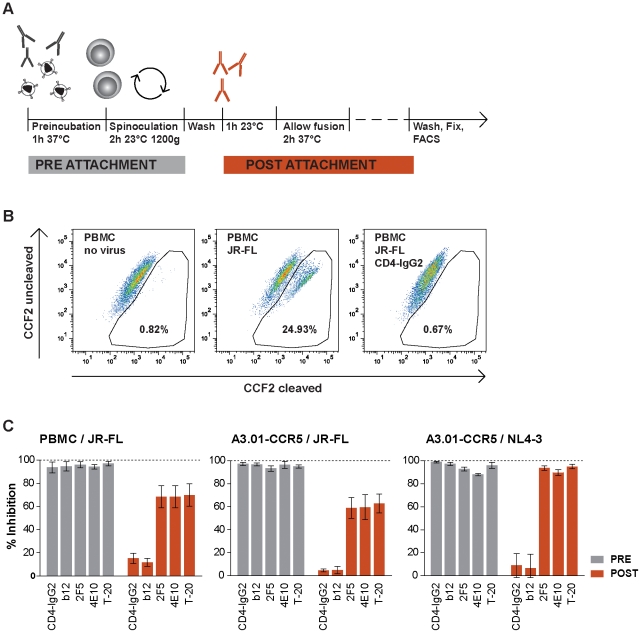
HIV is known to spread efficiently both in a cell-free state and from cell to cell, however the relative importance of the cell-cell transmission mode in natural infection has not yet been resolved. Likewise to what extent cell-cell transmission is vulnerable to inhibition by neutralizing antibodies and entry inhibitors remains to be determined. Here we report on neutralizing antibody activity during cell-cell transmission using specifically tailored experimental strategies which enable unambiguous discrimination between the two transmission routes. We demonstrate that the activity of neutralizing monoclonal antibodies (mAbs) and entry inhibitors during cell-cell transmission varies depending on their mode of action. While gp41 directed agents remain active, CD4 binding site (CD4bs) directed inhibitors, including the potent neutralizing mAb VRC01, dramatically lose potency during cell-cell transmission. This implies that CD4bs mAbs act preferentially through blocking free virus transmission, while still allowing HIV to spread through cell-cell contacts. Thus providing a plausible explanation for how HIV maintains infectivity and rapidly escapes potent and broadly active CD4bs directed antibody responses in vivo.
HIV 已被证实既能在无细胞状态下高效传播,也能在细胞间传播,然而,在自然感染中细胞间传播模式的相对重要性尚未得到解决。同样,中和抗体和进入抑制剂对细胞间传播的抑制程度仍有待确定。在这里,我们使用专门设计的实验策略,报告细胞间传播过程中的中和抗体活性,这些策略能够明确区分两种传播途径。我们证明,在细胞间传播过程中,中和单克隆抗体(mAbs)和进入抑制剂的活性因作用模式而异。虽然 gp41 定向药物仍然有效,但 CD4 结合位点(CD4bs)定向抑制剂,包括强效中和 mAb VRC01,在细胞间传播过程中效力显著降低。这意味着 CD4bs mAbs 主要通过阻断游离病毒传播起作用,同时仍允许 HIV 通过细胞间接触传播。这为 HIV 如何在体内保持感染力并迅速逃避强效和广泛有效的 CD4bs 定向抗体反应提供了一个合理的解释。