Vaccine Research Center, National Institute of Allergy and Infectious Diseases, National Insititutes of Health, Bethesda, Maryland, United States of America.
PLoS One. 2012;7(4):e33969. doi: 10.1371/journal.pone.0033969. Epub 2012 Apr 4.
The Step trial raised the possibility that uncircumcised men with pre-existing Ad5 neutralizing antibodies carried an increased risk of HIV infection after vaccination. Thus, understanding Ad seropositivity in humans is important to the development of an AIDS vaccine. Here, we analyze the impact of different Ad5-specific neutralizing antibodies on immune function and clinical outcome.
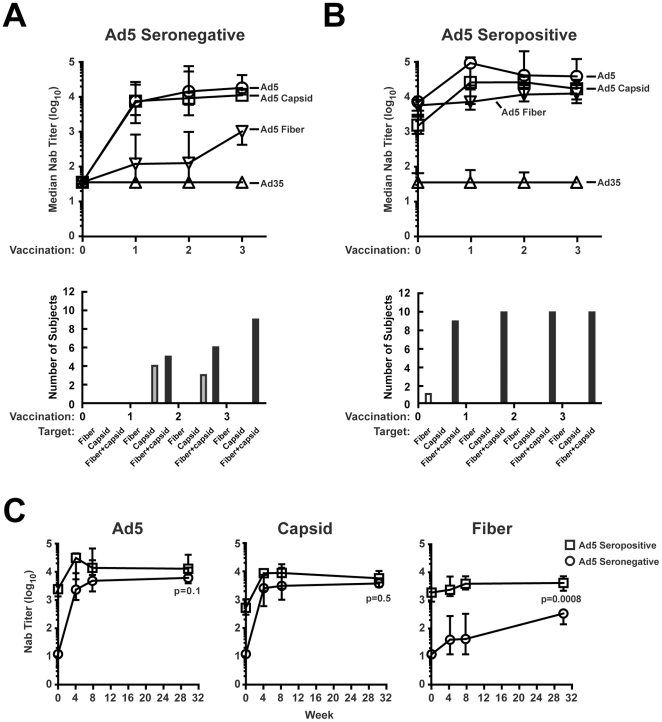
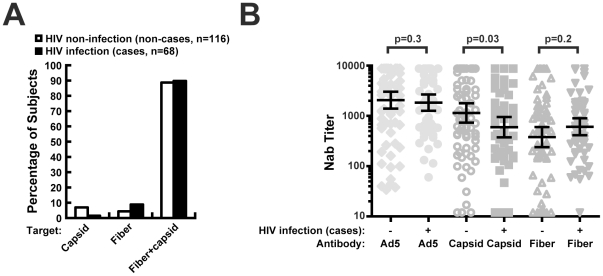
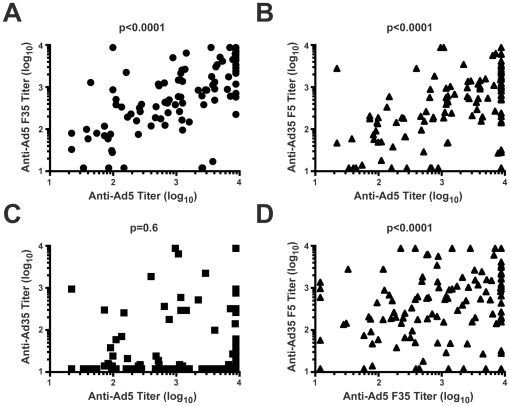
Ad seropositivity in the Step trial volunteers was analyzed using chimeric rAd5/35 vectors to characterize their specificity for Ad5 fiber and non-fiber external (capsid) proteins. Immune responses and HIV seropositivity were correlated with the specificity of Ad5-neutralizing antibodies. Neutralizing antibodies induced by the vaccine in Ad5 seronegative subjects were directed preferentially to Ad5 capsid proteins, although some fiber-neutralizing antibodies could be detected. Pre-vaccination Ad5 serostatus did not affect the capsid-directed response after three vaccinations. In contrast, anti-fiber antibody titers were significantly higher in volunteers who were Ad5 seropositive prior to vaccination. Those Ad5 seropositive subjects who generated anti-capsid responses showed a marked reduction in vaccine-induced CD8 responses. Unexpectedly, anti-vector immunity differed qualitatively in Ad5 seropositive participants who became HIV-1 infected compared to uninfected case controls; Ad5 seropositive participants who later acquired HIV had lower neutralizing antibodies to capsid. Moreover, Ad35 seropositivity was decreased in HIV-infected subjects compared with uninfected case controls, while seroprevalence for other serotypes including Ad14, Ad28 and Ad41 was similar in both groups.
Together, these findings suggest that the case subjects were less immunologically responsive prior to infection. Subjects infected during the Step trial had qualitative differences in immunity that increased their risk of HIV-1 infection independent of vaccination.
Step 试验提出了一种可能性,即预先存在 Ad5 中和抗体的未割包皮男性在接种疫苗后感染 HIV 的风险增加。因此,了解人类对 Ad 的血清阳性率对于艾滋病疫苗的开发至关重要。在这里,我们分析了不同 Ad5 特异性中和抗体对免疫功能和临床结果的影响。
使用嵌合 rAd5/35 载体分析 Step 试验志愿者中的 Ad 血清阳性率,以表征它们对 Ad5 纤维和非纤维外部(衣壳)蛋白的特异性。免疫反应和 HIV 血清阳性率与 Ad5 中和抗体的特异性相关。在 Ad5 血清阴性的受试者中,疫苗诱导的中和抗体主要针对 Ad5 衣壳蛋白,尽管可以检测到一些纤维中和抗体。在三次接种后,接种前的 Ad5 血清状态并不影响针对衣壳的反应。相比之下,在接种前 Ad5 血清阳性的志愿者中,抗纤维抗体滴度显著更高。产生抗衣壳反应的 Ad5 血清阳性受试者表现出疫苗诱导的 CD8 反应明显减少。出乎意料的是,与未感染的病例对照相比,在接种后感染 HIV 的 Ad5 血清阳性参与者中,抗载体免疫在质量上存在差异;随后感染 HIV 的 Ad5 血清阳性参与者对衣壳的中和抗体较低。此外,与未感染的病例对照相比,感染 HIV 的受试者中 Ad35 血清阳性率降低,而其他血清型(包括 Ad14、Ad28 和 Ad41)的血清阳性率在两组之间相似。
这些发现表明,病例受试者在感染前的免疫反应较低。在 Step 试验中感染的受试者在免疫方面存在差异,这些差异增加了他们感染 HIV-1 的风险,而与疫苗接种无关。