Department of Pharmacology, The Cancer Institute of New Jersey, Robert Wood Johnson Medical School, University of Medicine and Dentistry of New Jersey, New Brunswick, New Jersey, United States of America.
PLoS One. 2012;7(4):e35036. doi: 10.1371/journal.pone.0035036. Epub 2012 Apr 4.
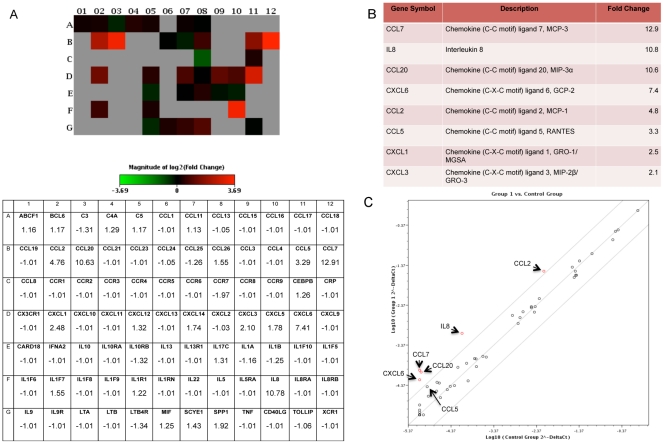
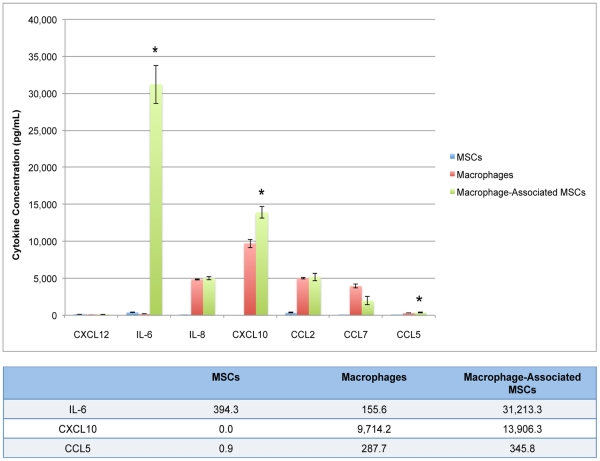
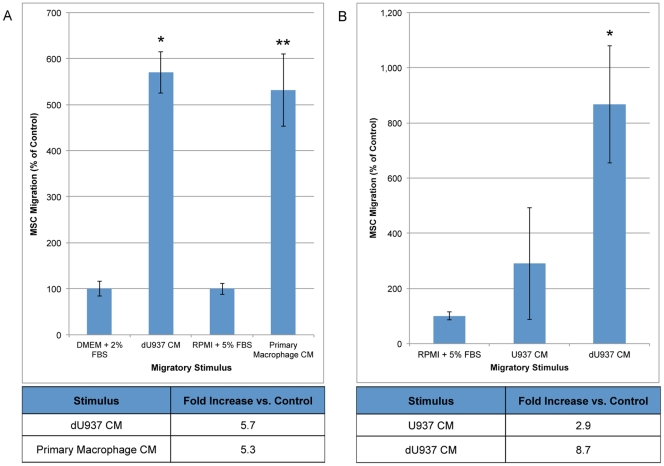
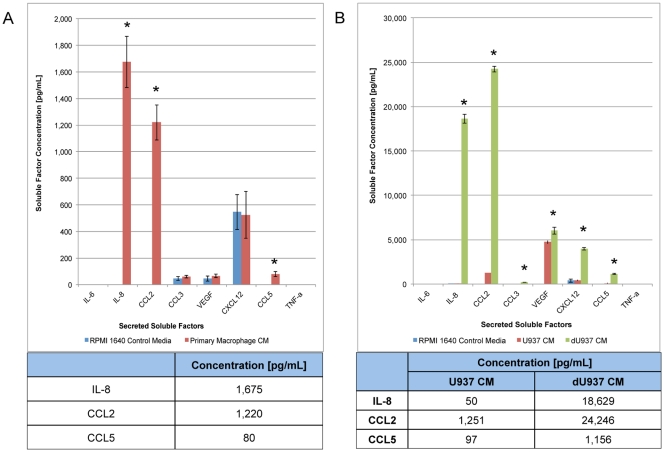
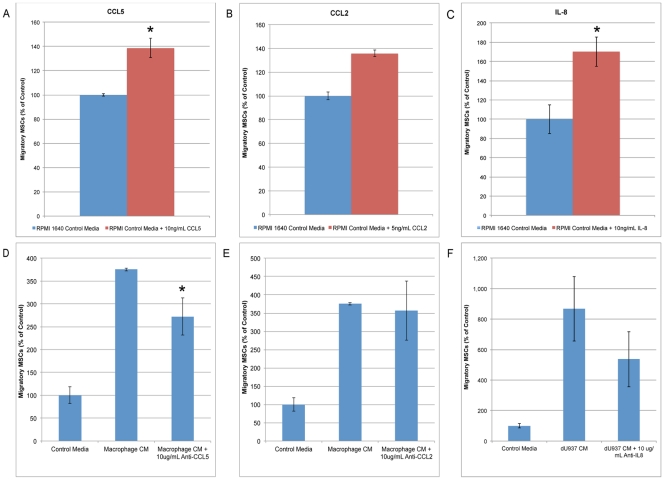
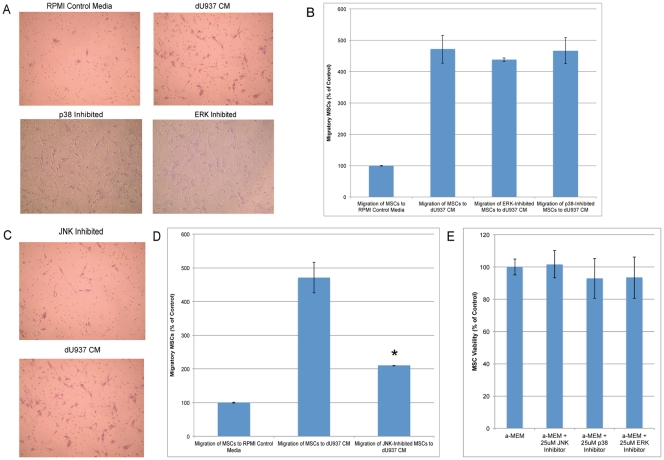
Mesenchymal stem cells (MSCs) exhibit tropism for sites of tissue injury and tumors. However, the influence of the microenvironment on MSC phenotype and localization remains incompletely characterized. In this study, we begin to define a macrophage-induced MSC phenotype. These MSCs secrete interleukin-6 (IL-6), CCL5, and interferon gamma-induced protein-10 (CXCL10) and exhibit increased mobility in response to multiple soluble factors produced by macrophages including IL-8, CCL2, and CCL5. The pro-migratory phenotype is dependent on activation of a c-Jun N-terminal kinase (JNK) pathway. This work begins to identify the influence of macrophages on MSC biology. These interactions are likely to play an important role in the tissue inflammatory response and may provide insight into the migratory potential of MSCs in inflammation and tissue injury.
间充质干细胞 (MSCs) 对组织损伤和肿瘤部位具有趋向性。然而,微环境对 MSC 表型和定位的影响仍不完全清楚。在这项研究中,我们开始定义巨噬细胞诱导的 MSC 表型。这些 MSC 分泌白细胞介素-6 (IL-6)、CCL5 和干扰素 γ 诱导蛋白-10 (CXCL10),并在对包括 IL-8、CCL2 和 CCL5 在内的多种由巨噬细胞产生的可溶性因子的反应中表现出更高的迁移能力。这种促迁移表型依赖于 c-Jun N 末端激酶 (JNK) 途径的激活。这项工作开始确定巨噬细胞对 MSC 生物学的影响。这些相互作用可能在组织炎症反应中发挥重要作用,并可能为炎症和组织损伤中 MSC 的迁移潜力提供见解。