Department of Neurology, Children's Hospital Boston, 300 Longwood Avenue, Boston, MA 02115, USA.
Neuron. 2012 Apr 12;74(1):41-8. doi: 10.1016/j.neuron.2012.03.010.
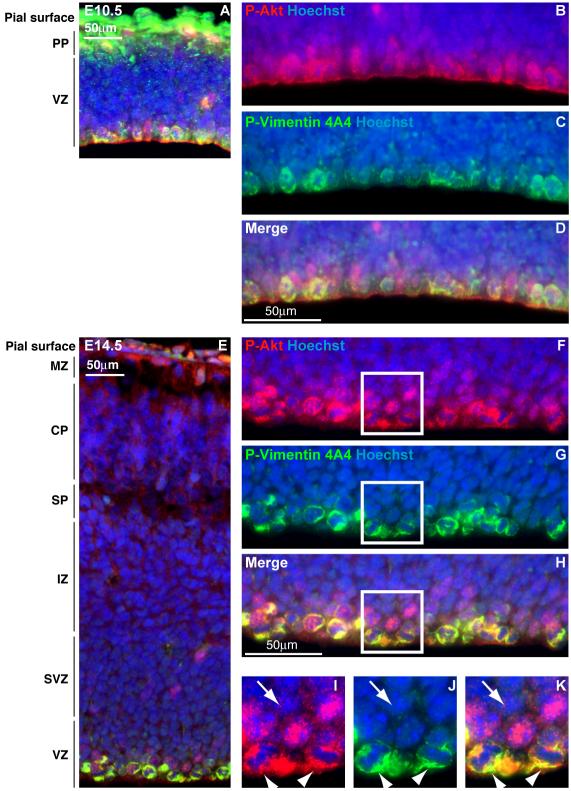
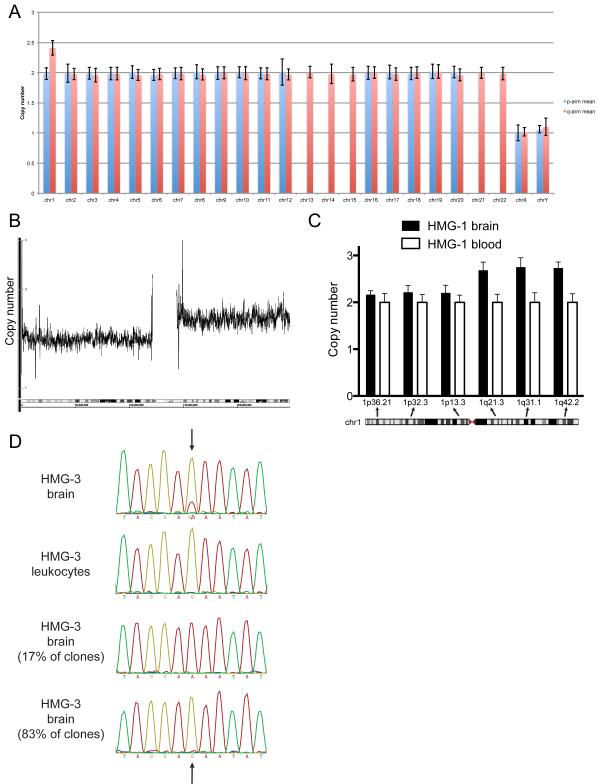
Hemimegalencephaly (HMG) is a developmental brain disorder characterized by an enlarged, malformed cerebral hemisphere, typically causing epilepsy that requires surgical resection. We studied resected HMG tissue to test whether the condition might reflect somatic mutations affecting genes critical to brain development. We found that two out of eight HMG samples showed trisomy of chromosome 1q, which encompasses many genes, including AKT3, a gene known to regulate brain size. A third case showed a known activating mutation in AKT3 (c.49G→A, creating p.E17K) that was not present in the patient's blood cells. Remarkably, the E17K mutation in AKT3 is exactly paralogous to E17K mutations in AKT1 and AKT2 recently discovered in somatic overgrowth syndromes. We show that AKT3 is the most abundant AKT paralog in the brain during neurogenesis and that phosphorylated AKT is abundant in cortical progenitor cells. Our data suggest that somatic mutations limited to the brain could represent an important cause of complex neurogenetic disease.
巨脑回畸形(HMG)是一种以大脑半球增大、畸形为特征的发育性脑疾病,通常会引发需要手术切除的癫痫。我们研究了切除的 HMG 组织,以测试这种病症是否可能反映影响大脑发育关键基因的体细胞突变。我们发现,8 个 HMG 样本中有 2 个显示 1q 染色体三体性,该染色体包含许多基因,包括 AKT3,这是一个已知调节大脑大小的基因。第三个病例显示 AKT3 中存在已知的激活突变(c.49G→A,导致 p.E17K),而该突变不存在于患者的血细胞中。值得注意的是,AKT3 中的 E17K 突变与最近在体细胞过度生长综合征中发现的 AKT1 和 AKT2 的 E17K 突变完全类似。我们表明,在神经发生过程中,AKT3 是大脑中最丰富的 AKT 同源物,磷酸化 AKT 在皮质祖细胞中丰富存在。我们的数据表明,仅限于大脑的体细胞突变可能是复杂神经遗传疾病的一个重要原因。