Department of Clinical Chemistry, Centre for Laboratory Medicine, Tampere University Hospital, and Medical School, University of Tampere, Tampere, Finland.
PLoS One. 2012;7(4):e33787. doi: 10.1371/journal.pone.0033787. Epub 2012 Apr 11.
Atherosclerosis is a complex disease with hundreds of genes influencing its progression. In addition, the phenotype of the disease varies significantly depending on the arterial bed.
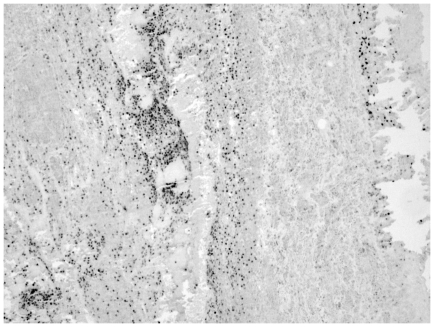
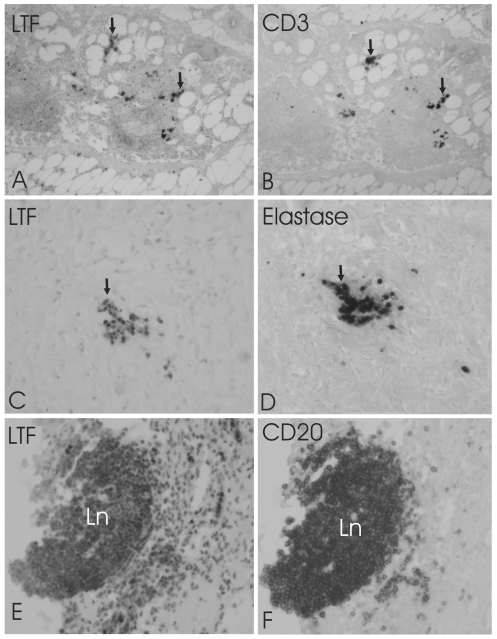
METHODOLOGY/PRINCIPAL FINDINGS: We characterized the genes generally involved in human advanced atherosclerotic (AHA type V-VI) plaques in carotid and femoral arteries as well as aortas from 24 subjects of Tampere Vascular study and compared the results to non-atherosclerotic internal thoracic arteries (n=6) using genome-wide expression array and QRT-PCR. In addition we determined genes that were typical for each arterial plaque studied. To gain a comprehensive insight into the pathologic processes in the plaques we also analyzed pathways and gene sets dysregulated in this disease using gene set enrichment analysis (GSEA). According to the selection criteria used (>3.0 fold change and p-value <0.05), 235 genes were up-regulated and 68 genes down-regulated in the carotid plaques, 242 genes up-regulated and 116 down-regulated in the femoral plaques and 256 genes up-regulated and 49 genes down-regulated in the aortic plaques. Nine genes were found to be specifically induced predominantly in aortic plaques, e.g., lactoferrin, and three genes in femoral plaques, e.g., chondroadherin, whereas no gene was found to be specific for carotid plaques. In pathway analysis, a total of 28 pathways or gene sets were found to be significantly dysregulated in atherosclerotic plaques (false discovery rate [FDR] <0.25).
This study describes comprehensively the gene expression changes that generally prevail in human atherosclerotic plaques. In addition, site specific genes induced only in femoral or aortic plaques were found, reflecting that atherosclerotic process has unique features in different vascular beds.
动脉粥样硬化是一种复杂的疾病,有数百个基因影响其进展。此外,疾病的表型因动脉床而异。
方法/主要发现:我们对来自 24 名坦佩雷血管研究受试者的颈动脉和股动脉以及主动脉中的人类晚期动脉粥样硬化(AHA 类型 V-VI)斑块中普遍涉及的基因进行了特征描述,并使用全基因组表达谱和 QRT-PCR 将结果与非动脉粥样硬化的内乳动脉(n=6)进行了比较。此外,我们确定了每种研究动脉斑块的典型基因。为了全面了解斑块中的病理过程,我们还使用基因集富集分析(GSEA)分析了该疾病中失调的途径和基因集。根据使用的选择标准(>3.0 倍变化和 p 值<0.05),在颈动脉斑块中上调了 235 个基因,下调了 68 个基因;在股动脉斑块中上调了 242 个基因,下调了 116 个基因;在主动脉斑块中上调了 256 个基因,下调了 49 个基因。有 9 个基因主要在主动脉斑块中特异性诱导,例如乳铁蛋白,在股动脉斑块中有 3 个基因,例如软骨粘连蛋白,而在颈动脉斑块中没有发现特异性基因。在通路分析中,总共发现 28 条通路或基因集在动脉粥样硬化斑块中明显失调(错误发现率 [FDR]<0.25)。
本研究全面描述了普遍存在于人类动脉粥样硬化斑块中的基因表达变化。此外,还发现了仅在股动脉或主动脉斑块中诱导的特定基因,反映了动脉粥样硬化过程在不同血管床中具有独特的特征。