Department of Molecular and Cell Biology and Helen Wills Neuroscience Institute, University of California Berkeley, Berkeley, CA 94720, USA.
Cell Rep. 2012 Mar 29;1(3):234-40. doi: 10.1016/j.celrep.2012.01.003.
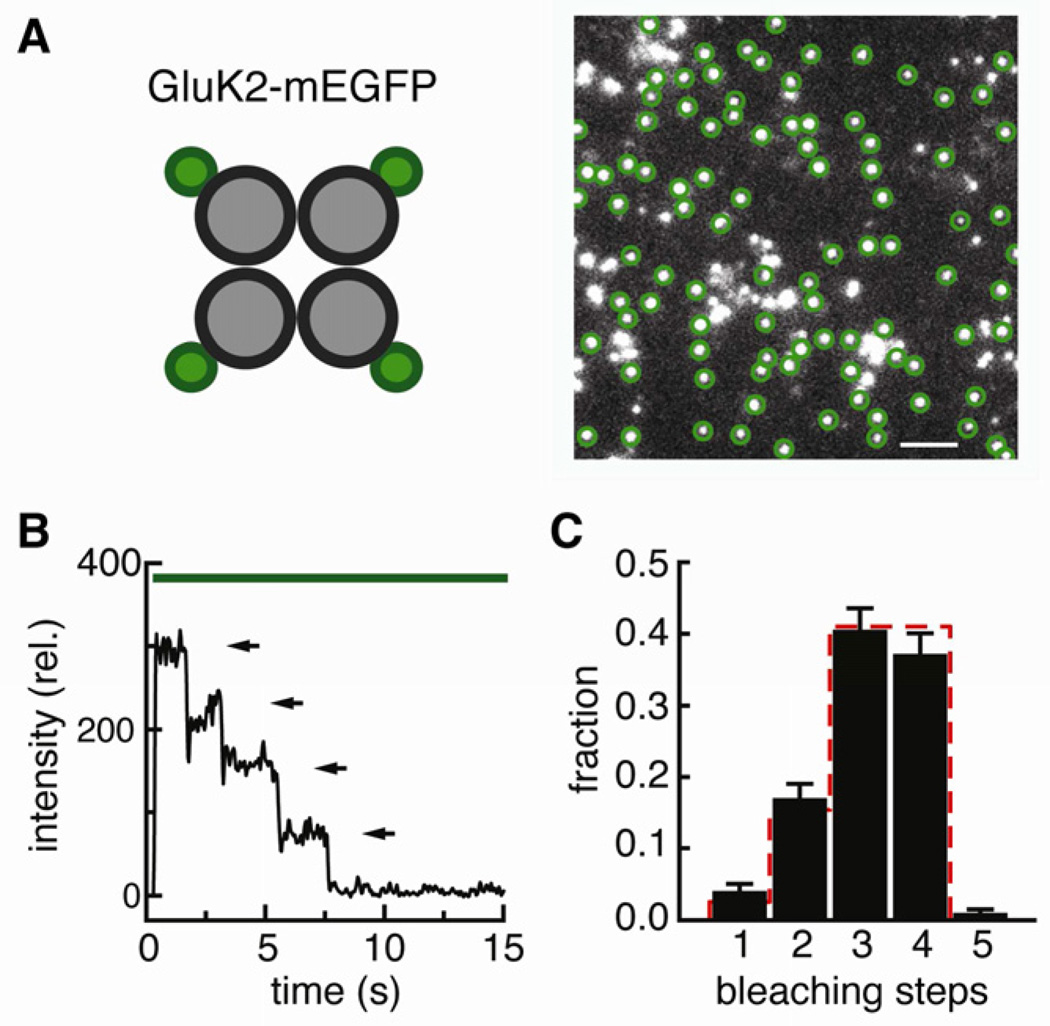
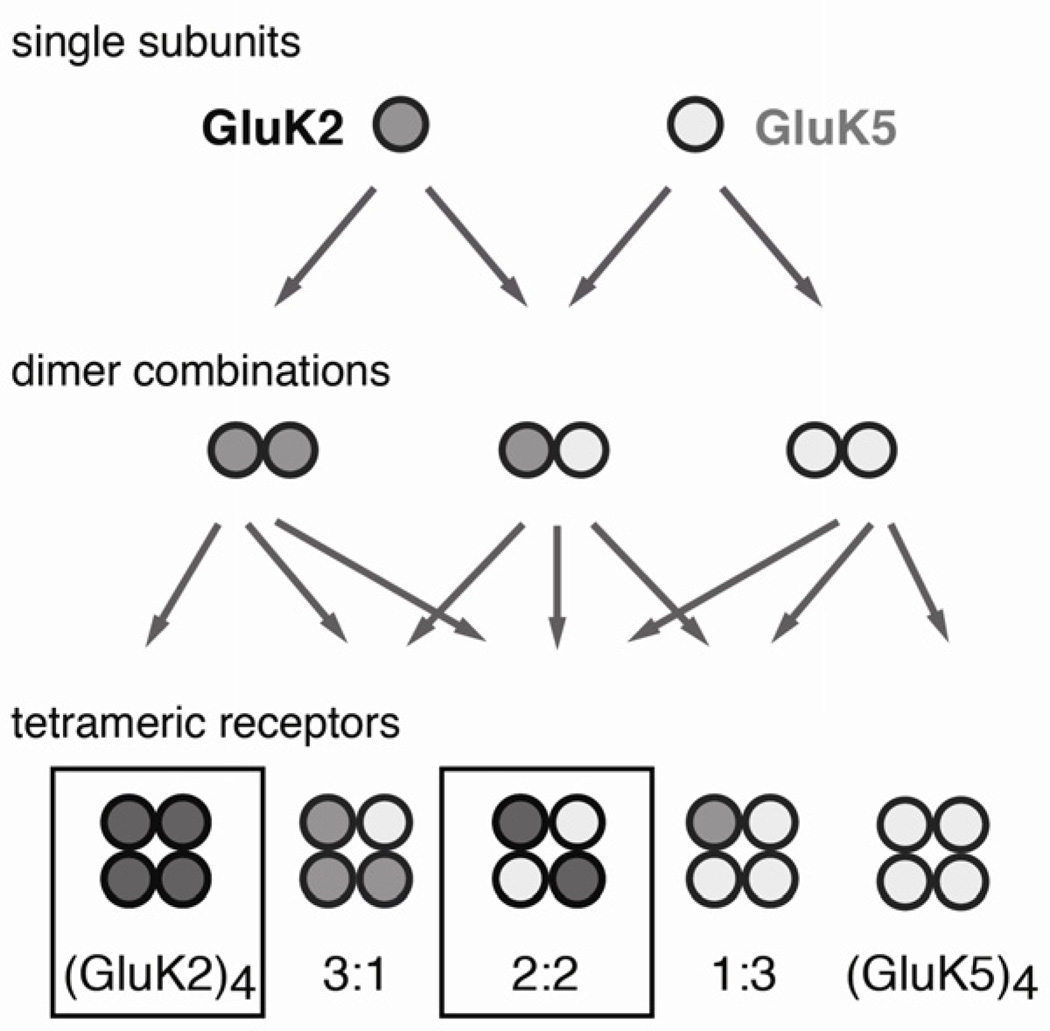
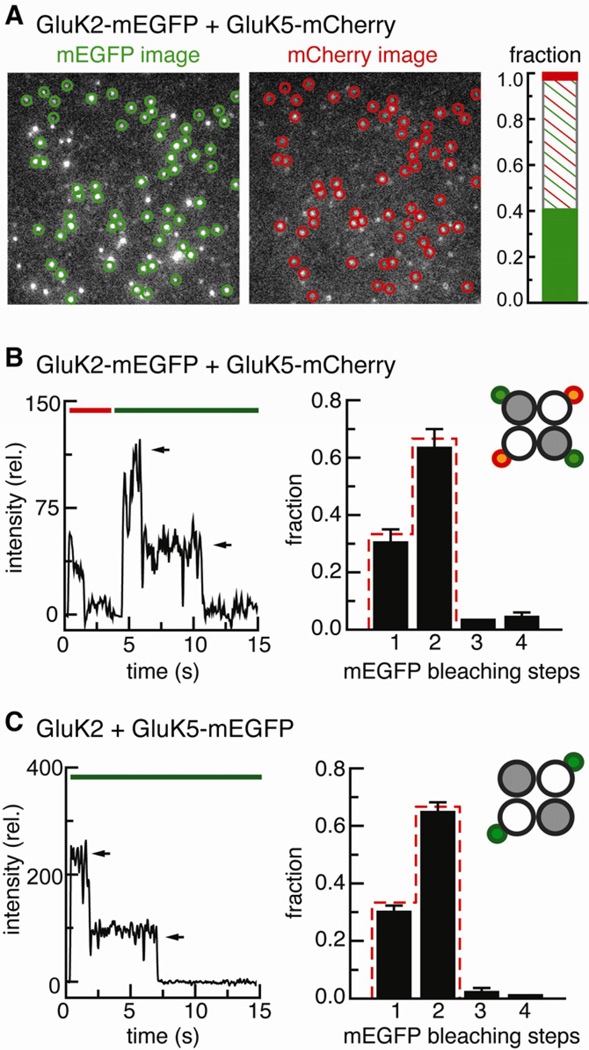
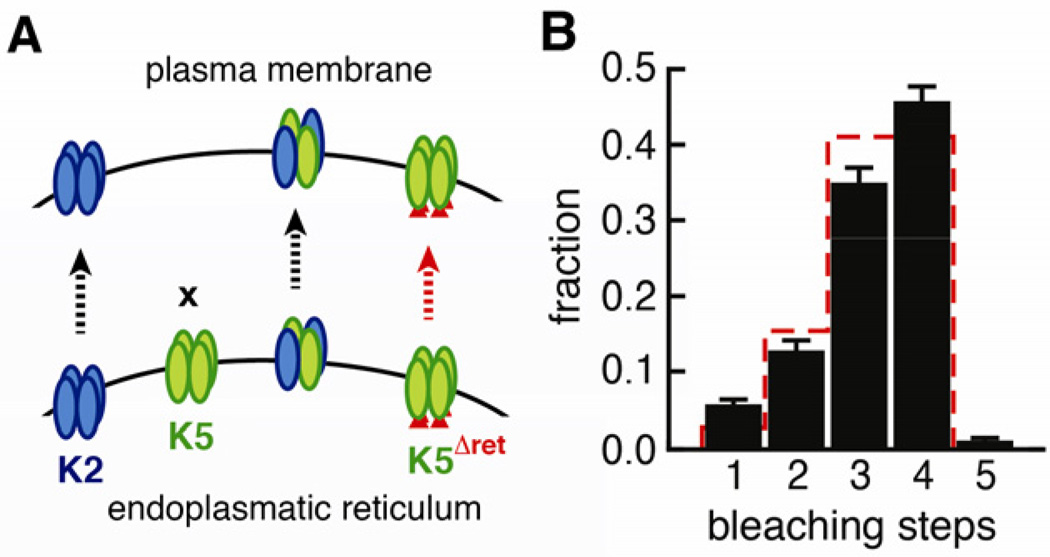
Ionotropic glutamate receptors assemble as homo- or heterotetramers. One well-studied heteromeric complex is formed by the kainate receptor subunits GluK2 and GluK5. Retention motifs prevent trafficking of GluK5 homomers to the plasma membrane, but coassembly with GluK2 yields functional heteromeric receptors. Additional control over GluK2/GluK5 assembly seems to be exerted by the aminoterminal domains, which preferentially assemble into heterodimers as isolated domains. However,the stoichiometry of the full-length GluK2/GluK5 receptor complex has yet to be determined, as is the case for all non-NMDA glutamate receptors. Here, we address this question, using a single-molecule imaging technique that enables direct counting of the number of each GluK subunit type in homomeric and heteromeric receptors in the plasma membranes of live cells. We show that GluK2 and GluK5 assemble with 2:2 stoichiometry. This is an important step toward understanding the assembly mechanism, architecture, and functional consequences of heteromer formation in ionotropic glutamate receptors.
离子型谷氨酸受体以同型或异型四聚体的形式组装。一个研究得很好的异型复合物是由 kainate 受体亚基 GluK2 和 GluK5 组成的。保留基序阻止 GluK5 同源体向质膜转运,但与 GluK2 共组装可产生功能性异型受体。氨基末端结构域似乎对 GluK2/GluK5 组装有额外的控制作用,这些结构域作为分离的结构域优先组装成异二聚体。然而,全长 GluK2/GluK5 受体复合物的化学计量比尚未确定,所有非 NMDA 谷氨酸受体都是如此。在这里,我们使用一种单分子成像技术来解决这个问题,该技术可以直接计数活细胞质膜中同源和异型受体中每种 GluK 亚基类型的数量。我们表明 GluK2 和 GluK5 以 2:2 的化学计量比组装。这是理解离子型谷氨酸受体中异质体形成的组装机制、结构和功能后果的重要一步。