Department of Microbiology and Immunology, College of Veterinary Medicine, Cornell University, Ithaca, NY 14853, USA.
J Immunol. 2012 Jun 1;188(11):5713-22. doi: 10.4049/jimmunol.1200545. Epub 2012 Apr 23.
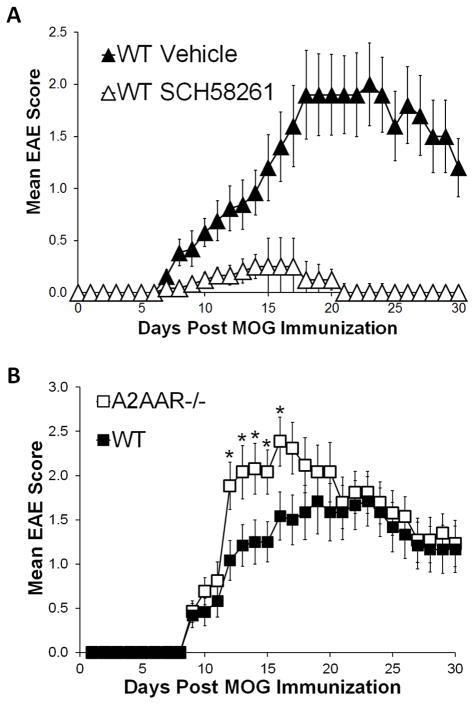
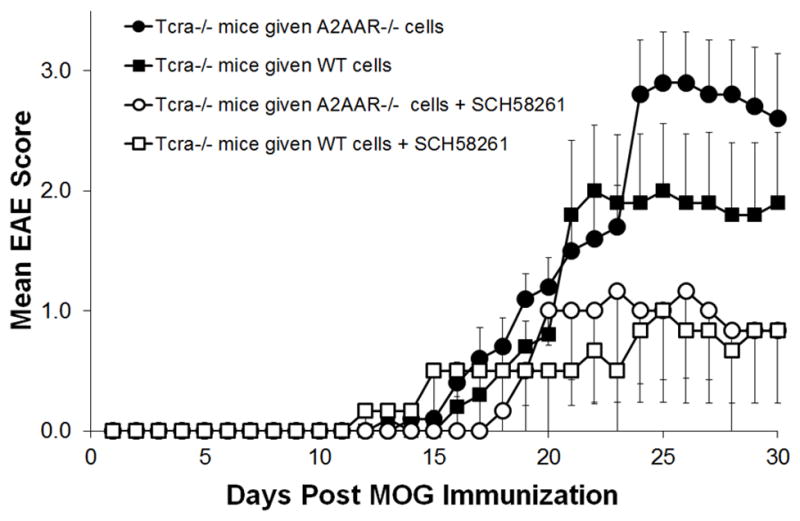
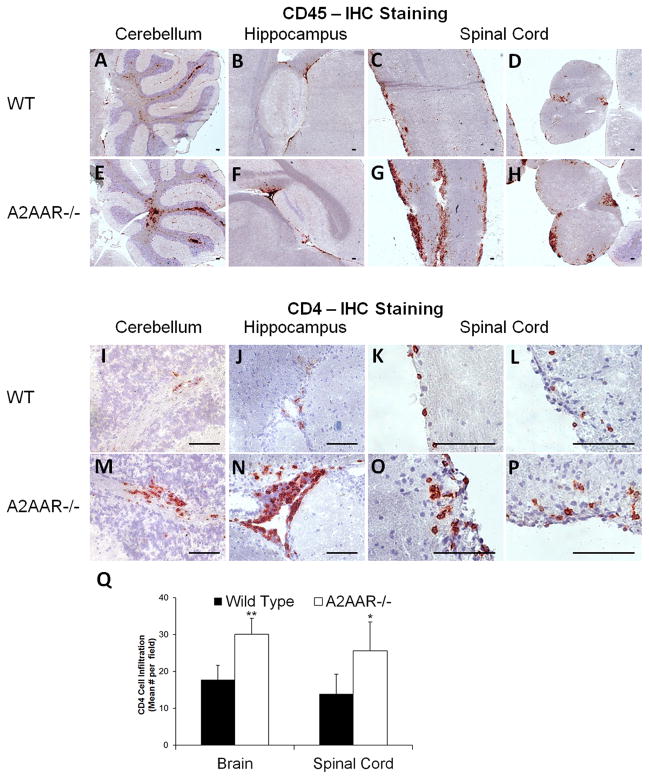
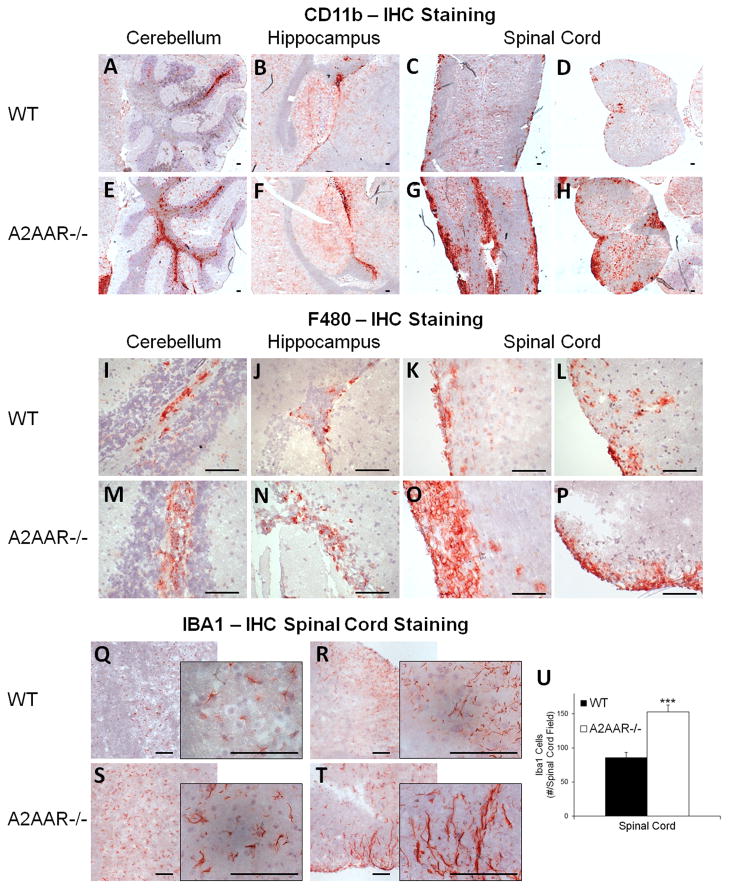
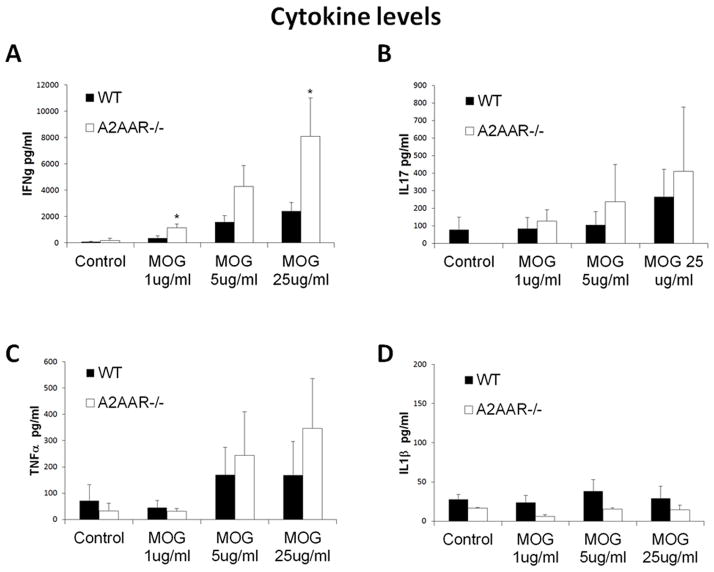
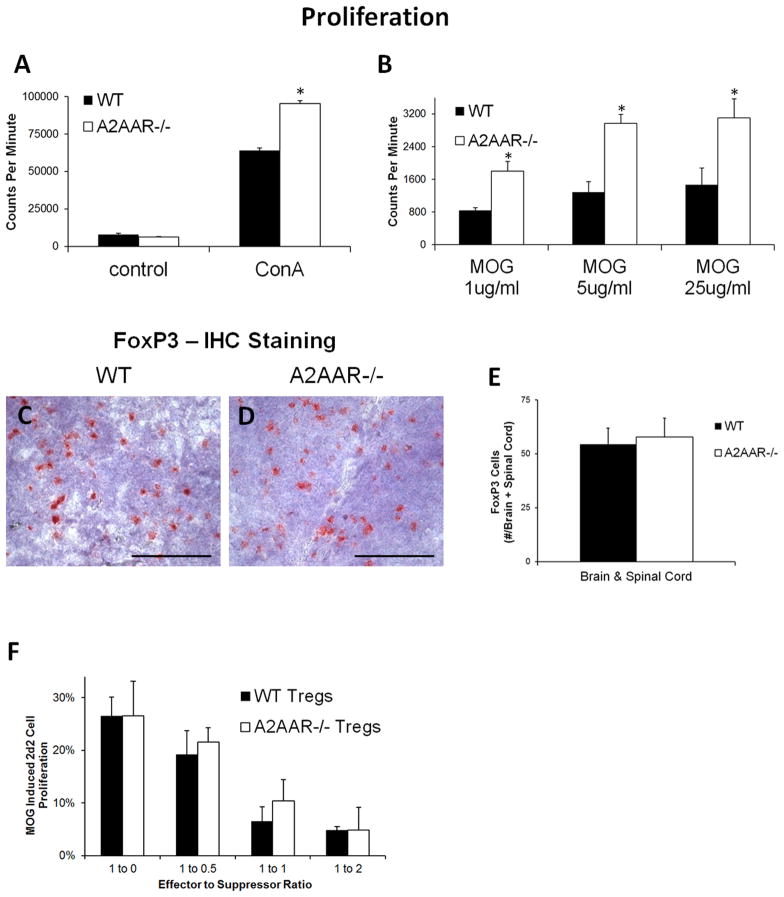
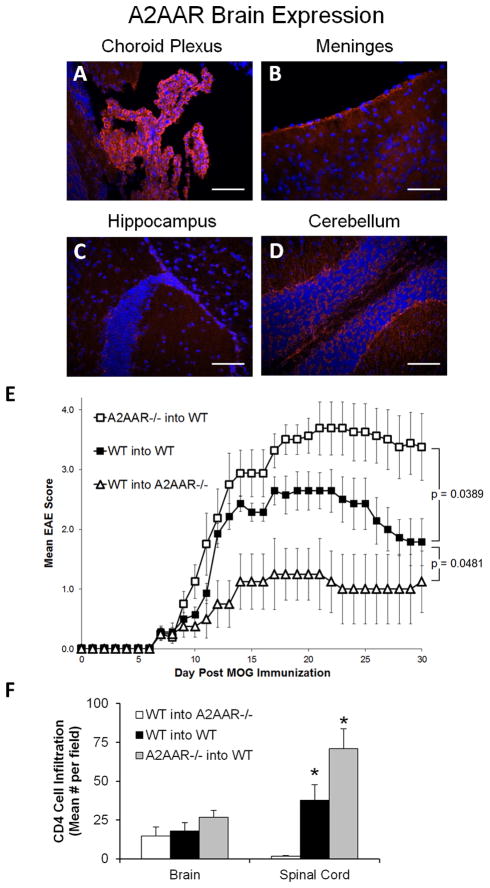
Extracellular adenosine has an important role in regulating the severity of inflammation during an immune response. Although there are four adenosine receptor (AR) subtypes, the A2AAR is both highly expressed on lymphocytes and known as a prime mediator of adenosine's anti-inflammatory effects. To define the importance of A2AAR signaling during neuroinflammatory disease progression, we used the experimental autoimmune encephalomyelitis (EAE) animal model for multiple sclerosis. In EAE induction experiments, A2AAR antagonist treatment protected mice from disease development and its associated CNS lymphocyte infiltration. However, A2AAR(-/-) mice developed a more severe acute EAE phenotype characterized by more proinflammatory lymphocytes and activated microglia/macrophages. Interestingly, very high levels of A2AAR were expressed on the choroid plexus, a well-established CNS lymphocyte entry point. To determine the contribution of A2AAR signaling in lymphocytes and the CNS during EAE, we used bone marrow chimeric mice. Remarkably, A2AAR(-/-) donor hematopoietic cells potentiated severe EAE, whereas lack of A2AAR expression on nonhematopoietic cells protected against disease development. Although no defect in the suppressive ability of A2AAR(-/-) regulatory T cells was observed, A2AAR(-/-) lymphocytes were shown to proliferate more and produced more IFN-γ following stimulation. Despite this more proinflammatory phenotype, A2AAR antagonist treatment still protected against EAE when A2AAR(-/-) lymphocytes were adoptively transferred to T cell-deficient A2AAR(+/+) mice. These results indicate that A2AAR expression on nonimmune cells (likely in the CNS) is required for efficient EAE development, while A2AAR lymphocyte expression is essential for limiting the severity of the inflammatory response.
细胞外腺苷在调节免疫反应过程中炎症的严重程度方面起着重要作用。虽然有四种腺苷受体 (AR) 亚型,但 A2AAR 在淋巴细胞上高度表达,并且是腺苷抗炎作用的主要介导物。为了确定 A2AAR 信号在神经炎症性疾病进展过程中的重要性,我们使用了多发性硬化症的实验性自身免疫性脑脊髓炎 (EAE) 动物模型。在 EAE 诱导实验中,A2AAR 拮抗剂治疗可防止小鼠发生疾病发展及其相关的中枢神经系统淋巴细胞浸润。然而,A2AAR(-/-) 小鼠表现出更严重的急性 EAE 表型,其特征是具有更多的促炎性淋巴细胞和活化的小胶质细胞/巨噬细胞。有趣的是,A2AAR 在脉络丛上表达水平非常高,脉络丛是中枢神经系统淋巴细胞进入的既定途径。为了确定 A2AAR 信号在 EAE 期间淋巴细胞和中枢神经系统中的作用,我们使用了骨髓嵌合小鼠。值得注意的是,A2AAR(-/-) 供体造血细胞增强了严重的 EAE,而缺乏非造血细胞上的 A2AAR 表达则可防止疾病发展。尽管未观察到 A2AAR(-/-) 调节性 T 细胞抑制能力的缺陷,但 A2AAR(-/-) 淋巴细胞在刺激后显示出更多的增殖和产生更多的 IFN-γ。尽管表现出更促炎性表型,但在将 A2AAR(-/-) 淋巴细胞过继转移到 T 细胞缺陷型 A2AAR(+/+) 小鼠时,A2AAR 拮抗剂治疗仍可防止 EAE。这些结果表明,非免疫细胞(可能在中枢神经系统中)上的 A2AAR 表达对于有效的 EAE 发展是必需的,而 A2AAR 淋巴细胞表达对于限制炎症反应的严重程度是必不可少的。