Department of Human Biology, Faculty of Health Sciences, University of Cape Town, 7925 Cape Town, South Africa.
Mol Biol Cell. 2012 Jun;23(12):2362-72. doi: 10.1091/mbc.E11-09-0790. Epub 2012 Apr 25.
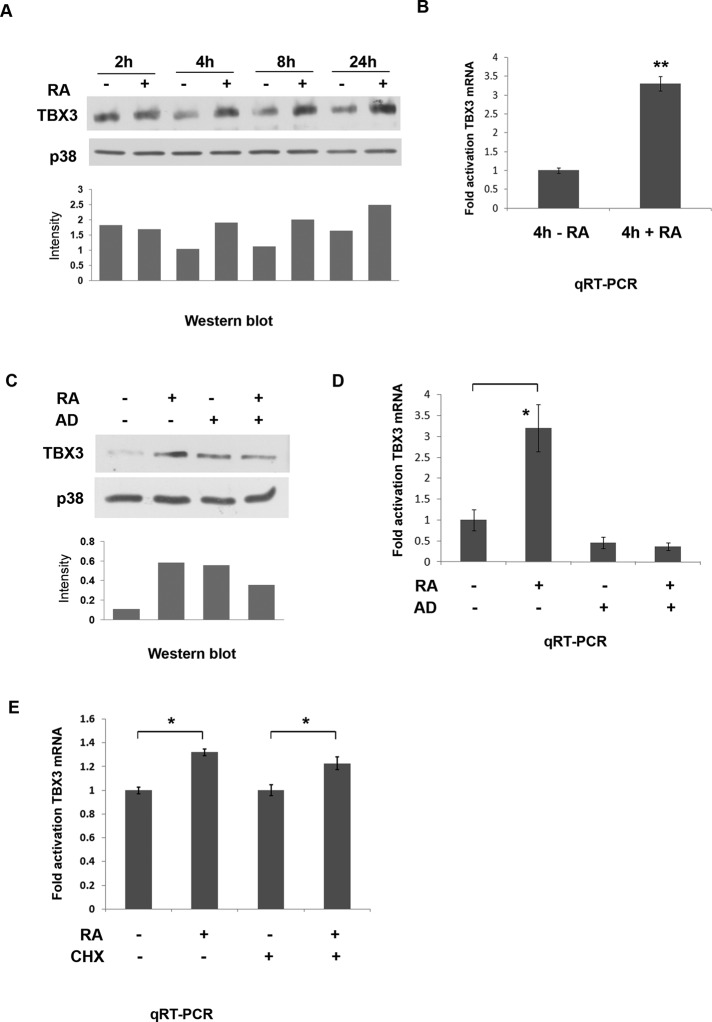
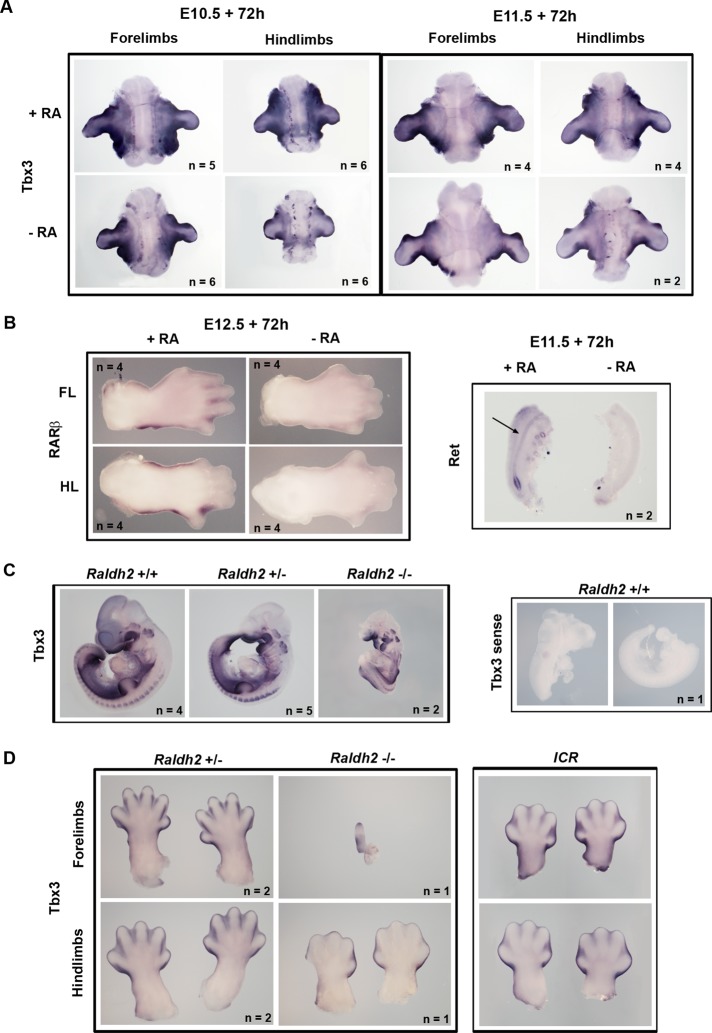
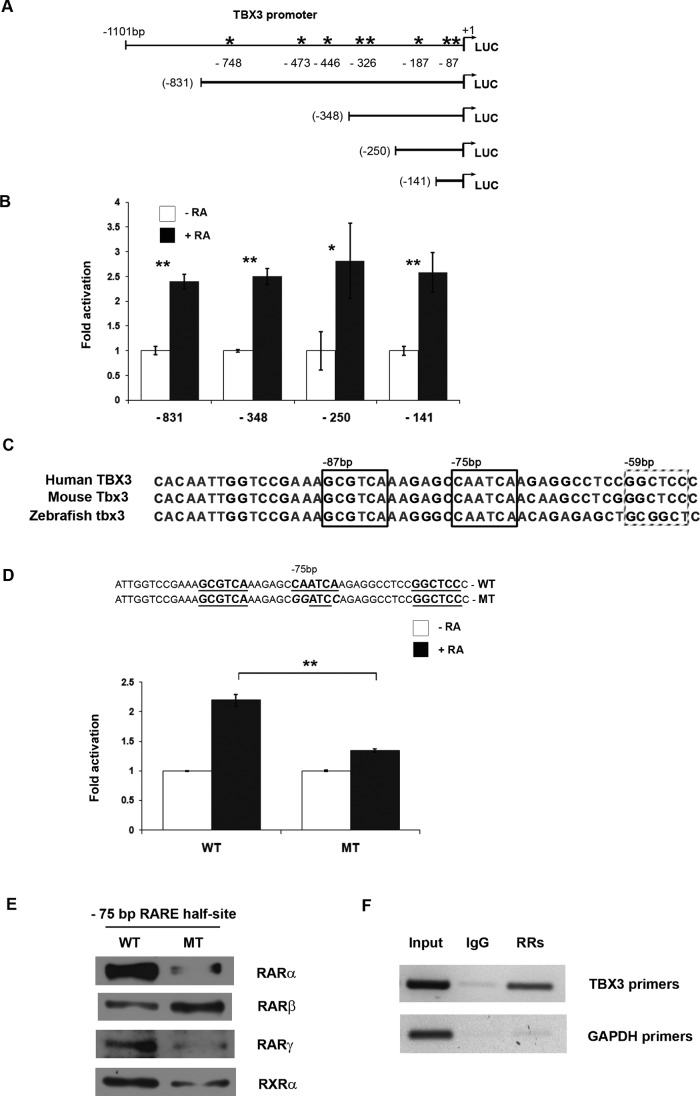
TBX3, a member of the T-box transcription factor gene family, is a transcriptional repressor that is required for the development of the heart, limbs, and mammary glands. Mutations in TBX3 that result in reduced functional protein lead to ulnar-mammary syndrome, a developmental disorder characterized by limb, mammary gland, tooth, and genital abnormalities. Increased levels of TBX3 have been shown to contribute to the oncogenic process, and TBX3 is overexpressed in several cancers, including breast cancer, liver cancer, and melanoma. Despite its important role in development and postnatal life, little is known about the signaling pathways that modulate TBX3 expression. Here we show, using in vitro and in vivo assays, that retinoic acid (RA) activates endogenous TBX3 expression, which is mediated by an RA-receptor complex directly binding and activating the TBX3 promoter, and we provide evidence that this regulation may be functionally relevant in mouse embryonic limb development. Our data identify TBX3 as a direct target of the RA signaling pathway and extend our understanding of the role and regulation of TBX3 in limb development.
TBX3 是 T 盒转录因子基因家族的成员,是一种转录抑制因子,对于心脏、四肢和乳腺的发育是必需的。导致功能性蛋白减少的 TBX3 突变会导致上肢-乳腺综合征,这是一种以肢体、乳腺、牙齿和生殖器异常为特征的发育障碍。已经表明 TBX3 水平的增加有助于致癌过程,并且 TBX3 在包括乳腺癌、肝癌和黑色素瘤在内的几种癌症中过度表达。尽管它在发育和出生后生活中具有重要作用,但对于调节 TBX3 表达的信号通路知之甚少。在这里,我们使用体外和体内测定表明,视黄酸(RA)激活内源性 TBX3 表达,这是由 RA 受体复合物直接结合并激活 TBX3 启动子介导的,并且我们提供证据表明这种调节在小鼠胚胎肢体发育中可能具有功能相关性。我们的数据将 TBX3 鉴定为 RA 信号通路的直接靶标,并扩展了我们对 TBX3 在肢体发育中的作用和调节的理解。