Department of Zoology and Animal Cell Biology, Faculty of Science and Technology, University of the Basque Country UPV/EHU, Sarriena z.g., Leioa, The Basque Country.
PLoS One. 2012;7(4):e35692. doi: 10.1371/journal.pone.0035692. Epub 2012 Apr 24.
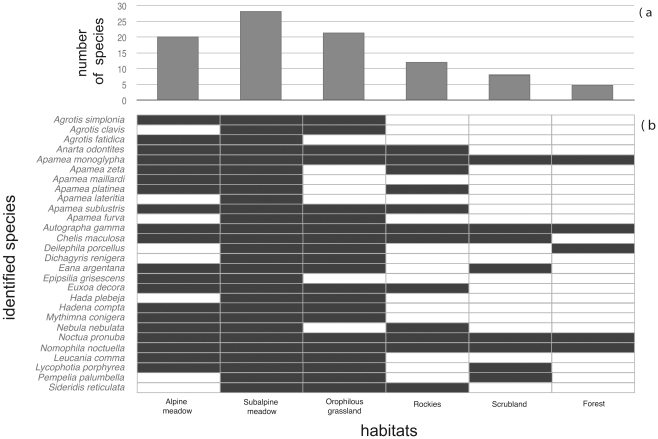
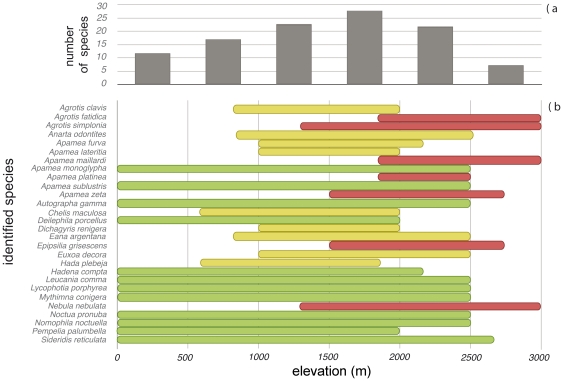
Molecular analysis of diet overcomes the considerable limitations of traditional techniques for identifying prey remains in bat faeces. We collected faeces from individual Mountain Long-eared Bats Plecotus macrobullaris trapped using mist nets during the summers of 2009 and 2010 in the Pyrenees. We analysed their diet using DNA mini-barcodes to identify prey species. In addition, we inferred some basic features of the bat's foraging ecology that had not yet been addressed. P. macrobullaris fed almost exclusively on moths (97.8%). As prey we detected one dipteran genus (Tipulidae) and 29 moth taxa: 28 were identified at species level (23 Noctuidae, 1 Crambidae, 1 Geometridae, 1 Pyralidae, 1 Sphingidae, 1 Tortricidae), and one at genus level (Rhyacia sp., Noctuidae). Known ecological information about the prey species allowed us to determine that bats had foraged at elevations between 1,500 and 2,500 m amsl (above mean sea level), mostly in subalpine meadows, followed by other open habitats such as orophilous grasslands and alpine meadows. No forest prey species were identified in the diet. As 96.4% of identified prey species were tympanate moths and no evidence of gleaning behaviour was revealed, we suggest P. macrobullaris probably forages by aerial hawking using faint echolocation pulses to avoid detection by hearing moths. As we could identify 87.8% of the analysed sequences (64.1% of the MOTUs, Molecular Operational Taxonomic Units) at species level, we conclude that DNA mini-barcodes are a very useful tool to analyse the diet of moth-specialist bats.
分子分析饮食克服了传统技术在鉴定蝙蝠粪便中猎物残留物方面的重大局限性。我们在 2009 年和 2010 年夏季使用网捕法收集了个体山蝠(Plecotus macrobullaris)的粪便。我们使用 DNA 迷你条码分析它们的饮食,以鉴定猎物物种。此外,我们推断了一些蝙蝠觅食生态学的基本特征,这些特征尚未得到解决。P. macrobullaris 几乎完全以蛾类(97.8%)为食。作为猎物,我们检测到一个双翅目属(毛蚊科)和 29 种蛾类:28 种在种水平上被鉴定(23 种夜蛾科、1 种麦蛾科、1 种尺蛾科、1 种螟蛾科、1 种凤蝶科、1 种卷蛾科),1 种在属水平上被鉴定(Rhyacia sp.,夜蛾科)。已知猎物物种的生态信息使我们能够确定蝙蝠在海拔 1500 至 2500 米(海拔以上)的地区觅食,主要在亚高山草甸,其次是其他开放栖息地,如石生草原和高山草甸。饮食中没有森林猎物物种。由于 96.4%的鉴定猎物物种是鼓膜状的蛾类,并且没有显示出觅食行为的证据,我们建议 P. macrobullaris 可能通过使用微弱的回声定位脉冲进行空中捕食来觅食,以避免被听觉上的蛾类察觉。由于我们能够在种水平上鉴定出分析序列的 87.8%(MOTUs,分子操作分类单位的 64.1%),我们得出结论,DNA 迷你条码是分析食蛾蝙蝠饮食的非常有用的工具。