Westermaier Thomas, Stetter Christian, Raslan Furat, Vince Giles Hamilton, Ernestus Ralf-Ingo
Department of Neurosurgery, University of Würzburg, Josef-Schneider-Str, 11, Würzburg, 97080, Germany.
Exp Transl Stroke Med. 2012 Jul 13;4(1):8. doi: 10.1186/2040-7378-4-8.
Severe brain edema is observed in a number of patients suffering from subarachnoid hemorrhage (SAH). Little is known about its pathogenesis and time-course in the first hours after SAH. This study was performed to investigate the development of brain edema and its correlation with brain perfusion after experimental SAH.
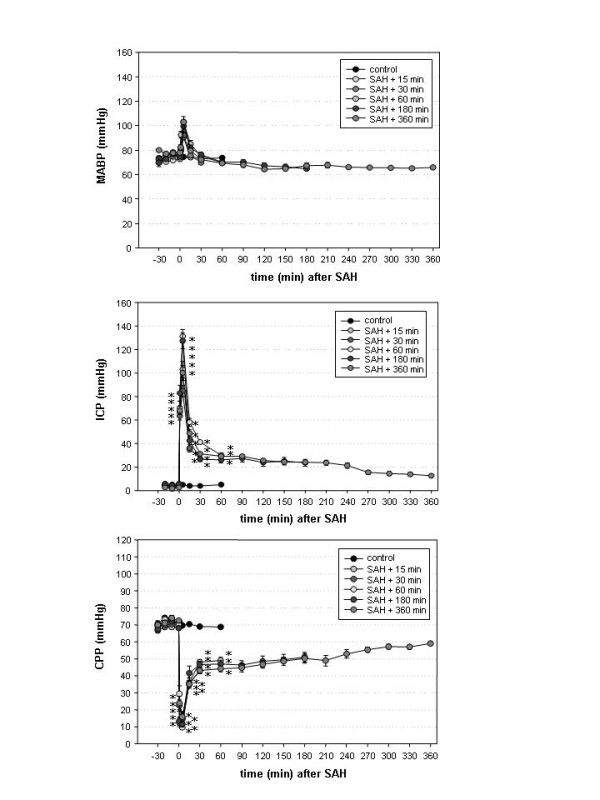
Male Sprague-Dawley rats, randomly assigned to one of six groups (n = 8), were subjected to SAH using the endovascular filament model or underwent a sham operation. Animals were sacrificed 15, 30, 60, 180 or 360 minutes after SAH. Intracranial pressure (ICP), mean arterial blood pressure (MABP), cerebral perfusion pressure (CPP) and bilateral local cerebral blood flow (LCBF) were continuously measured. Brain water content (BWC) was determined by the wet/dry-weight method.
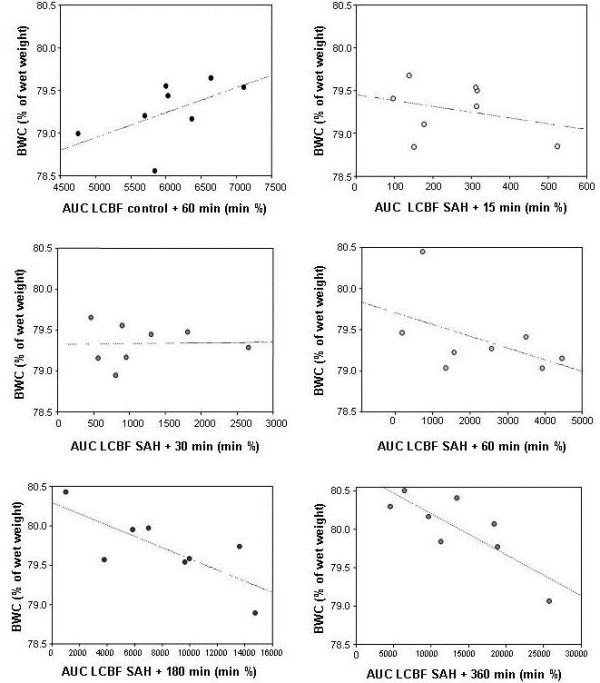
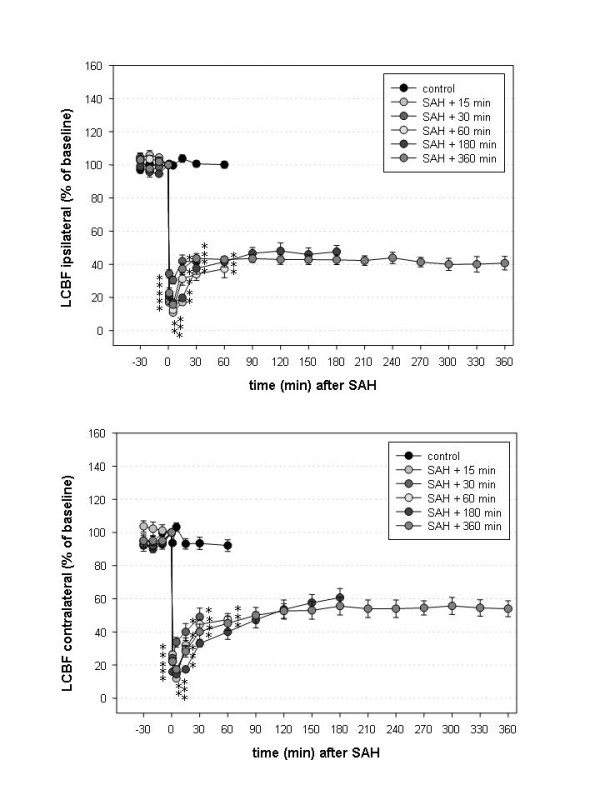
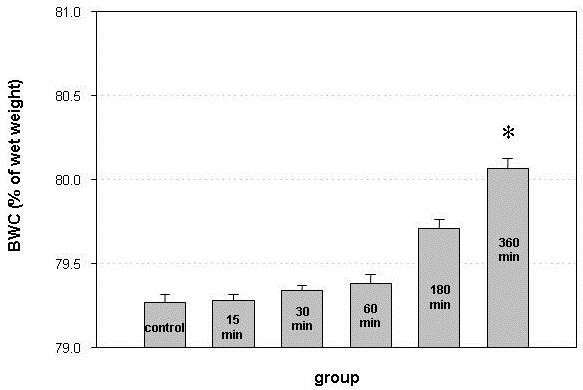
After SAH, CPP and LCBF rapidly decreased. The decline of LCBF markedly exceeded the decline of CPP and persisted until the end of the observation period. BWC continuously increased. A significant correlation was observed between the BWC and the extent of the perfusion deficit in animals sacrificed after 180 and 360 minutes.
The significant correlation with the perfusion deficit after SAH suggests that the development of brain edema is related to the extent of ischemia and acute vasoconstriction in the first hours after SAH.
在许多蛛网膜下腔出血(SAH)患者中观察到严重脑水肿。关于其在SAH后最初几小时内的发病机制和时间进程知之甚少。本研究旨在探讨实验性SAH后脑水肿的发展及其与脑灌注的相关性。
将雄性Sprague-Dawley大鼠随机分为六组(每组n = 8),采用血管内丝线模型进行SAH或进行假手术。在SAH后15、30、60、180或360分钟处死动物。连续测量颅内压(ICP)、平均动脉血压(MABP)、脑灌注压(CPP)和双侧局部脑血流量(LCBF)。采用湿/干重法测定脑含水量(BWC)。
SAH后,CPP和LCBF迅速下降。LCBF的下降明显超过CPP的下降,并持续到观察期结束。BWC持续增加。在180和360分钟后处死的动物中,观察到BWC与灌注缺损程度之间存在显著相关性。
SAH后与灌注缺损的显著相关性表明,脑水肿的发展与SAH后最初几小时内的缺血程度和急性血管收缩有关。