
氧张力和抗衰老因子 Klotho 对髓核细胞 Wnt 信号通路的影响。
The effects of oxygen tension and antiaging factor Klotho on Wnt signaling in nucleus pulposus cells.
机构信息
Department of Orthopaedic Surgery, Surgical Science, Tokai University School of Medicine, 143 Shimokasuya, Isehara, Kanagawa 259-1193, Japan.
出版信息
Arthritis Res Ther. 2012 May 2;14(3):R105. doi: 10.1186/ar3830.
INTRODUCTION
The goals of this study were to examine the oxemic regulation of Wnt signaling to explore whether Wnt signaling accelerates the age-related degeneration of nucleus pulposus cells, and if so, to define the mechanism underlying this effect. We investigated the expression of Klotho, a newly identified antiaging gene, and whether its regulation is attributable to the suppression of Wnt signaling.
METHODS
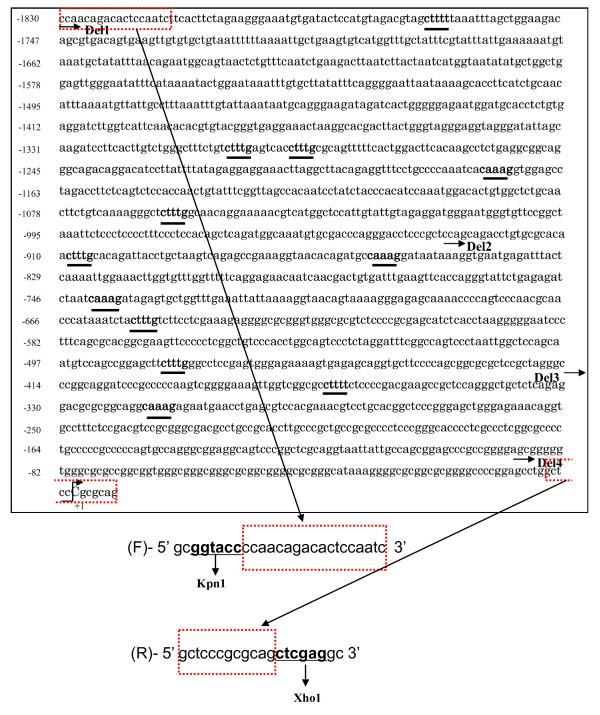
Rat nucleus pulposus cells were cultured under normoxic (21% O2) or hypoxic (2% O2) conditions, and the expression and promoter activity of Wnt signaling and Klotho were evaluated. The effect of Klotho protein was examined with transfection experiments, 3-(4,5-dimethylthiazol-2-yl)-2,5-diphenyltetrazolium bromide assay, senescence-associated β-galactosidase staining, and cell-cycle analysis. To determine the methylation status of the Klotho promoter region, bisulfite genomic sequencing analysis was performed. Its relation with the activation of Wnt signaling was assessed. We also examined whether the expression of Klotho could block the effects of pathological Wnt expression in nucleus pulposus cells.
RESULTS
Nucleus pulposus cells exhibited increased β-catenin mRNA and protein under the hypoxic condition. Klotho protein was expressed in vivo, and protein and messenger RNA expression decreased under the hypoxic condition. Klotho treatment decreased cell proliferation and induced the quiescence of nucleus pulposus cells. In addition, Klotho treatment inhibited expression of β-catenin gene and protein compared with untreated control cells.
CONCLUSIONS
These data indicate that Wnt signaling and Klotho form a negative-feedback loop in nucleus pulposus cells. These results suggest that the expression of Klotho is regulated by the balance between upregulation and downregulation of Wnt signaling.
简介
本研究旨在探讨氧合调节 Wnt 信号,以研究 Wnt 信号是否会加速椎间盘细胞的衰老退变,如果是,那么明确其作用机制。我们研究了 Klotho 的表达,Klotho 是新发现的抗衰老基因,研究其调控机制是否归因于 Wnt 信号的抑制。
方法
在常氧(21% O2)或低氧(2% O2)条件下培养大鼠椎间盘细胞,评估 Wnt 信号和 Klotho 的表达和启动子活性。通过转染实验、3-(4,5-二甲基噻唑-2-基)-2,5-二苯基四氮唑溴盐(MTT)比色试验、衰老相关β-半乳糖苷酶染色和细胞周期分析,检测 Klotho 蛋白的作用。通过亚硫酸氢盐基因组测序分析,检测 Klotho 启动子区域的甲基化状态,评估其与 Wnt 信号激活的关系。同时,还检测了 Klotho 的表达是否可以阻断椎间盘细胞病理性 Wnt 表达的作用。
结果
在低氧条件下,椎间盘细胞β-catenin 的 mRNA 和蛋白表达增加。Klotho 蛋白在体内表达,在低氧条件下表达减少。Klotho 处理降低了细胞增殖,并诱导椎间盘细胞静止。此外,Klotho 处理与未经处理的对照组细胞相比,抑制了β-catenin 基因和蛋白的表达。
结论
这些数据表明,Wnt 信号和 Klotho 在椎间盘细胞中形成负反馈回路。这些结果表明,Klotho 的表达受 Wnt 信号上调和下调之间平衡的调节。




 Zotero 插件