Department of Biochemistry, Meiji Pharmaceutical University, 2-522-1 Kiyose, Tokyo 204-8588, Japan.
PPAR Res. 2012;2012:814945. doi: 10.1155/2012/814945. Epub 2012 Apr 19.
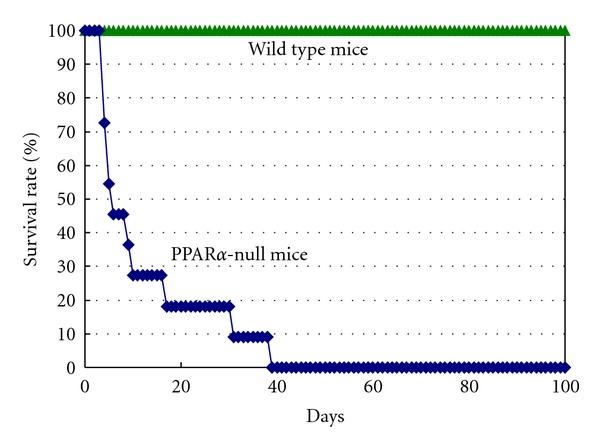
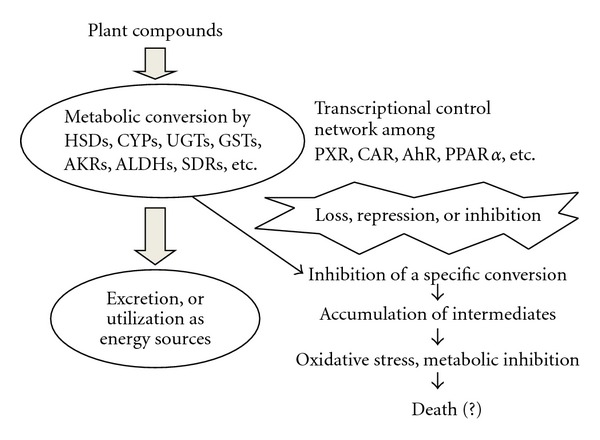
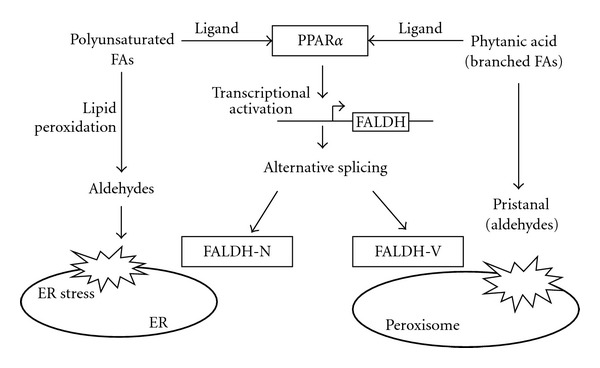
Plants contain potentially toxic compounds for animals and animals have developed physiological strategies to detoxify the ingested toxins during evolution. Feeding mice with various plant seeds and grains showed unexpected result that only sesame killed PPARα-null mice but not wild-type mice at all. A detailed analysis of this observation revealed that PPARα is involved in the metabolism of toxic compounds from plants as well as endobiotic substrates by inducing phase I and phase II detoxification enzymes. PPARα plays a vital role in direct or indirect activation of the relevant genes via the complex network among other xenobiotic nuclear receptors. Thus, PPARα plays its wider and more extensive role in energy metabolism from natural food intake to fat storage than previously thought.
植物中含有对动物有毒的化合物,而动物在进化过程中已经发展出了生理策略来解毒摄入的毒素。用各种植物种子和谷物喂养老鼠,结果出人意料,只有芝麻会杀死 PPARα 基因敲除的老鼠,而对野生型老鼠完全没有影响。对这一观察结果的详细分析表明,PPARα 参与了植物和内源性底物有毒化合物的代谢,通过诱导 I 相和 II 相解毒酶。PPARα 通过其他外来核受体之间的复杂网络,在直接或间接激活相关基因方面发挥着至关重要的作用。因此,PPARα 在从天然食物摄入到脂肪储存的能量代谢中发挥的作用比之前认为的更广泛、更深远。