Department of Obstetrics and Gynecology, University of Colorado School of Medicine, Aurora, CO, USA.
Oncogene. 2013 Mar 14;32(11):1341-50. doi: 10.1038/onc.2012.164. Epub 2012 May 14.
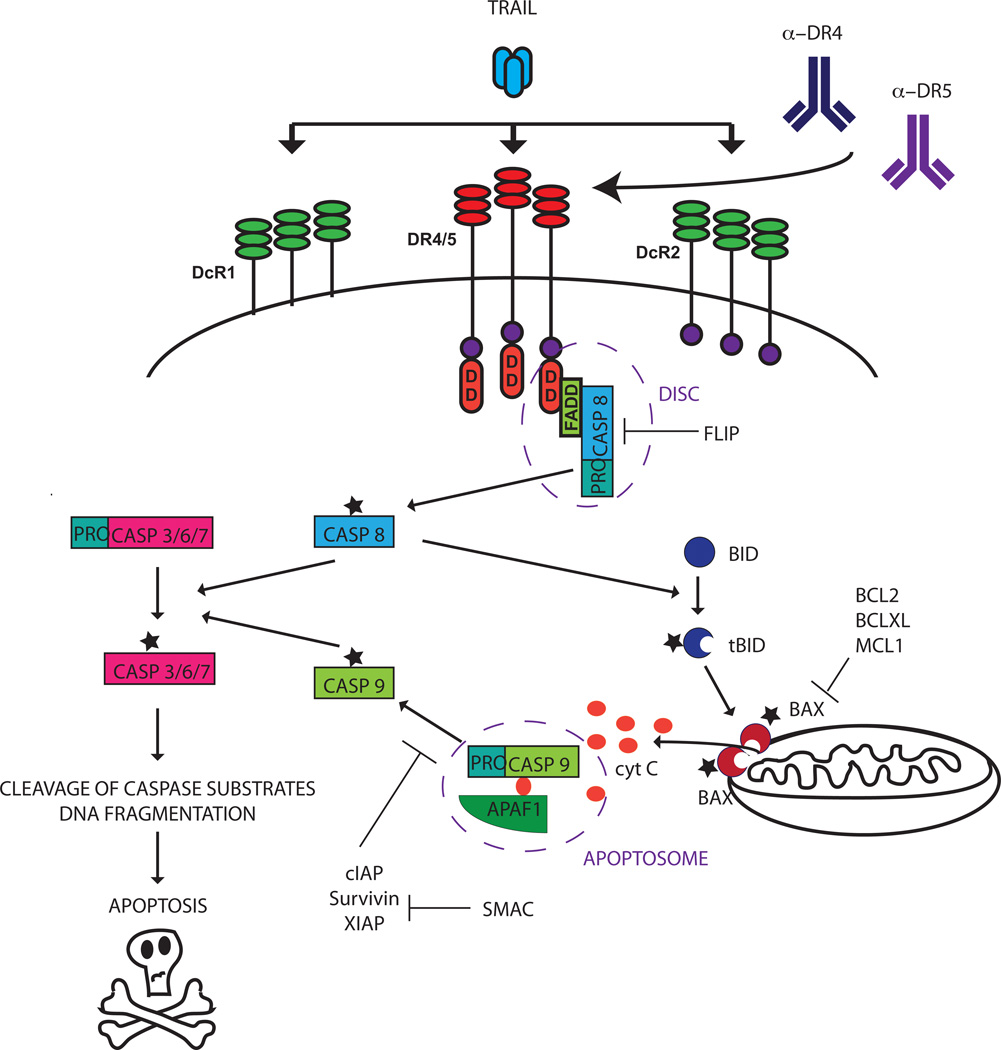
Tumor necrosis factor-related apoptosis-inducing ligand (TRAIL) and agonistic antibodies against TRAIL death receptors (DR) kill tumor cells while causing virtually no damage to normal cells. Several novel drugs targeting TRAIL receptors are currently in clinical trials. However, TRAIL resistance is a common obstacle in TRAIL-based therapy and limits the efficiency of these drugs. In this review article we discuss different mechanisms of TRAIL resistance, and how they can be predicted and therapeutically circumvented. In addition, we provide a brief overview of all TRAIL-based clinical trials conducted so far. It is apparent that although the effects of TRAIL therapy are disappointingly modest overall, a small subset of patients responds very well to TRAIL. We argue that the true potential of targeting TRAIL DRs in cancer can only be reached when we find efficient ways to select for those patients that are most likely to benefit from the treatment. To achieve this, it is crucial to identify biomarkers that can help us predict TRAIL sensitivity.
肿瘤坏死因子相关凋亡诱导配体(TRAIL)和针对 TRAIL 死亡受体(DR)的激动性抗体可以杀死肿瘤细胞,而对正常细胞几乎没有损伤。目前有几种针对 TRAIL 受体的新型药物正在临床试验中。然而,TRAIL 耐药是 TRAIL 为基础的治疗中的常见障碍,限制了这些药物的效率。在这篇综述文章中,我们讨论了 TRAIL 耐药的不同机制,以及如何预测和治疗性规避这些机制。此外,我们还简要概述了迄今为止所有基于 TRAIL 的临床试验。显然,尽管 TRAIL 治疗的总体效果令人失望,但一小部分患者对 TRAIL 的反应非常好。我们认为,只有当我们找到有效的方法来选择最有可能从治疗中受益的患者时,靶向 TRAIL DR 治疗癌症的真正潜力才能实现。为此,确定有助于我们预测 TRAIL 敏感性的生物标志物至关重要。