Department of Economics and Statistics, University of Innsbruck, Universitätsstrasse 15, A-6020 Innsbruck, Austria.
Health Policy. 2012 Aug;106(3):257-68. doi: 10.1016/j.healthpol.2012.04.012. Epub 2012 May 18.
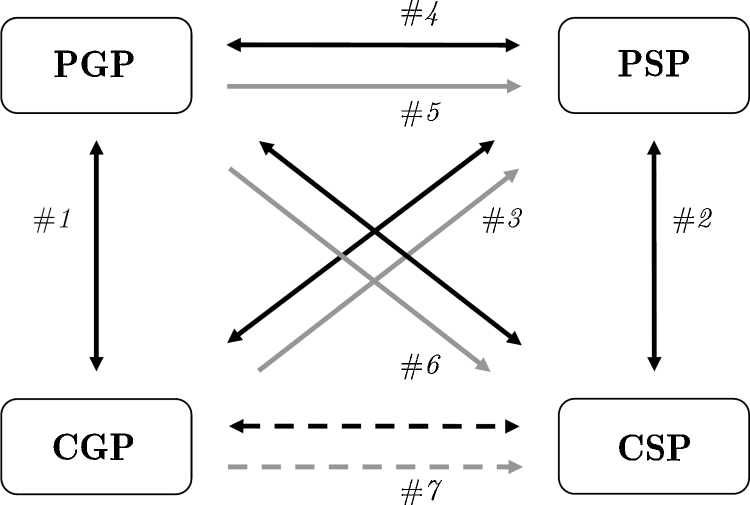
We investigate the density of non-contract (private) physicians in a two-tiered health care system, i.e., one with co-existing public and private health care providers. In particular, we analyze how the densities of private and public suppliers of outpatient health care (general practitioners and specialists) are related to each other. Using a panel of 121 Austrian districts between 2002 and 2008, we apply a Hausman-Taylor estimator, which allows to treat each of these densities as endogenous. We find that the density of non-contract specialists is positively associated with the density of non-contract general practitioners, but not significantly related to the density of contract general practitioners. We also observe a negative relationship between the densities of non-contract and contract general practitioners and the ones of non-contract and contract specialists, indicating competitive forces between the private and the public sector of the outpatient health care provision in Austria. Our results contribute to the ongoing debate on the role of non-contract physicians for health care provision in Austria.
我们研究了双层医疗体系中(私人)非合同医生的密度,即同时存在公共和私人医疗服务提供者的体系。特别是,我们分析了门诊医疗(全科医生和专科医生)的私人和公共供应商的密度如何相互关联。利用 2002 年至 2008 年期间的 121 个奥地利地区面板,我们应用豪斯曼-泰勒估计量,从而可以将每种密度视为内生变量。我们发现,非合同专科医生的密度与非合同全科医生的密度呈正相关,但与合同全科医生的密度没有显著关系。我们还观察到非合同和合同全科医生以及非合同和合同专科医生之间的密度之间存在负相关关系,这表明奥地利门诊医疗服务提供的私营部门和公共部门之间存在竞争力量。我们的结果为关于非合同医生在奥地利医疗服务提供中的作用的持续争论做出了贡献。