Queen Mary University of London, School of Engineering and Material Sciences, Mile End Road, London, E1 4NS, UK.
Bone. 2012 Sep;51(3):553-62. doi: 10.1016/j.bone.2012.04.021. Epub 2012 May 15.
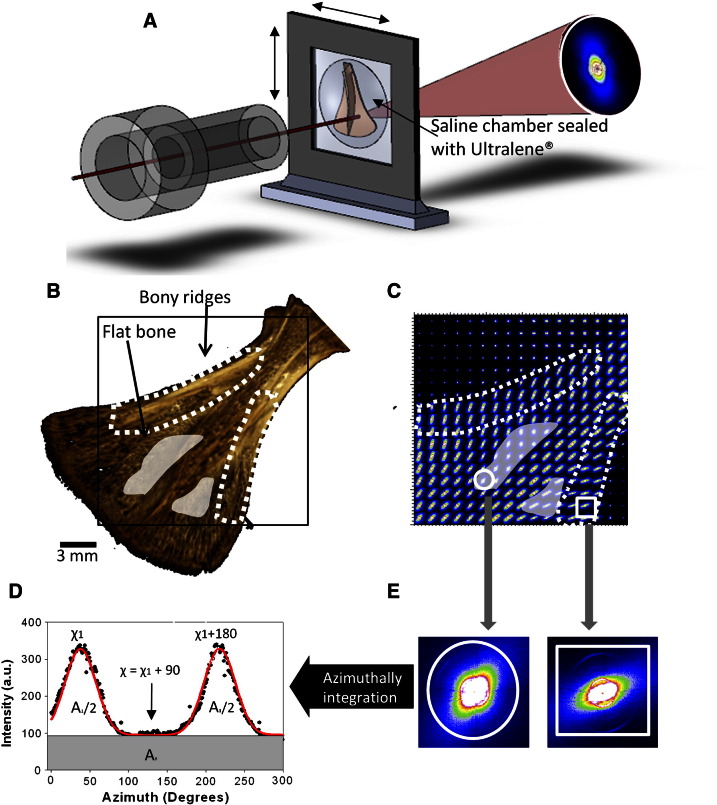
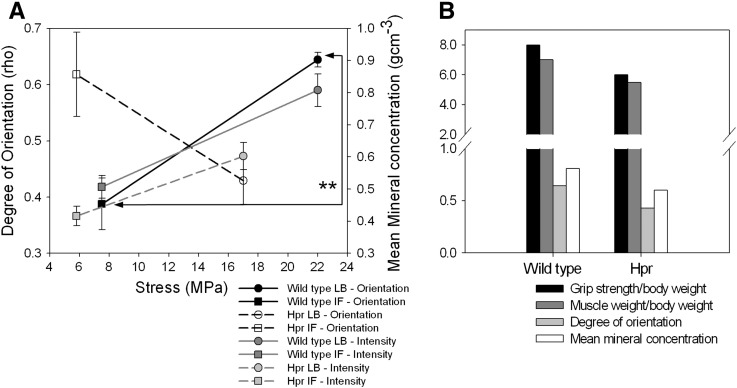
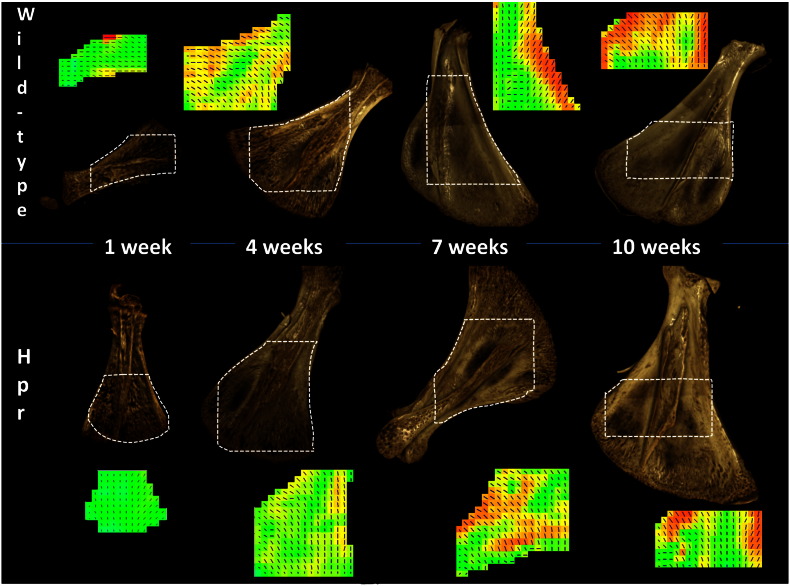
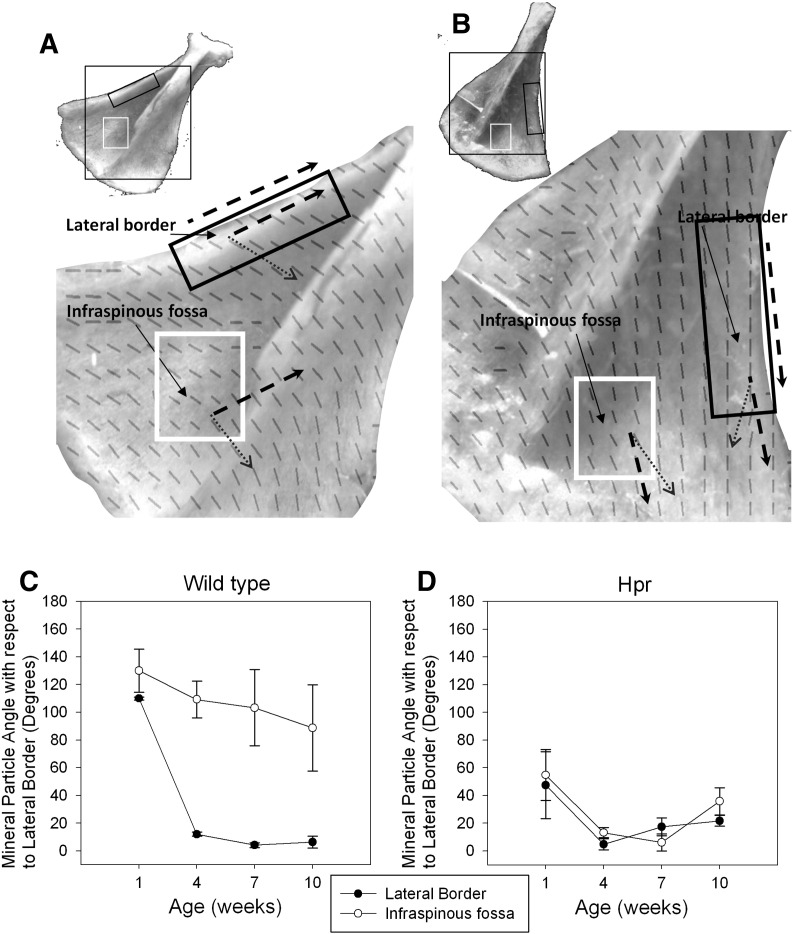
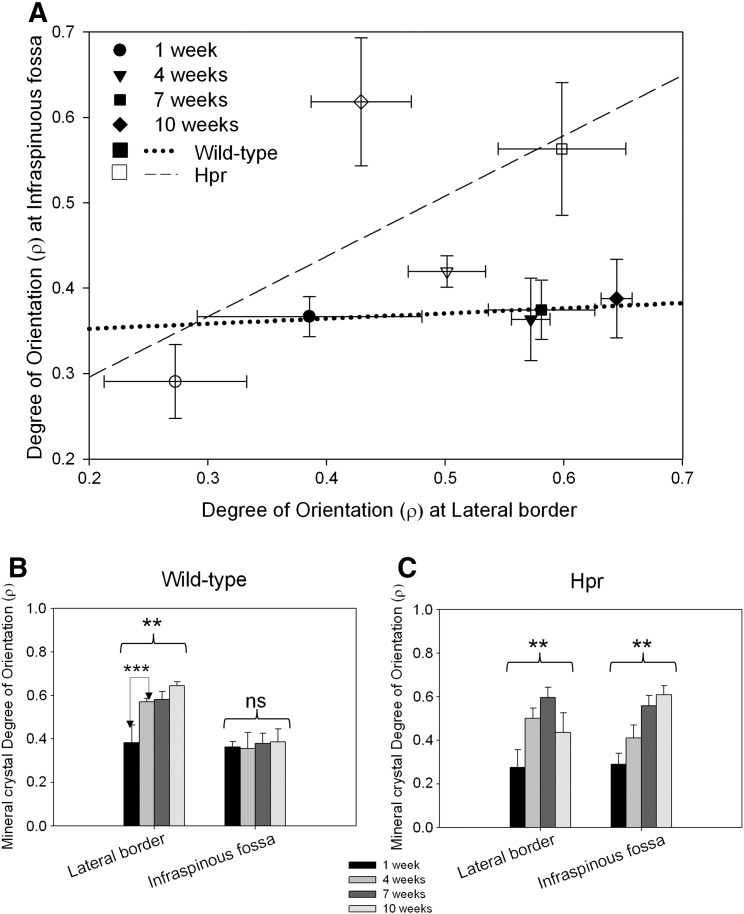
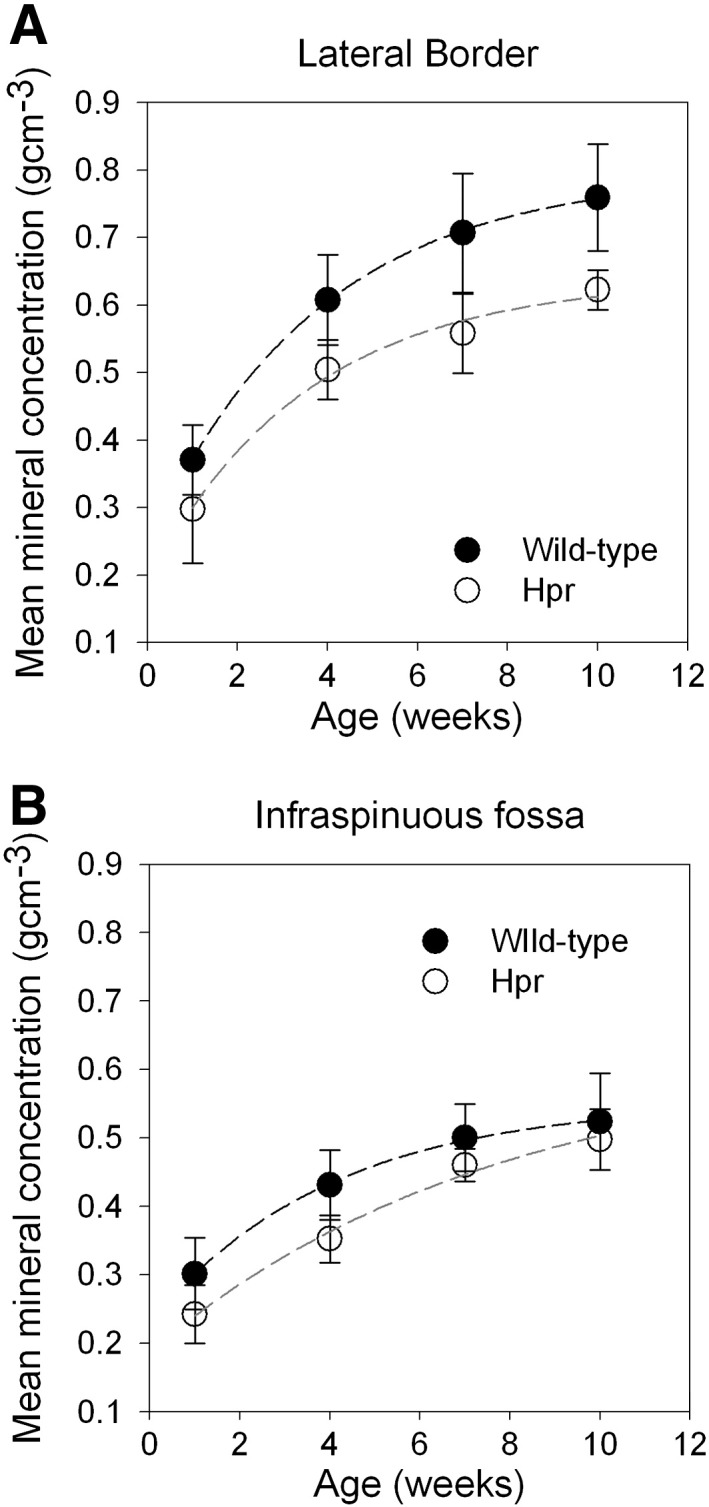
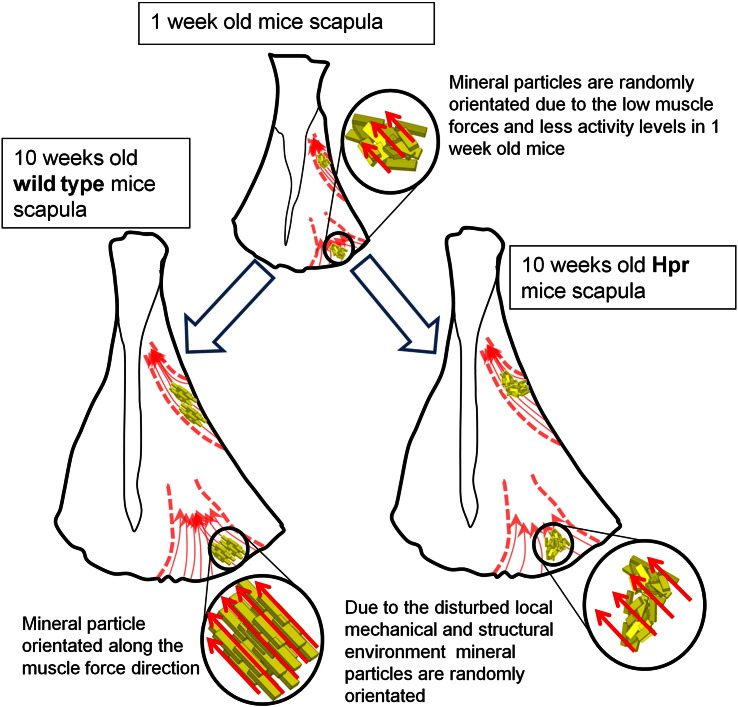
Metabolic bone disorders such as rickets are associated with altered in vivo muscular force distributions on the skeletal system. During development, these altered forces can potentially affect the spatial and temporal dynamics of mineralised tissue formation, but the exact mechanisms are not known. Here we have used a murine model of hypophosphatemic rickets (Hpr) to study the development of the mineralised nanostructure in the intramembranously ossifying scapulae (shoulder bone). Using position-resolved scanning small angle X-ray scattering (SAXS), we quantified the degree and direction of mineral nanocrystallite alignment over the width of the scapulae, from the load bearing lateral border (LB) regions to the intermediate infraspinous fossa (IF) tissue. These measurements revealed a significant (p<0.05) increase in mineral nanocrystallite alignment in the LB when compared to the IF region, with increased tissue maturation in wild-type mice; this was absent in mice with rickets. The crystallites were more closely aligned to the macroscopic bone boundary in the LB when compared to the IF region in both wild type and Hpr mice, but the degree of alignment was reduced in Hpr mice. These findings are consistent with a correlation between the nanocrystallites within fibrils and in vivo muscular forces. Thus our results indicate a relevant mechanism for the observed increased macroscopic deformability in rickets, via a significant alteration in the mineral particle alignment, which is mediated by an altered spatial distribution of muscle forces.
代谢性骨病,如佝偻病,与骨骼系统上体内肌肉力量分布的改变有关。在发育过程中,这些改变的力量可能会影响矿化组织形成的空间和时间动态,但确切的机制尚不清楚。在这里,我们使用低磷血症性佝偻病(Hpr)的小鼠模型来研究膜内成骨的肩胛骨(肩骨)中矿化纳米结构的发育。使用位置分辨扫描小角 X 射线散射(SAXS),我们定量测量了肩胛骨宽度上矿化纳米晶的取向程度和方向,从承重的侧缘(LB)区域到中间棘突下窝(IF)组织。与 IF 区域相比,这些测量结果显示出 LB 中的矿化纳米晶取向显著增加(p<0.05),野生型小鼠的组织成熟度增加;佝偻病小鼠中则没有这种情况。与 IF 区域相比,LB 中的晶体更接近宏观骨边界,而在野生型和 Hpr 小鼠中,LB 中的晶体取向程度降低。这些发现与纤维内的纳米晶与体内肌肉力量之间的相关性一致。因此,我们的结果表明,佝偻病中观察到的宏观可变形性增加存在一个相关机制,即通过矿化颗粒取向的显著改变,这是由肌肉力量的空间分布改变介导的。