Global eHealth Unit, Department of Primary Care and Public Health, Imperial College London, London, United Kingdom.
PLoS One. 2012;7(5):e36105. doi: 10.1371/journal.pone.0036105. Epub 2012 May 17.
Low cost, effective interventions are needed to deal with the major global burden of HIV/AIDS. Telephone consultation offers the potential to improve health of people living with HIV/AIDS cost-effectively and to reduce the burden on affected people and health systems. The aim of this systematic review was to assess the effectiveness of telephone consultation for HIV/AIDS care.
We undertook a comprehensive search of peer-reviewed and grey literature. Two authors independently screened citations, extracted data and assessed the quality of randomized controlled trials which compared telephone interventions with control groups for HIV/AIDS care. Telephone interventions were voice calls with landlines or mobile phones. We present a narrative overview of the results as the obtained trials were highly heterogeneous in design and therefore the data could not be pooled for statistical analysis.
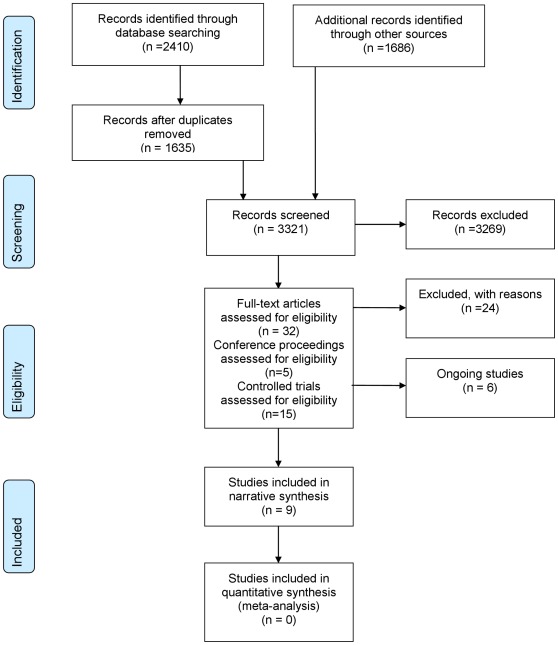
The search yielded 3321 citations. Of these, nine studies involving 1162 participants met the inclusion criteria. The telephone was used for giving HIV test results (one trial) and for delivering behavioural interventions aimed at improving mental health (four trials), reducing sexual transmission risk (one trial), improving medication adherence (two trials) and smoking cessation (one trial). Limited effectiveness of the intervention was found in the trial giving HIV test results, in one trial supporting medication adherence and in one trial for smoking cessation by telephone.
We found some evidence of the benefits of interventions delivered by telephone for the health of people living with HIV or at risk of HIV. However, only limited conclusions can be drawn as we only found nine studies for five different interventions and they mainly took place in the United States. Nevertheless, given the high penetration of low-cost mobile phones in countries with high HIV endemicity, more evidence is needed on how telephone consultation can aid in the delivery of HIV prevention, treatment and care.
需要低成本、有效的干预措施来应对全球艾滋病的主要负担。电话咨询有可能以具有成本效益的方式改善艾滋病毒/艾滋病患者的健康状况,并减轻受影响者和卫生系统的负担。本系统评价的目的是评估电话咨询在艾滋病毒/艾滋病护理中的有效性。
我们对同行评审和灰色文献进行了全面搜索。两名作者独立筛选引文、提取数据,并评估了将电话干预与艾滋病毒/艾滋病护理对照组进行比较的随机对照试验的质量。电话干预是指通过固定电话或移动电话进行语音通话。由于所获得的试验在设计上存在很大的异质性,因此数据无法进行汇总进行统计分析,我们仅对结果进行了叙述性概述。
搜索结果产生了 3321 条引文。其中,有九项研究涉及 1162 名参与者符合纳入标准。电话用于提供艾滋病毒检测结果(一项试验)和提供旨在改善心理健康的行为干预措施(四项试验),降低性传播风险(一项试验),提高药物依从性(两项试验)和戒烟(一项试验)。在提供艾滋病毒检测结果的试验、支持药物依从性的一项试验和通过电话戒烟的一项试验中,发现干预措施的效果有限。
我们发现,通过电话进行干预对艾滋病毒感染者或艾滋病毒感染风险者的健康有一定益处。然而,由于仅发现了九项针对五种不同干预措施的研究,且这些研究主要发生在美国,因此只能得出有限的结论。然而,考虑到低成本手机在艾滋病高发国家的普及程度,需要更多的证据来证明电话咨询如何有助于提供艾滋病预防、治疗和护理。