Fiala Karel, Tůma Ivan, Holub Petr
Department of Vegetation Ecology, Institute of Botany, Academy of Sciences of the Czech Republic, Lidická 25, 602 00 Brno, Czech Republic.
ScientificWorldJournal. 2012;2012:805298. doi: 10.1100/2012/805298. Epub 2012 May 2.
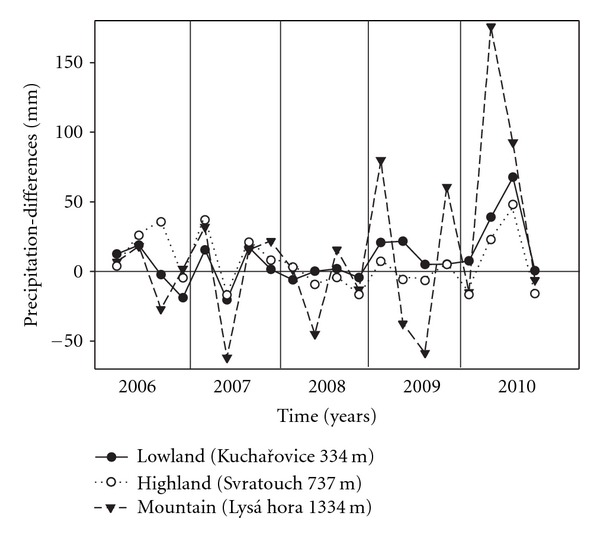
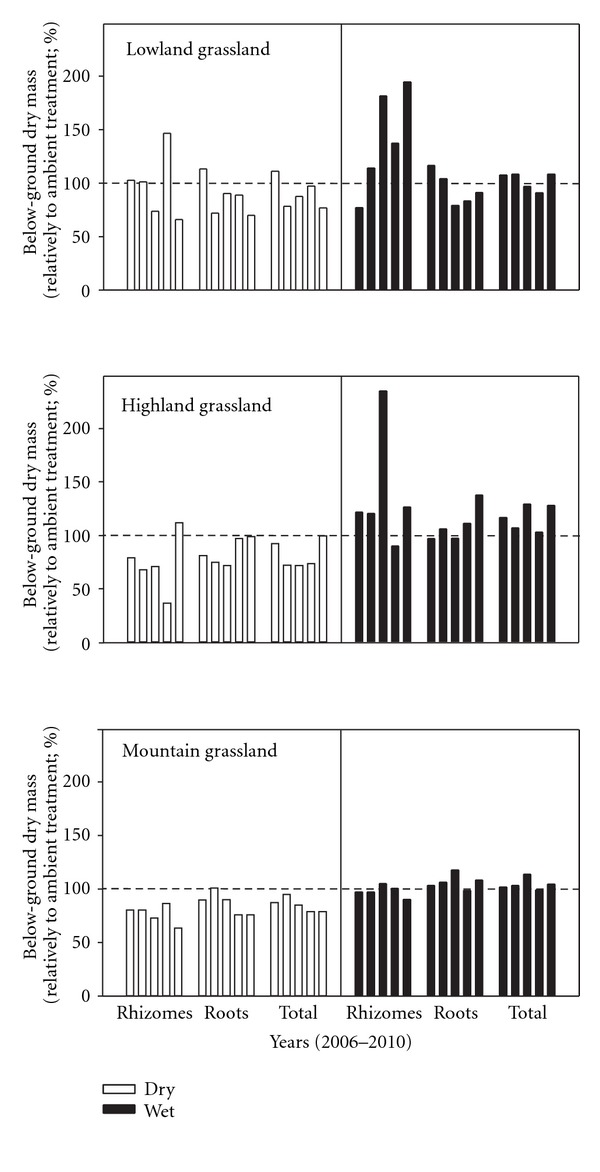
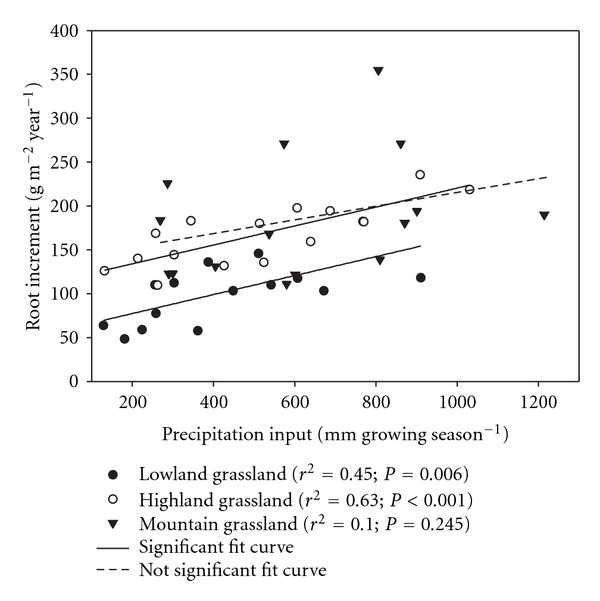
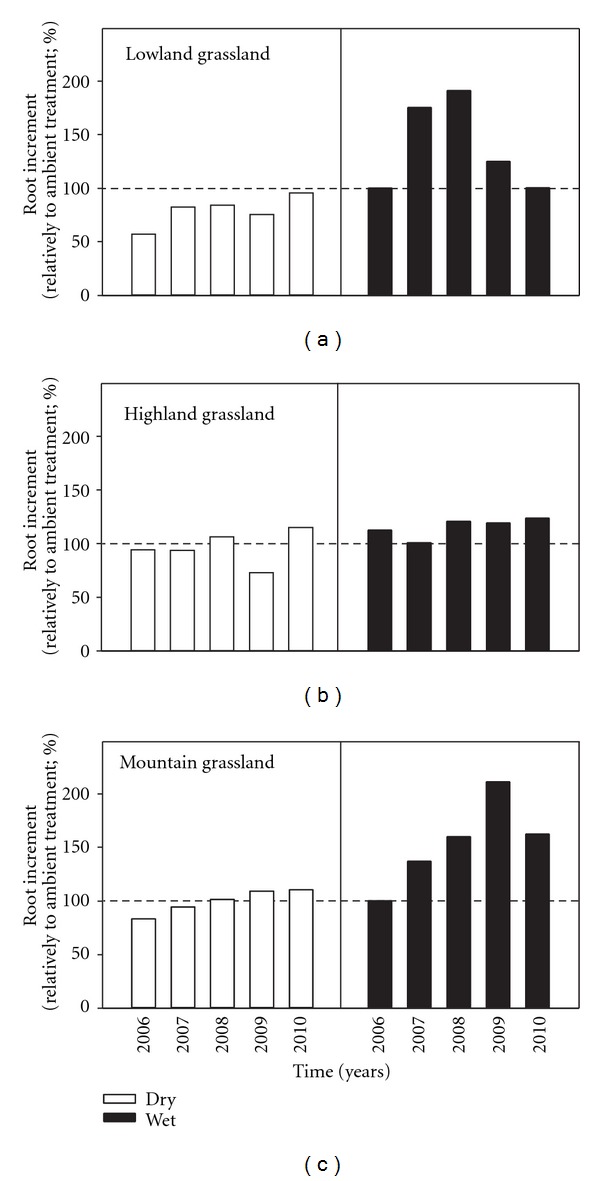
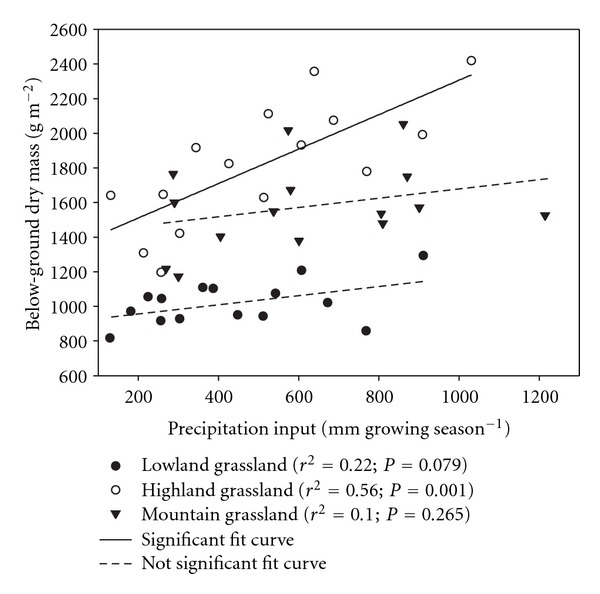
The effect of different amounts of rainfall on the below-ground plant biomass was studied in three grassland ecosystems. Responses of the lowland (dry Festuca grassland), highland (wet Cirsium grassland), and mountain (Nardus grassland) grasslands were studied during five years (2006-2010). A field experiment based on rainout shelters and gravity irrigation simulated three climate scenarios: rainfall reduced by 50% (dry), rainfall increased by 50% (wet), and the natural rainfall of the current growing season (ambient). The interannual variation in root increment and total below-ground biomass reflected the experimentally manipulated amount of precipitation and also the amount of current rainfall of individual years. The effect of year on these below-ground parameters was found significant in all studied grasslands. In comparison with dry Festuca grassland, better adapted to drought, submontane wet Cirsium grassland was more sensitive to the different water inputs forming rather lower amount of below-ground plant matter at reduced precipitation.
在三个草原生态系统中研究了不同降雨量对地下植物生物量的影响。在五年期间(2006 - 2010年)研究了低地(干旱羊茅草原)、高地(湿润蓟属草原)和山地(垂穗草草原)草原的响应。基于遮雨棚和重力灌溉的田间试验模拟了三种气候情景:降雨量减少50%(干旱)、降雨量增加50%(湿润)以及当前生长季节的自然降雨量(环境条件)。根系增量和地下总生物量的年际变化反映了实验控制的降水量以及各年份的当前降雨量。在所有研究的草原中,年份对这些地下参数的影响均显著。与更适应干旱的干旱羊茅草原相比,亚山地湿润蓟属草原对不同水分输入更为敏感,在降水量减少时形成的地下植物物质数量相对较低。