Department of Medicine, Division of Pulmonary, Allergy, and Critical Care Medicine, Scleroderma Center, and Department of Pathology, University of Pittsburgh School of Medicine, Pittsburgh, PA 15213, USA.
Sci Transl Med. 2012 May 30;4(136):136ra71. doi: 10.1126/scitranslmed.3003421.
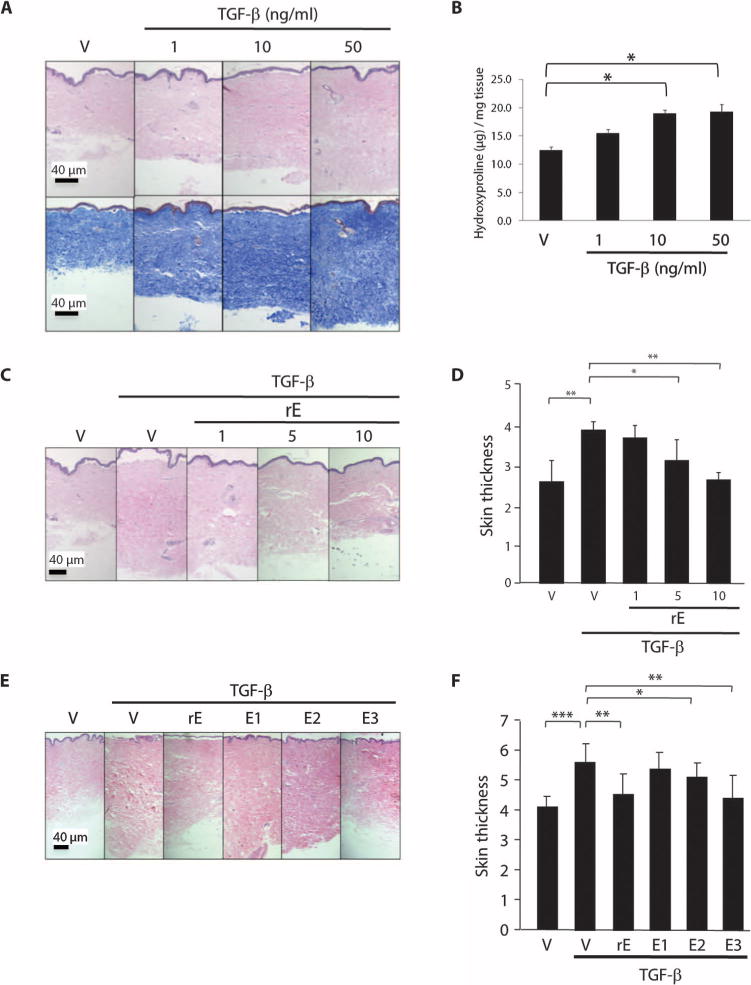
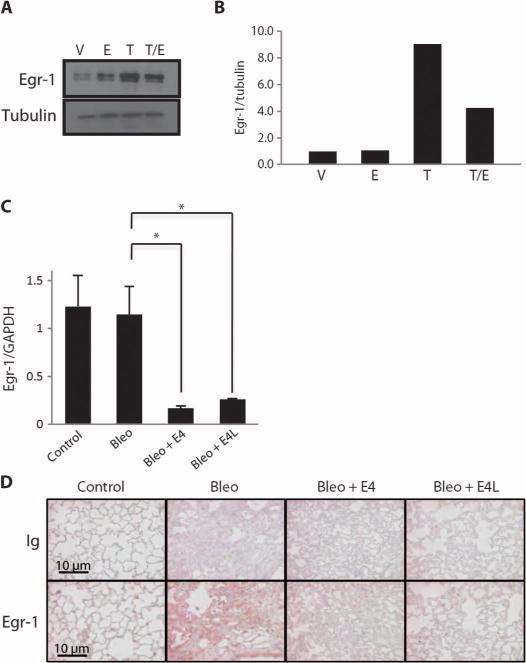
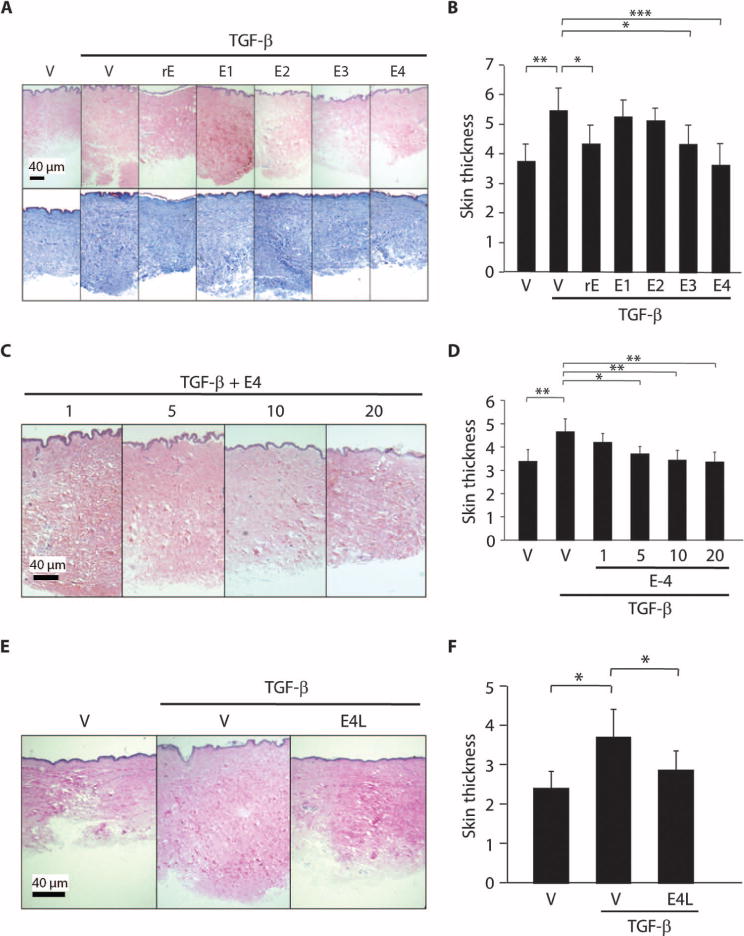
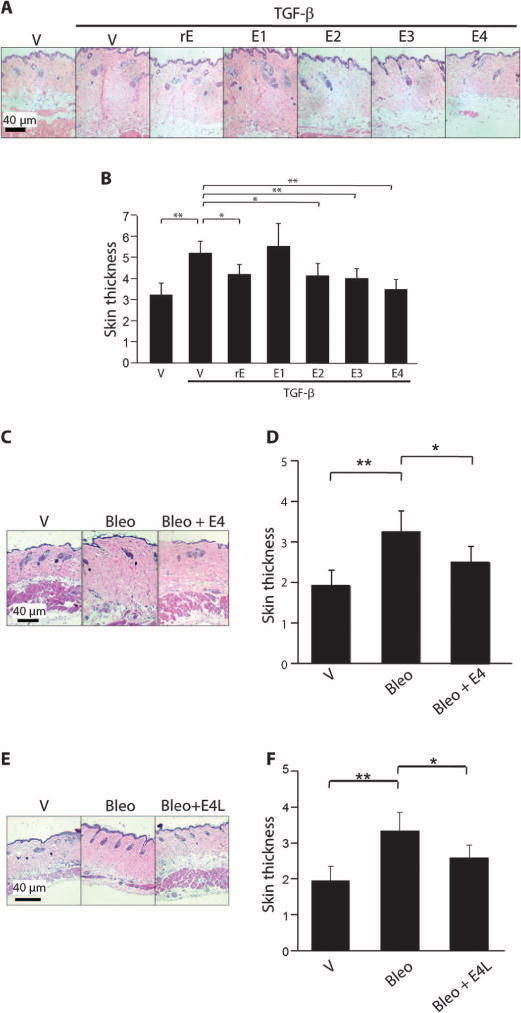
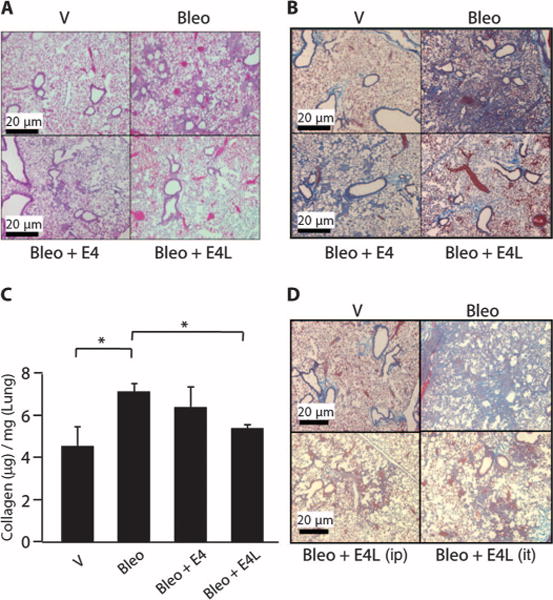
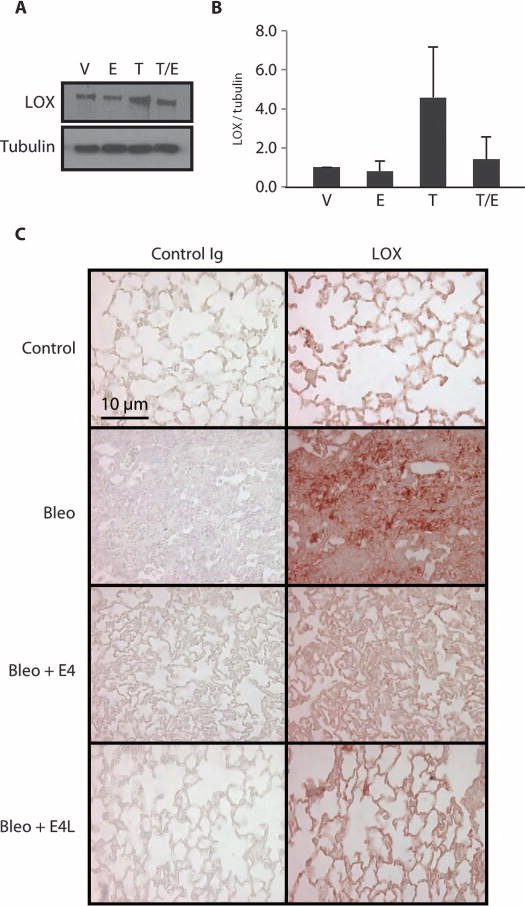
Fibroproliferative disorders such as idiopathic pulmonary fibrosis and systemic sclerosis have no effective therapies and result in significant morbidity and mortality due to progressive organ fibrosis. We examined the effect of peptides derived from endostatin on existing fibrosis and fibrosis triggered by two potent mediators, transforming growth factor-β (TGF-β) and bleomycin, in human and mouse tissues in vitro, ex vivo, and in vivo. We identified one peptide, E4, with potent antifibrotic activity. E4 prevented TGF-β-induced dermal fibrosis in vivo in a mouse model, ex vivo in human skin, and in bleomycin-induced dermal and pulmonary fibrosis in vivo, demonstrating that E4 exerts potent antifibrotic effects. In addition, E4 significantly reduced existing fibrosis in these preclinical models. E4 amelioration of fibrosis was accompanied by reduced cell apoptosis and lower levels of lysyl oxidase, an enzyme that cross-links collagen, and Egr-1 (early growth response gene-1), a transcription factor that mediates the effects of several fibrotic triggers. Our findings identify E4 as a peptide with potent antifibrotic activity and a possible therapeutic agent for organ fibrosis.
纤维增生性疾病,如特发性肺纤维化和系统性硬化症,目前尚无有效疗法,由于进行性器官纤维化,导致发病率和死亡率显著增加。我们研究了源自内皮抑素的肽对现有纤维化和两种有效介质(转化生长因子-β(TGF-β)和博来霉素)引发的纤维化的影响,在体外、离体和体内研究了人类和小鼠组织中的这些肽。我们鉴定出一种具有很强抗纤维化活性的肽 E4。E4 可预防 TGF-β诱导的小鼠体内真皮纤维化,离体预防人皮肤中的真皮纤维化,以及博来霉素诱导的真皮和肺纤维化,表明 E4 具有很强的抗纤维化作用。此外,E4 还可显著减少这些临床前模型中的现有纤维化。E4 改善纤维化伴随着细胞凋亡减少和赖氨酰氧化酶水平降低,赖氨酰氧化酶是一种交联胶原的酶,Egr-1(早期生长反应基因-1)是一种介导几种纤维化触发因素作用的转录因子。我们的研究结果表明,E4 是一种具有强大抗纤维化活性的肽,可能是一种治疗器官纤维化的药物。