
琥珀酸受体作为氧化应激和代谢应激相关疾病的新型治疗靶点。
The succinate receptor as a novel therapeutic target for oxidative and metabolic stress-related conditions.
机构信息
Department of Physiology, Nijmegen Centre for Molecular Life Sciences, Radboud University Nijmegen Medical Centre Nijmegen, Netherlands.
出版信息
Front Endocrinol (Lausanne). 2012 Feb 16;3:22. doi: 10.3389/fendo.2012.00022. eCollection 2012.
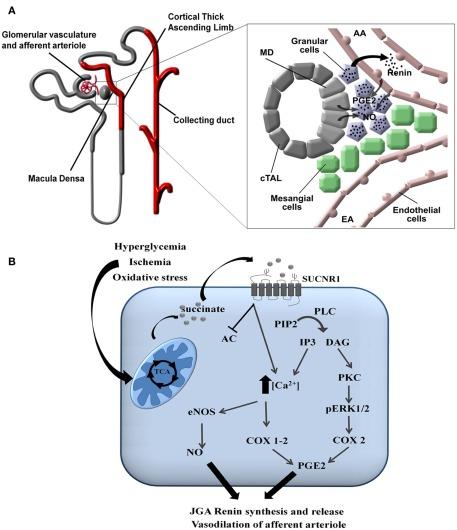
The succinate receptor (also known as GPR91) is a G protein-coupled receptor that is closely related to the family of P2Y purinoreceptors. It is expressed in a variety of tissues, including blood cells, adipose tissue, the liver, retina, and kidney. In these tissues, this receptor and its ligand succinate have recently emerged as novel mediators in local stress situations, including ischemia, hypoxia, toxicity, and hyperglycemia. Amongst others, the succinate receptor is involved in recruitment of immune cells to transplanted tissues. Moreover, it was shown to play a key role in the development of diabetic retinopathy. However, most prominently, the role of locally increased succinate levels and succinate receptor activation in the kidney, stimulating the systemic and local renin-angiotensin system, starts to unfold: the succinate receptor is a key mediator in the development of hypertension and possibly fibrosis in diabetes mellitus and metabolic syndrome. This makes the succinate receptor a promising drug target to counteract or prevent cardiovascular and fibrotic defects in these expanding disorders. Recent development of SUCNR1-specific antagonists opens novel possibilities for research in models for these disorders and may eventually provide novel opportunities for the treatment of patients.
琥珀酸受体(也称为 GPR91)是一种 G 蛋白偶联受体,与 P2Y 嘌呤能受体家族密切相关。它在多种组织中表达,包括血细胞、脂肪组织、肝脏、视网膜和肾脏。在这些组织中,该受体及其配体琥珀酸最近被认为是局部应激情况下(包括缺血、缺氧、毒性和高血糖)的新型介质。除其他外,琥珀酸受体参与招募免疫细胞到移植组织中。此外,它还被证明在糖尿病性视网膜病变的发展中发挥关键作用。然而,最突出的是,局部增加的琥珀酸水平和琥珀酸受体激活在肾脏中的作用,刺激全身和局部肾素-血管紧张素系统,开始显现:琥珀酸受体是高血压和糖尿病和代谢综合征中纤维化的关键介质。这使得琥珀酸受体成为一种有前途的药物靶点,可用于对抗或预防这些不断扩大的疾病中的心血管和纤维缺陷。SUCNR1 特异性拮抗剂的最新发展为这些疾病的模型研究开辟了新的可能性,并可能最终为患者的治疗提供新的机会。


 Zotero 插件