Faculty of Bioengineering and Bioinformatics, Lomonosov Moscow State University.
Acta Naturae. 2010 Jul;2(2):66-71.
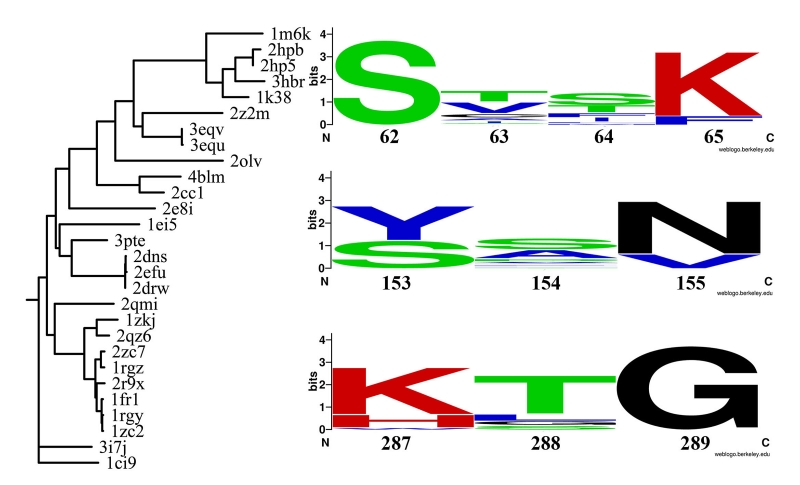
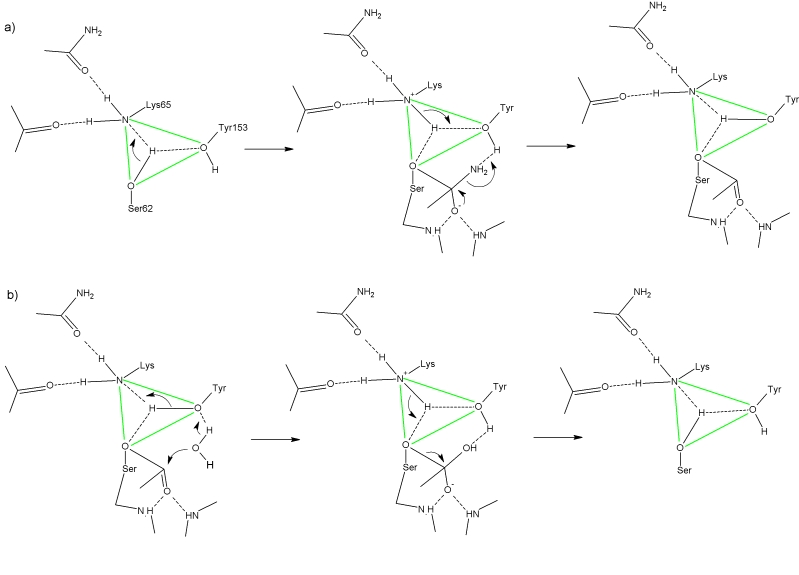
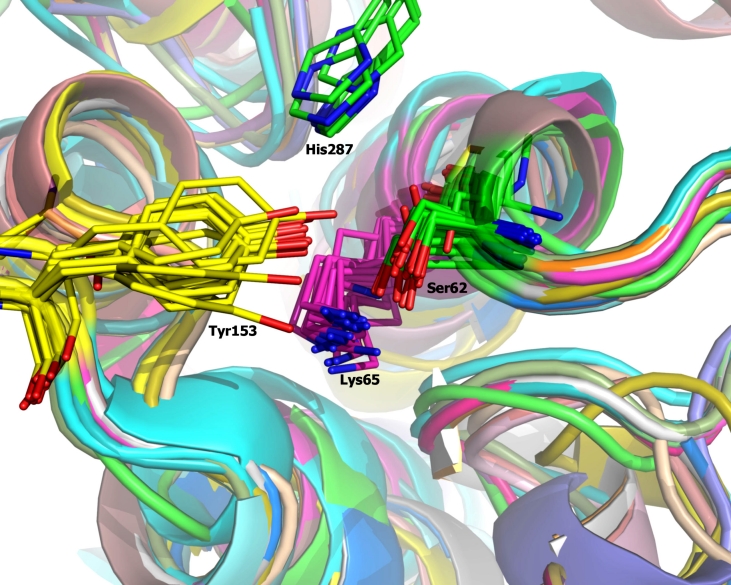
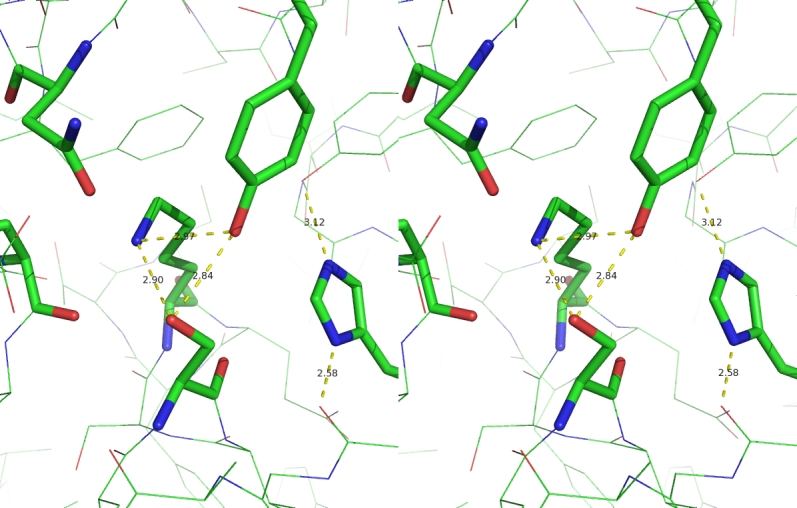
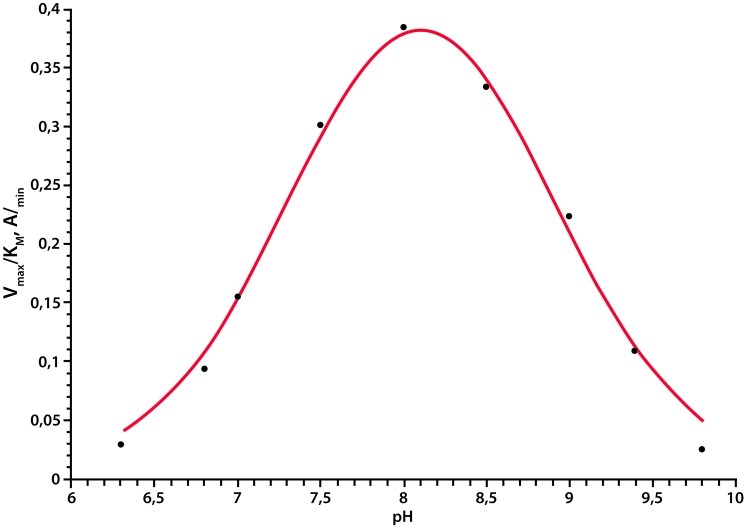
A bioinformatic and phylogenetic study has been performed on a family of penicillin-binding proteins including D-aminopeptidases, D-amino acid amidases, DD-carboxypeptidases, and β -lactamases. Significant homology between D-aminopeptidase from Ochrobactrum anthropi and other members of the family has been shown and a number of conserved residues identified as S62, K65, Y153, N155, H287, and G289. Three of those (Ser62, Lys65, and Tyr153) form a catalytic triangle - the proton relay system that activates the generalized nucleophile in the course of catalysis. Molecular modeling has indicated the conserved residue Lys65 to have an unusually low pKa value, which has been confirmed experimentally by a study of the pH-profile of D-aminopeptidase catalytic activity. The resulting data have been used to elucidate the role of Lys65 in the catalytic mechanism of D-aminopeptidase as a general base for proton transfer from catalytic Ser62 to Tyr153, and vice versa, during the formation and hydrolysis of the acyl - enzyme intermediate.
已经对包括 D-氨基肽酶、D-氨基酸酰胺酶、DD-羧肽酶和β-内酰胺酶在内的青霉素结合蛋白家族进行了生物信息学和系统发育研究。已经表明,从土壤杆菌属的 D-氨基肽酶与家族的其他成员之间具有显著的同源性,并鉴定了一些保守残基为 S62、K65、Y153、N155、H287 和 G289。其中三个(Ser62、Lys65 和 Tyr153)形成一个催化三角形——质子传递系统,在催化过程中激活广义亲核试剂。分子建模表明保守残基 Lys65 具有异常低的 pKa 值,这通过研究 D-氨基肽酶催化活性的 pH 曲线得到了实验证实。所得数据用于阐明 Lys65 在 D-氨基肽酶催化机制中的作用,作为从催化 Ser62 到 Tyr153 的质子转移的通用碱,反之亦然,在酰-酶中间体的形成和水解过程中。