Bleibel Fadi, Fragoza Keith, Faller Garrey T
Department of Internal Medicine, Steward Carney Hospital, Tufts University, Boston, MA 02124, USA.
Case Rep Gastrointest Med. 2012;2012:896523. doi: 10.1155/2012/896523. Epub 2012 May 8.
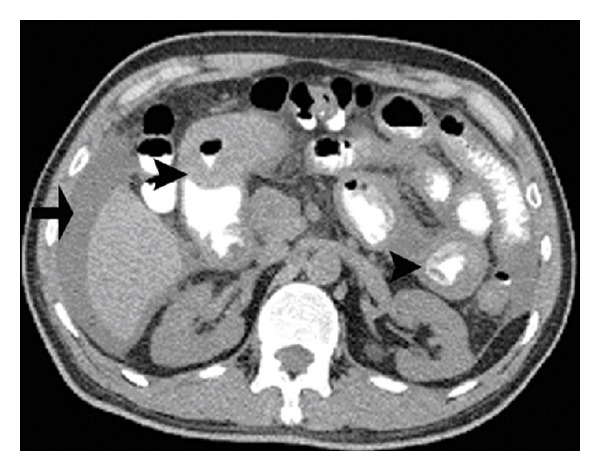
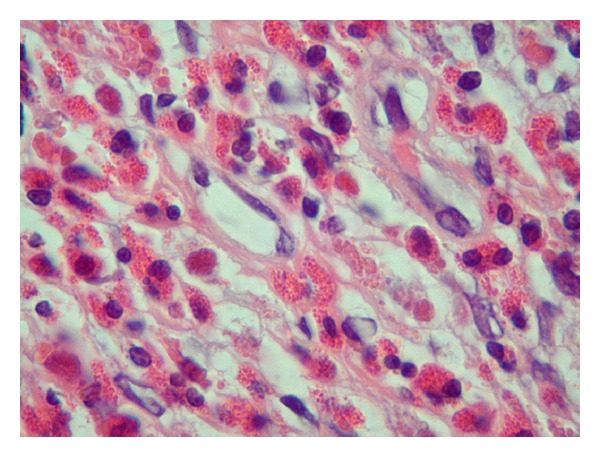
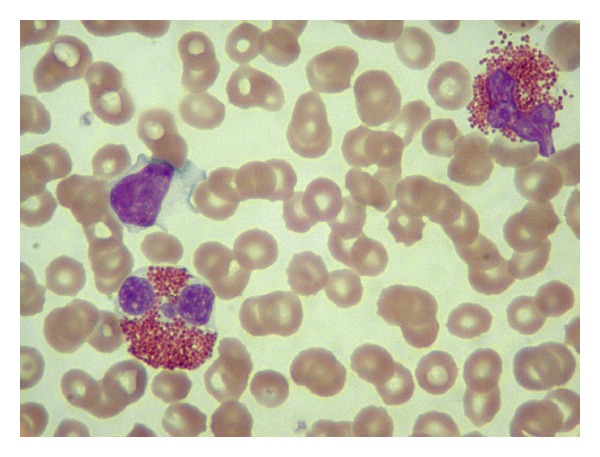
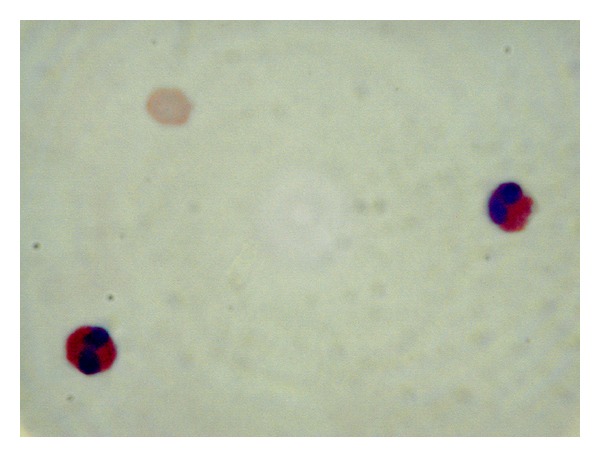
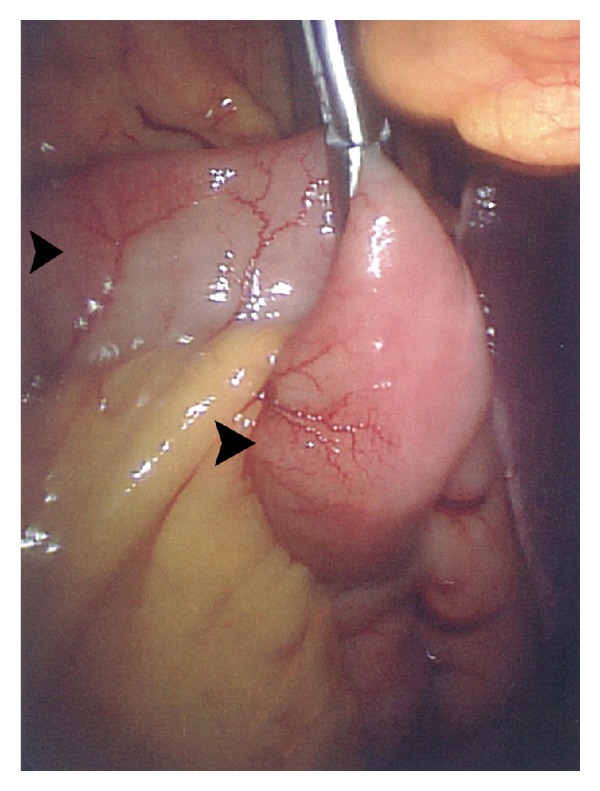
Eosinophilic gastroenteritis is a rare condition characterized by recurrent eosinophilic infiltration of portions of the GI tract and presenting with nonspecific GI symptoms in association with peripheral eosinophilia. Its etiology and pathogenesis remain unclear and its symptoms overlap with many GI and systemic diseases. Thus, both gastroenterologists and general internists need to be aware of this rare condition. We present a case of a 55-year-old male with diffuse abdominal pain and distention for two weeks. His physical examination was significant for moderate ascites. Initial work-up demonstrated severe peripheral blood eosinophilia, normal liver function tests, thickening of the stomach and small bowel wall, and elevated serum IgE. Upper endoscopy and extensive testing for malignancy and parasitic infections failed to establish a diagnosis. Ascitic fluid analysis showed significant eosinophilia. Further, a full-thickness jejunal showed marked eosinophilic infiltration of the serosa and muscularis propria. Subsequent treatment with oral prednisone resulted in normalization of laboratory and radiologic abnormalities in a few week period.
嗜酸性胃肠炎是一种罕见疾病,其特征为胃肠道部分区域反复出现嗜酸性粒细胞浸润,并伴有外周嗜酸性粒细胞增多的非特异性胃肠道症状。其病因和发病机制尚不清楚,症状与许多胃肠道及全身性疾病重叠。因此,胃肠病学家和普通内科医生都需要了解这种罕见疾病。我们报告一例55岁男性,有两周的弥漫性腹痛和腹胀。体格检查发现有中度腹水。初步检查显示外周血嗜酸性粒细胞严重增多、肝功能检查正常、胃和小肠壁增厚以及血清IgE升高。上消化道内镜检查以及针对恶性肿瘤和寄生虫感染的广泛检测未能确诊。腹水分析显示有明显的嗜酸性粒细胞增多。此外,空肠全层显示浆膜和固有肌层有明显的嗜酸性粒细胞浸润。随后口服泼尼松治疗,几周内实验室和影像学异常恢复正常。