Molecular Virology and Immunology (UR892), French National Institute for Agricultural Research, Jouy-en-Josas, France.
PLoS One. 2012;7(5):e37722. doi: 10.1371/journal.pone.0037722. Epub 2012 May 24.
The human respiratory syncytial virus (hRSV) is the leading cause of severe bronchiolitis in infants worldwide. The most severe RSV diseases occur between 2 and 6 months-of-age, so pediatric vaccination will have to be started within the first weeks after birth, when the immune system is prone to Th2 responses that may turn deleterious upon exposure to the virus. So far, the high risk to prime for immunopathological responses in infants has hampered the development of vaccine. In the present study we investigated the safety and efficacy of ring-nanostructures formed by the recombinant nucleoprotein N of hRSV (N(SRS)) as a mucosal vaccine candidate against RSV in BALB/c neonates, which are highly sensitive to immunopathological Th2 imprinting.
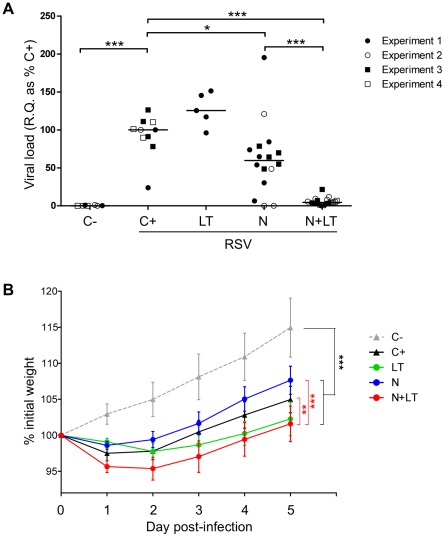
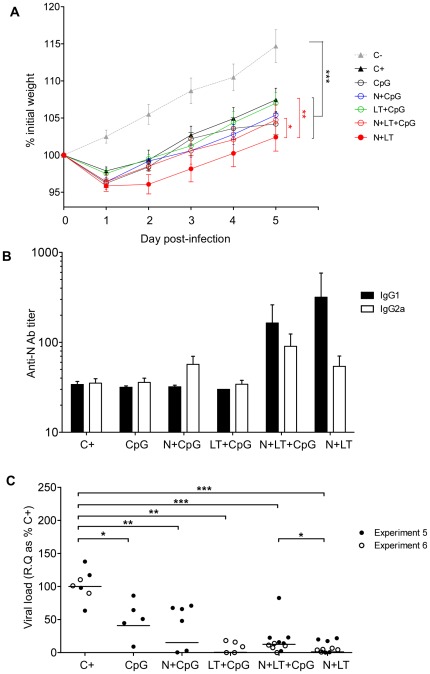
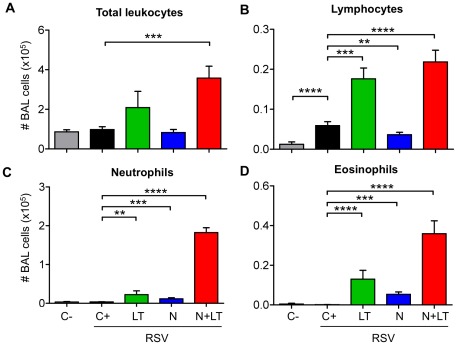
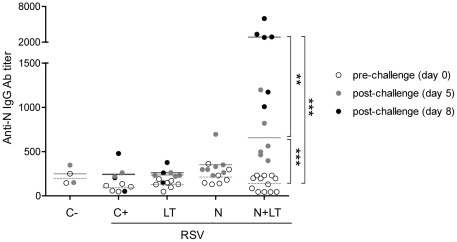
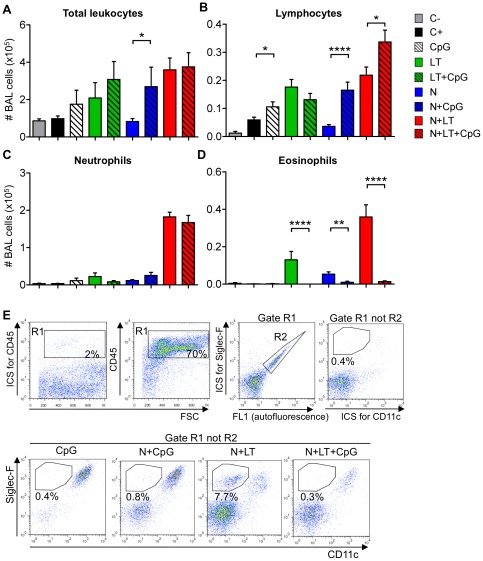
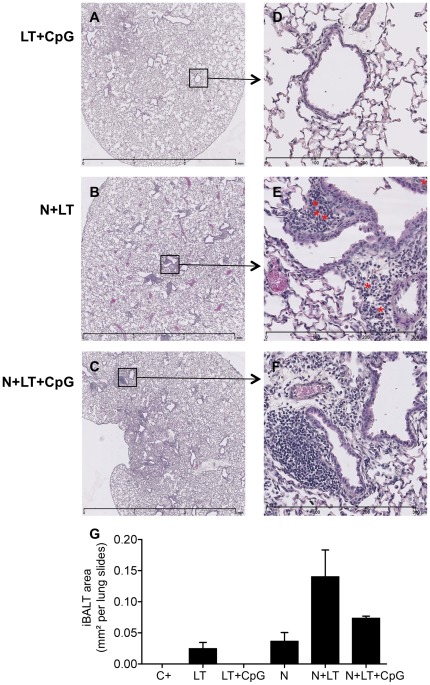
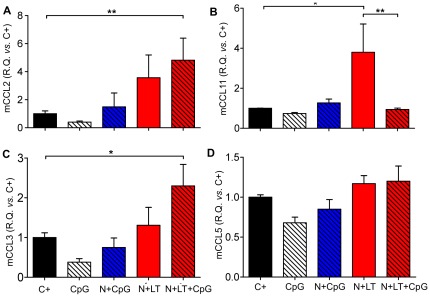
A single intranasal administration of N(SRS) with detoxified E. coli enterotoxin LT(R192G) to 5-7 day old neonates provided a significant reduction of the viral load after an RSV challenge at five weeks of age. However, neonatal vaccination also generated an enhanced lung infiltration by neutrophils and eosinophils following the RSV challenge. Analysis of antibody subclasses and cytokines produced after an RSV challenge or a boost administration of the vaccine suggested that neonatal vaccination induced a Th2 biased local immune memory. This Th2 bias and the eosinophilic reaction could be prevented by adding CpG to the vaccine formulation, which, however did not prevent pulmonary inflammation and neutrophil infiltration upon viral challenge.
CONCLUSIONS/SIGNIFICANCE: In conclusion, protective vaccination against RSV can be achieved in neonates but requires an appropriate combination of adjuvants to prevent harmful Th2 imprinting.
人类呼吸道合胞病毒(hRSV)是全球婴儿严重细支气管炎的主要原因。最严重的 RSV 疾病发生在 2 至 6 个月龄之间,因此儿科疫苗接种必须在出生后的第一周内开始,此时免疫系统容易产生 Th2 反应,而接触病毒后可能会产生有害影响。到目前为止,婴儿产生免疫病理反应的高风险阻碍了疫苗的开发。在本研究中,我们研究了 hRSV 的重组核蛋白 N(N(SRS))形成的环纳米结构作为 RSV 黏膜候选疫苗在 BALB/c 新生儿中的安全性和疗效,这些新生儿对免疫病理 Th2 印迹非常敏感。
将脱毒的大肠杆菌肠毒素 LT(R192G)与 N(SRS) 一起单次鼻腔内给药给 5-7 天大的新生儿,可在五周龄时 RSV 挑战后显著降低病毒载量。然而,新生儿接种疫苗后,在 RSV 挑战后也会导致中性粒细胞和嗜酸性粒细胞在肺部浸润增加。对 RSV 挑战或疫苗加强接种后产生的抗体亚类和细胞因子的分析表明,新生儿接种疫苗诱导了 Th2 偏向的局部免疫记忆。这种 Th2 偏向和嗜酸性粒细胞反应可以通过在疫苗配方中添加 CpG 来预防,但这并不能防止病毒挑战后肺部炎症和中性粒细胞浸润。
总之,在新生儿中可以实现针对 RSV 的保护性接种,但需要适当的佐剂组合来预防有害的 Th2 印迹。