Department of Biology, Center for Excellence in Infection Genomics and The University of Texas at San Antonio, San Antonio, Texas, United States of America.
PLoS One. 2012;7(5):e38171. doi: 10.1371/journal.pone.0038171. Epub 2012 May 31.
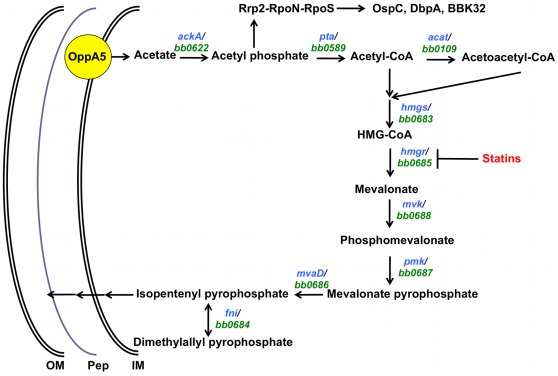
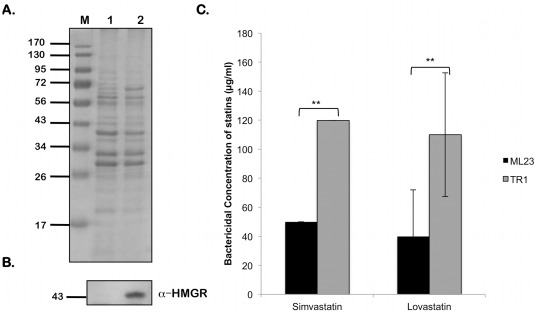
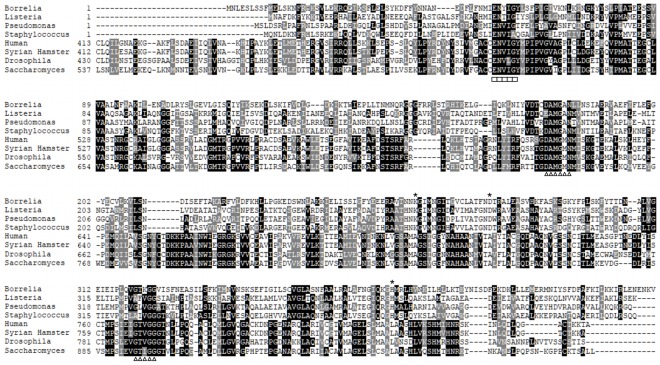
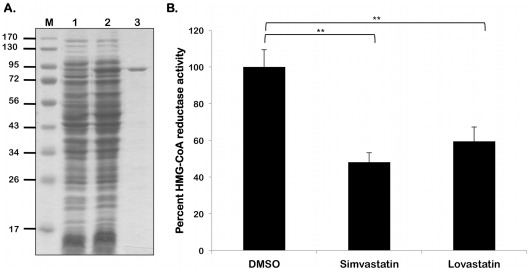
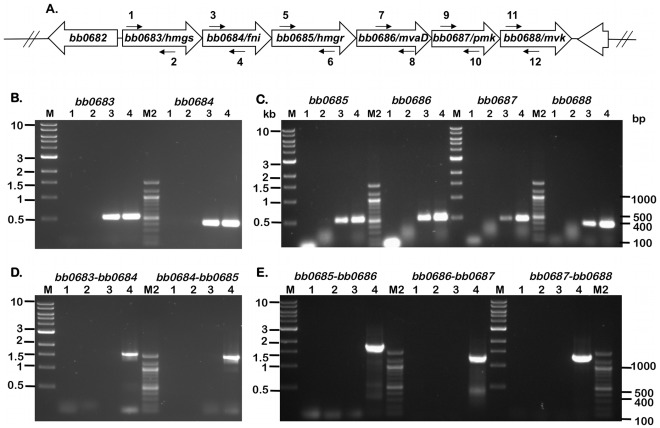
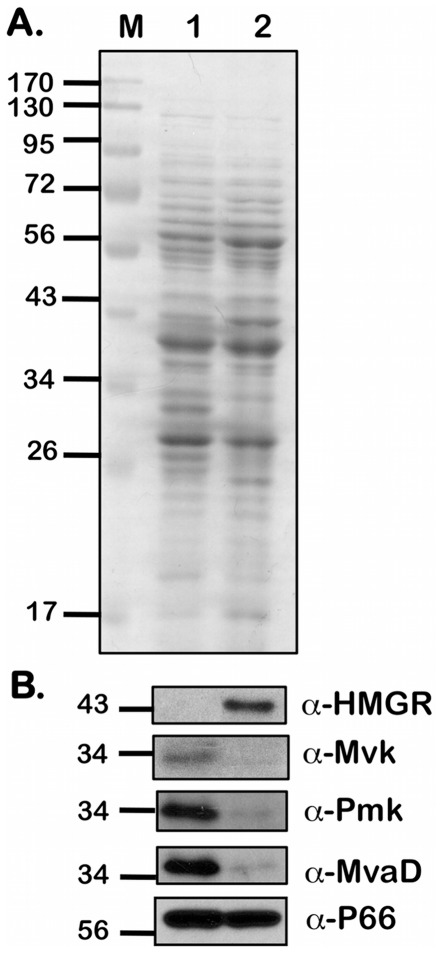
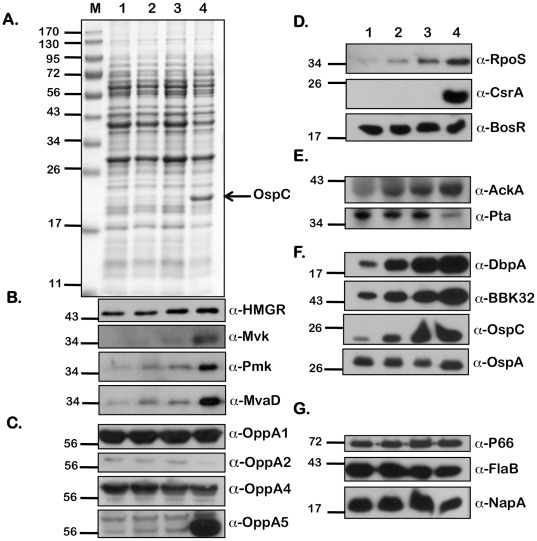
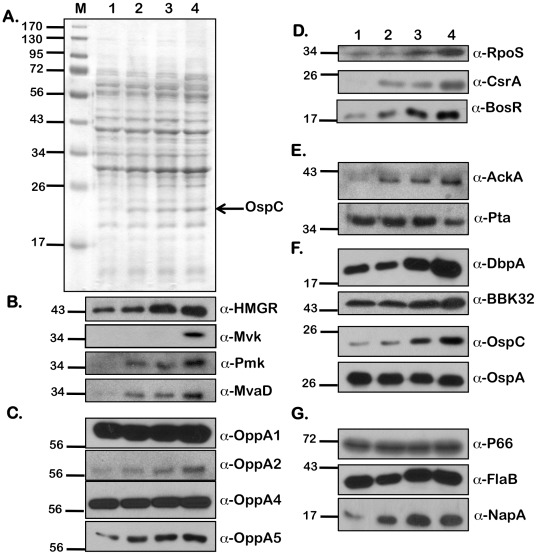
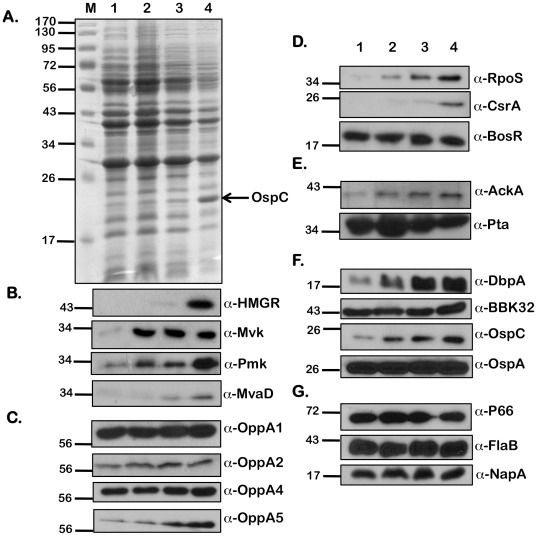
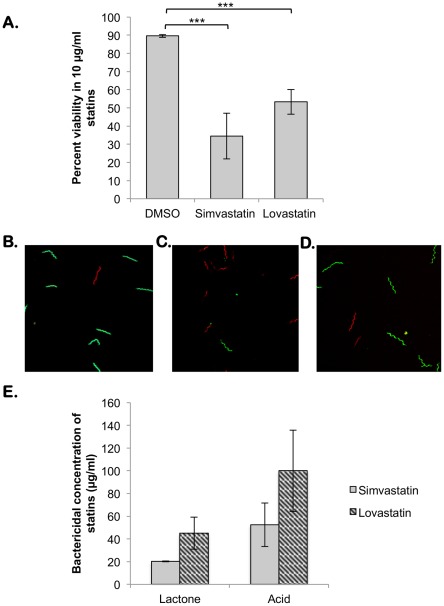
Borrelia burgdorferi, the agent of Lyme disease, is a spirochetal pathogen with limited metabolic capabilities that survives under highly disparate host-specific conditions. However, the borrelial genome encodes several proteins of the mevalonate pathway (MP) that utilizes acetyl-CoA as a substrate leading to intermediate metabolites critical for biogenesis of peptidoglycan and post-translational modifications of proteins. In this study, we analyzed the MP and contributions of acetate in modulation of adaptive responses in B. burgdorferi. Reverse-transcription PCR revealed that components of the MP are transcribed as individual open reading frames. Immunoblot analysis using monospecific sera confirmed synthesis of members of the MP in B. burgdorferi. The rate-limiting step of the MP is mediated by HMG-CoA reductase (HMGR) via conversion of HMG-CoA to mevalonate. Recombinant borrelial HMGR exhibited a K(m) value of 132 µM with a V(max) of 1.94 µmol NADPH oxidized minute(-1) (mg protein)(-1) and was inhibited by statins. Total protein lysates from two different infectious, clonal isolates of B. burgdorferi grown under conditions that mimicked fed-ticks (pH 6.8/37°C) exhibited increased levels of HMGR while other members of the MP were elevated under unfed-tick (pH 7.6/23°C) conditions. Increased extra-cellular acetate gave rise to elevated levels of MP proteins along with RpoS, CsrA(Bb) and their respective regulons responsible for mediating vertebrate host-specific adaptation. Both lactone and acid forms of two different statins inhibited growth of B. burgdorferi strain B31, while overexpression of HMGR was able to partially overcome that inhibition. In summary, these studies on MP and contributions of acetate to host-specific adaptation have helped identify potential metabolic targets that can be manipulated to reduce the incidence of Lyme disease.
伯氏疏螺旋体,莱姆病的病原体,是一种螺旋体病原体,代谢能力有限,只能在宿主特异性的高度差异条件下生存。然而,伯氏疏螺旋体的基因组编码几种甲羟戊酸途径(MP)的蛋白,这些蛋白利用乙酰辅酶 A 作为底物,产生肽聚糖生物合成和蛋白质翻译后修饰所必需的中间代谢物。在这项研究中,我们分析了 MP 及其在伯氏疏螺旋体适应性反应中的调节作用。逆转录 PCR 显示,MP 的组成部分作为单个开放阅读框转录。使用单特异性血清的免疫印迹分析证实了 MP 成员在伯氏疏螺旋体中的合成。MP 的限速步骤由 HMG-CoA 还原酶(HMGR)介导,通过将 HMG-CoA 转化为甲羟戊酸来实现。重组伯氏疏螺旋体 HMGR 表现出 132µM 的 K(m)值,V(max)为 1.94µmol NADPH 氧化分钟(-1)(mg 蛋白)(-1),并被他汀类药物抑制。在模拟喂食蜱(pH 6.8/37°C)条件下生长的两种不同传染性、克隆分离的伯氏疏螺旋体的总蛋白裂解物中,HMGR 水平升高,而在未喂食蜱(pH 7.6/23°C)条件下,其他 MP 成员水平升高。细胞外乙酸的增加导致 MP 蛋白以及 RpoS、CsrA(Bb)及其各自负责介导脊椎动物宿主特异性适应的调控子的水平升高。两种不同他汀类药物的内酯和酸形式都抑制了 B. burgdorferi 菌株 B31 的生长,而过表达 HMGR 能够部分克服这种抑制。总之,这些关于 MP 及其对宿主特异性适应的调节作用的研究有助于确定潜在的代谢靶点,这些靶点可以被操纵以减少莱姆病的发生。