Division of Rheumatology, Brigham and Women's Hospital/Harvard Medical School, 75 Francis Street, Boston, MA 02115, USA.
Arthritis Res Ther. 2012 Jun 7;14(3):R135. doi: 10.1186/ar3868.
Hydroxychloroquine (HCQ) is a common disease modifying therapy for the treatment of rheumatoid arthritis (RA). Prior research suggests that HCQ may reduce the risk of diabetes mellitus in patients with RA. To investigate the mechanism of this effect, we examined the effect of HCQ on insulin resistance, insulin sensitivity, and pancreatic β-cell secretion of insulin in non-diabetic, obese subjects.
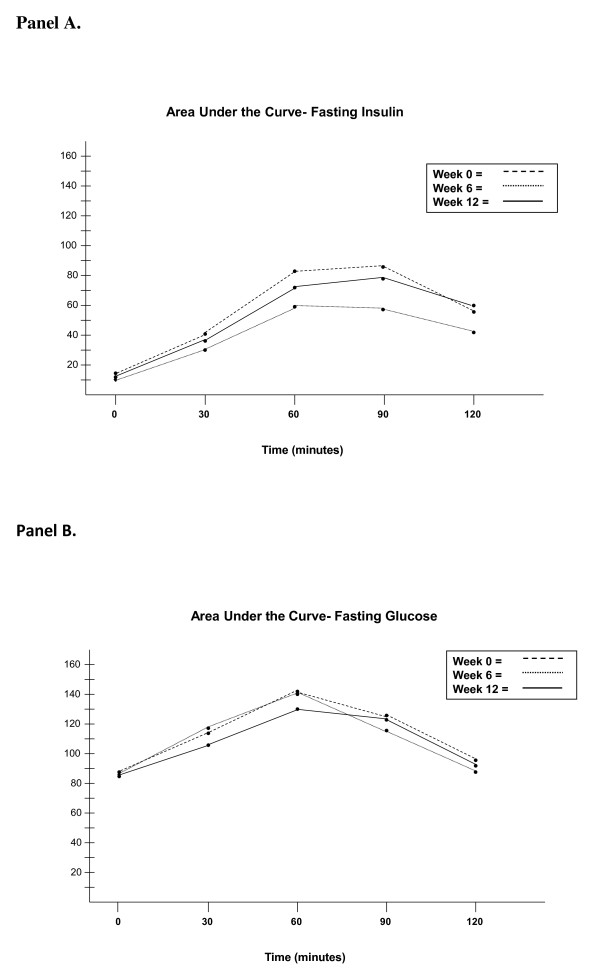
We recruited 13 obese, non-diabetic subjects without systemic inflammatory conditions for an open-label longitudinal study of HCQ 6.5 mg per kilogram per day for six weeks. Subjects underwent an oral glucose tolerance test at three time points: 0 weeks (pre-treatment with HCQ), 6 weeks (at the end of the HCQ treatment), and 12 weeks (6 weeks post HCQ-treatment). The Matsuda Insulin Sensitivity Index (ISI), HOMA-IR, and HOMA-B were compared across time-points.
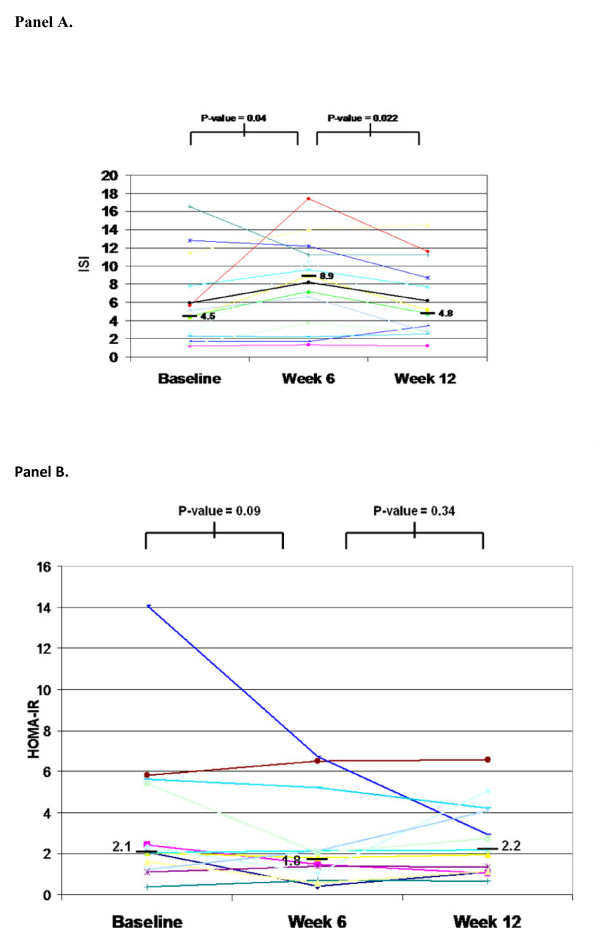
The mean age of the cohort was 49 years, 77% females and median body mass index was 36.1 kg/m2. After 6 weeks of HCQ therapy, ISI increased from a median (interquartile range) of 4.5 (2.3-7.8) to 8.9 (3.7-11.4) with a p-value of 0.040, and HOMA-IR decreased from a median of 2.1 (1.6-5.4) to 1.8 (1.02-2.1) with a p-value of 0.09. All these variables returned toward baseline at week 12.
HCQ use for 6 weeks in non diabetic obese subjects was associated with a significant increase in ISI and trends toward reduced insulin resistance and insulin secretion. These data suggest that HCQ, a common medication used to treat RA, possesses beneficial effects upon insulin sensitization. Further study of the insulin sensitizing effects of HCQ in patients with RA is warranted.
羟氯喹(HCQ)是一种常用于治疗类风湿关节炎(RA)的疾病修正治疗药物。先前的研究表明,HCQ 可能降低 RA 患者发生糖尿病的风险。为了探究这种作用的机制,我们研究了 HCQ 对非糖尿病肥胖患者胰岛素抵抗、胰岛素敏感性和胰岛β细胞胰岛素分泌的影响。
我们招募了 13 名无系统性炎症的肥胖、非糖尿病受试者,进行一项为期 6 周、每天 6.5 毫克/公斤 HCQ 的开放性纵向研究。受试者在三个时间点接受口服葡萄糖耐量试验:0 周(开始 HCQ 治疗前)、6 周(HCQ 治疗结束时)和 12 周(HCQ 治疗结束后 6 周)。比较了各时间点的 Matsuda 胰岛素敏感性指数(ISI)、HOMA-IR 和 HOMA-B。
该队列的平均年龄为 49 岁,77%为女性,中位数体重指数为 36.1kg/m2。HCQ 治疗 6 周后,ISI 从中位数(四分位间距)4.5(2.3-7.8)增加至 8.9(3.7-11.4),p 值为 0.040,HOMA-IR 从中位数 2.1(1.6-5.4)降低至 1.8(1.02-2.1),p 值为 0.09。所有这些变量在第 12 周均恢复到基线水平。
在非糖尿病肥胖受试者中,HCQ 治疗 6 周与 ISI 显著增加相关,且存在胰岛素抵抗和胰岛素分泌减少的趋势。这些数据表明,HCQ 作为一种常用于治疗 RA 的药物,可能具有改善胰岛素敏感性的作用。需要进一步研究 HCQ 对 RA 患者的胰岛素增敏作用。