Department of Physiology and Medical Physics and Centre for Study of Neurological Disorders, Royal College of Surgeons in Ireland, Dublin, Ireland.
Nat Med. 2012 Jul;18(7):1087-94. doi: 10.1038/nm.2834.
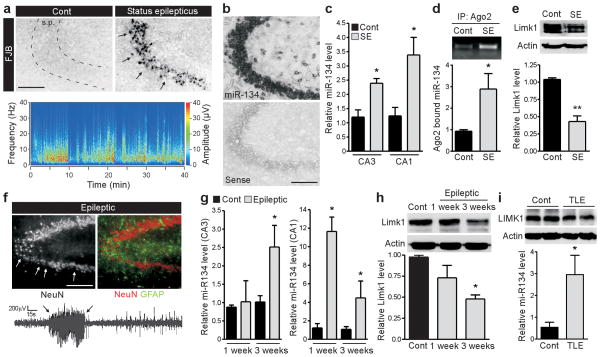
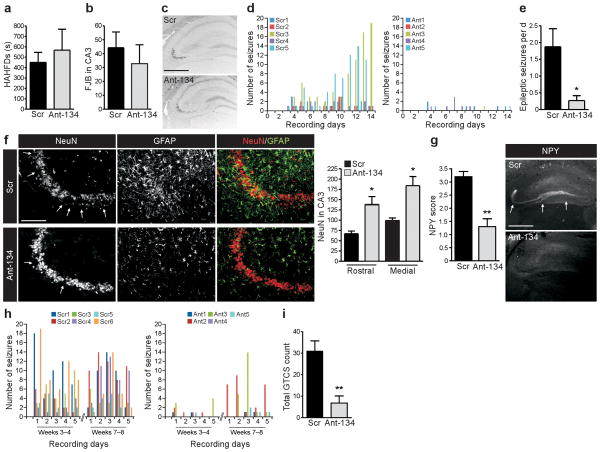
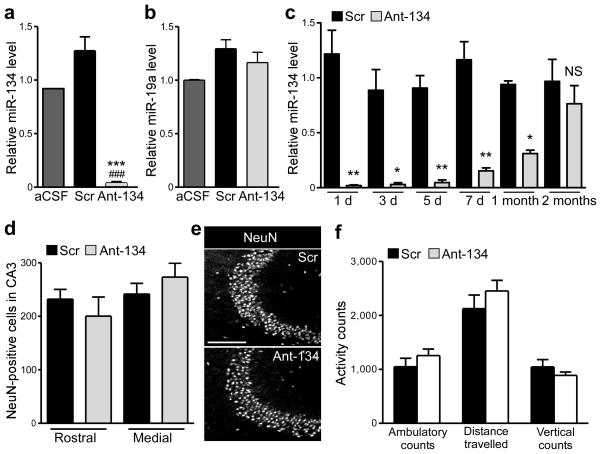
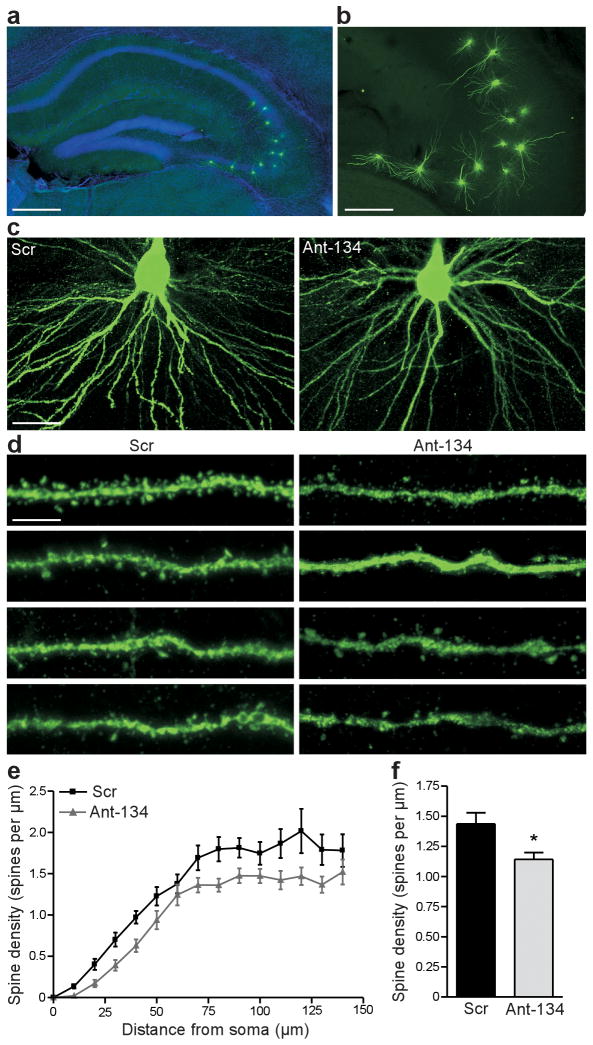
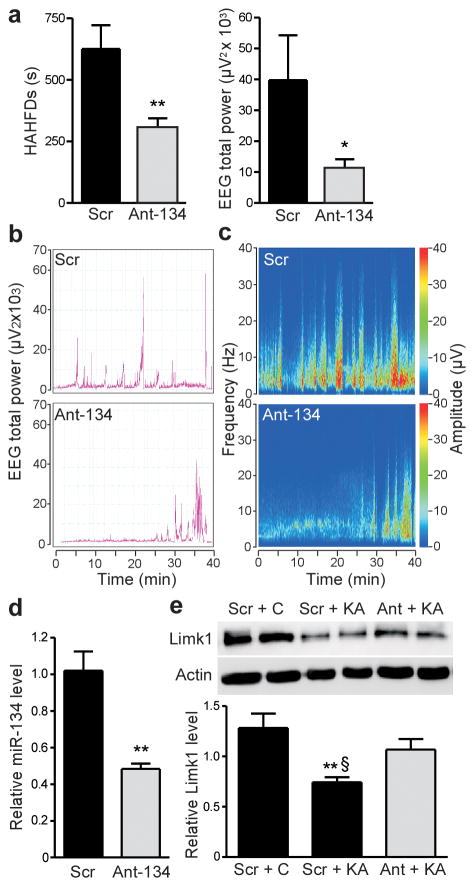
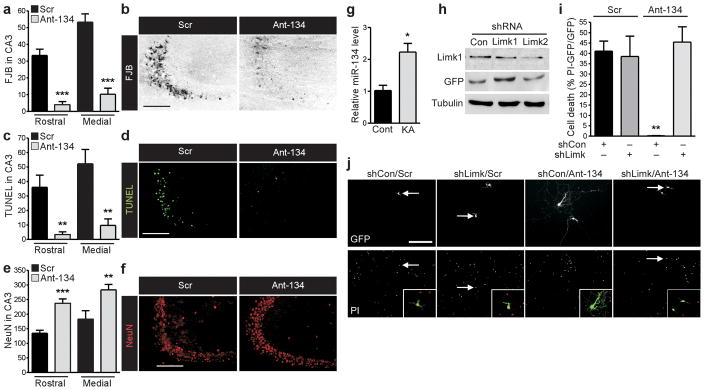
Temporal lobe epilepsy is a common, chronic neurological disorder characterized by recurrent spontaneous seizures. MicroRNAs (miRNAs) are small, noncoding RNAs that regulate post-transcriptional expression of protein-coding mRNAs, which may have key roles in the pathogenesis of neurological disorders. In experimental models of prolonged, injurious seizures (status epilepticus) and in human epilepsy, we found upregulation of miR-134, a brain-specific, activity-regulated miRNA that has been implicated in the control of dendritic spine morphology. Silencing of miR-134 expression in vivo using antagomirs reduced hippocampal CA3 pyramidal neuron dendrite spine density by 21% and rendered mice refractory to seizures and hippocampal injury caused by status epilepticus. Depletion of miR-134 after status epilepticus in mice reduced the later occurrence of spontaneous seizures by over 90% and mitigated the attendant pathological features of temporal lobe epilepsy. Thus, silencing miR-134 exerts prolonged seizure-suppressant and neuroprotective actions; determining whether these are anticonvulsant effects or are truly antiepileptogenic effects requires additional experimentation.
颞叶癫痫是一种常见的慢性神经系统疾病,其特征是反复发作的自发性癫痫发作。微小 RNA(miRNA)是一种小的非编码 RNA,可调节蛋白质编码 mRNA 的转录后表达,其可能在神经疾病的发病机制中起关键作用。在长期、有害的癫痫发作(癫痫持续状态)的实验模型和人类癫痫中,我们发现 miR-134 上调,miR-134 是一种脑特异性、活性调节的 miRNA,与树突棘形态的控制有关。体内使用反义寡核苷酸沉默 miR-134 的表达,使海马 CA3 锥体神经元树突棘密度降低了 21%,并使小鼠对癫痫持续状态引起的癫痫发作和海马损伤产生抗性。在癫痫持续状态后,miR-134 在小鼠中的耗竭使自发性癫痫发作的后期发生减少了 90%以上,并减轻了颞叶癫痫的伴随病理特征。因此,沉默 miR-134 可发挥长期的抗癫痫和神经保护作用;确定这些是否为抗惊厥作用,还是真正的抗癫痫作用,需要进一步的实验。