Nihon University, Tokyo, Japan.
Proc Jpn Acad Ser B Phys Biol Sci. 2012;88(5):192-200. doi: 10.2183/pjab.88.192.
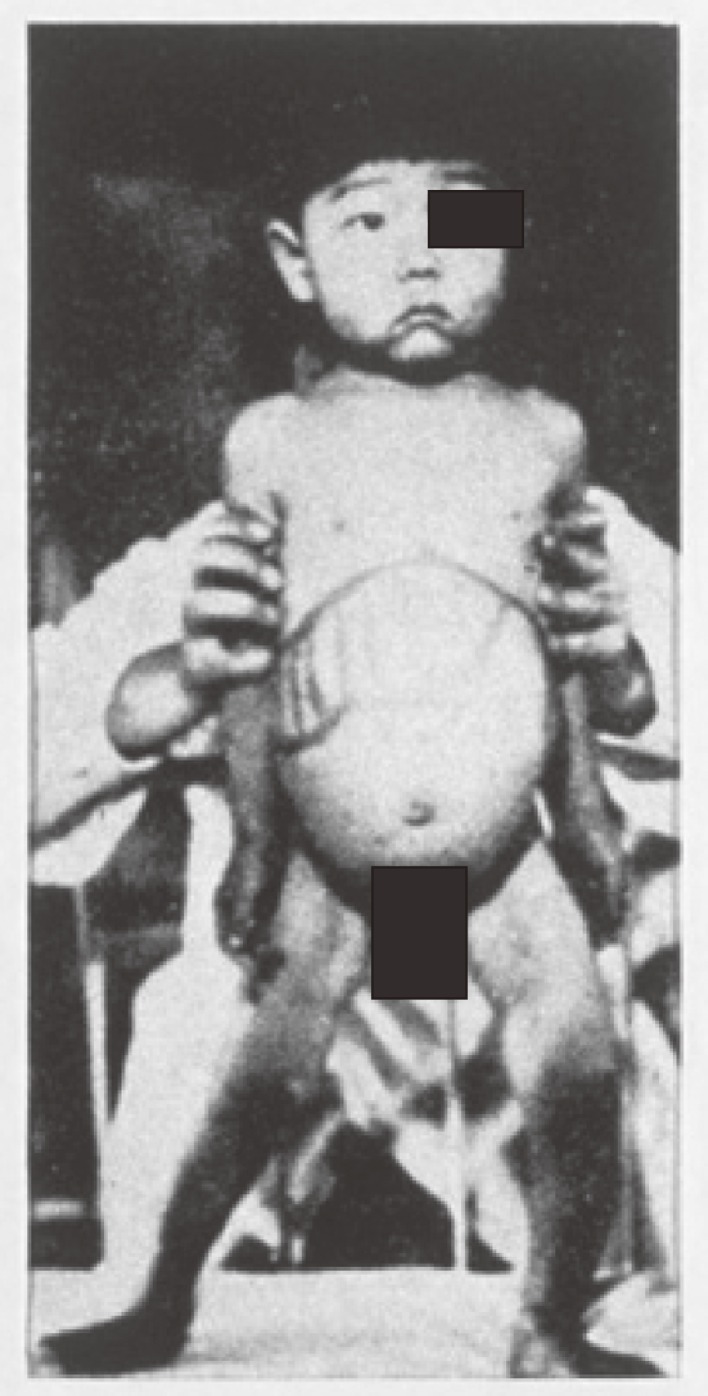
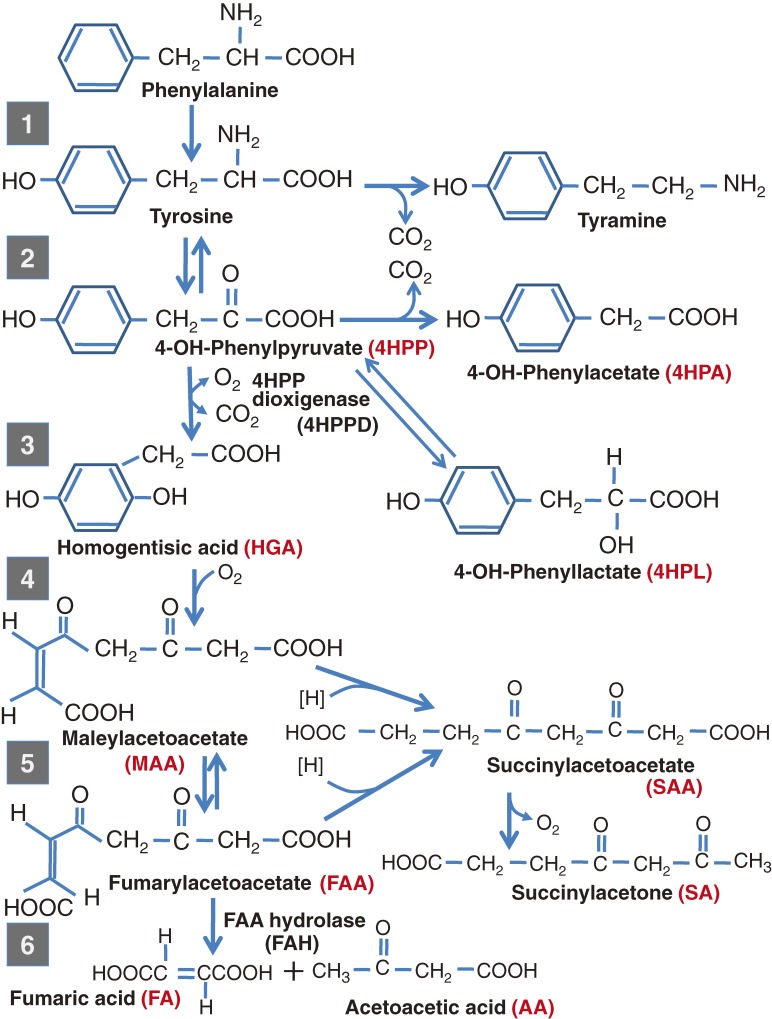
In 1957 Sakai and Kitagawa in Japan reported the clinical and biochemical findings in a patient with tyrosinemia, tyrosyluria, liver cirrhosis, and renal rickets. Subsequently, reports were published from various countries of other patients with hepatorenal tyrosinemia (HRT). 4-Hydroxyphenylpyruvate dioxygenase deficiency was originally proposed as the cause of HRT. However, in 1977 Lindblad et al. found that succinylacetone, which accumulates in the serum and urine from patients with HRT, inhibits delta-aminolevulinic acid (ALA) dehydratase in vitro. They suggested that the primary enzyme deficiency in patients with HRT was fumarylacetoacetate hydrolase, and this was soon confirmed. Thus, the elucidation of the pathogenesis of this disease has led to the possibility that, if a reliable newborn screening method could be developed, the prognosis of these patients would be improved. Early treatment would require a diet low in phenylalanine and tyrosine, administration of 2-(2-nitoro-4-trifluoromethylbenzoyl)-1,3-cyclohexanedione (NTBC), and liver transplantation.
1957 年,日本的酒井和北川报道了一例酪氨酸血症、酪氨酸尿症、肝硬化和肾性佝偻病患者的临床和生化发现。随后,来自不同国家的报告发表了其他肝肾功能酪氨酸血症(HRT)患者的病例。最初提出 4-羟苯丙酮酸双加氧酶缺乏是 HRT 的原因。然而,1977 年林德布拉德等人发现,HRT 患者血清和尿液中积累的琥珀酰丙酮在体外抑制δ-氨基乙酰丙酸(ALA)脱水酶。他们认为,HRT 患者的主要酶缺乏是延胡索酰乙酰乙酸水解酶,这很快得到了证实。因此,对这种疾病发病机制的阐明使人们有可能,如果能够开发出一种可靠的新生儿筛查方法,这些患者的预后将会得到改善。早期治疗需要低苯丙氨酸和酪氨酸饮食、2-(2-硝基-4-三氟甲基苯甲酰基)-1,3-环己二酮(NTBC)的给予和肝移植。