Department of Pathobiology, University of Pennsylvania School of Veterinary Medicine, Philadelphia, Pennsylvania, United States of America.
PLoS One. 2012;7(6):e38596. doi: 10.1371/journal.pone.0038596. Epub 2012 Jun 12.
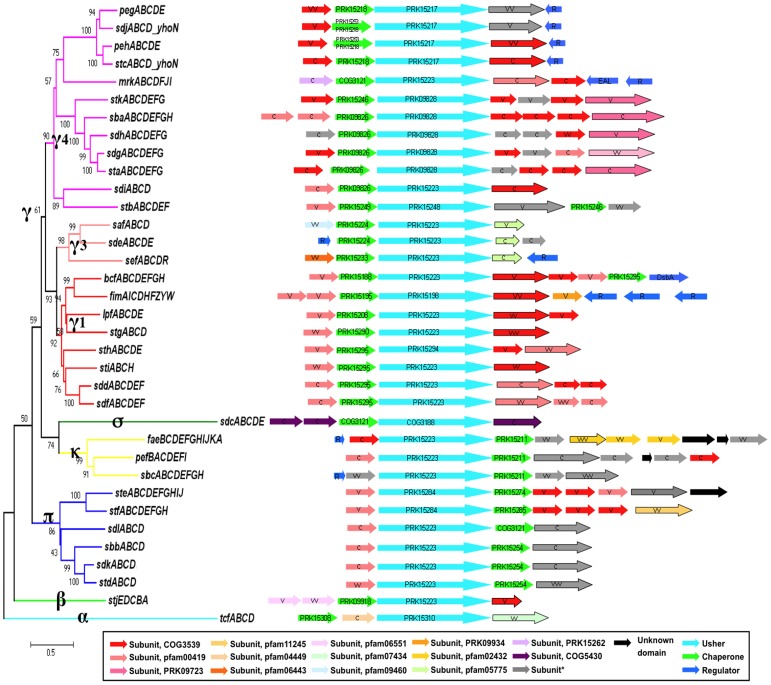
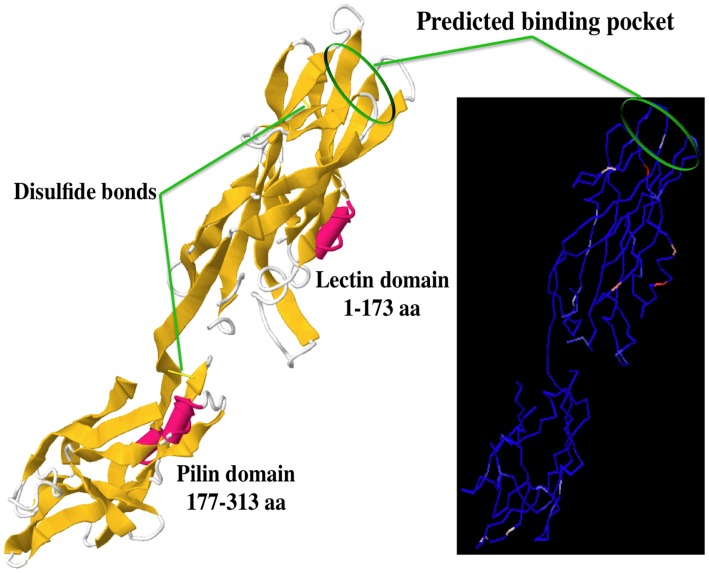
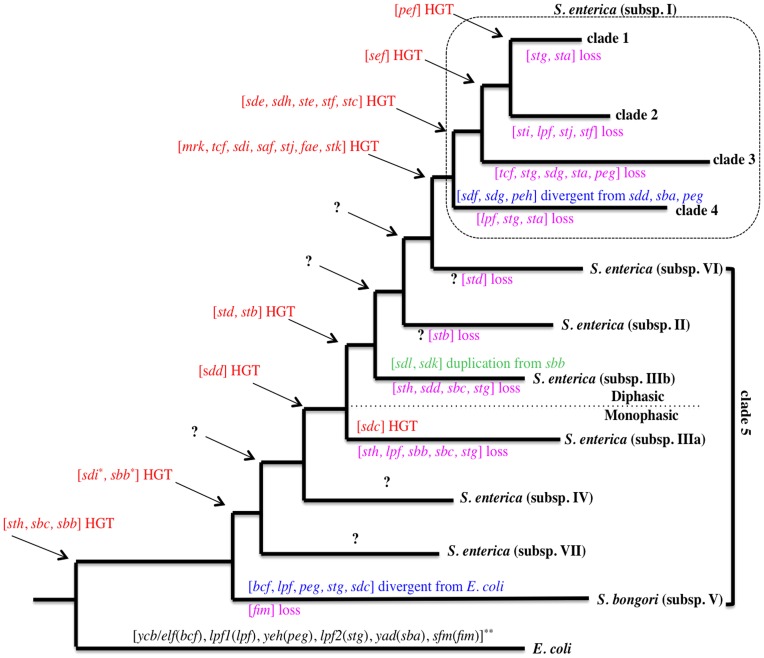
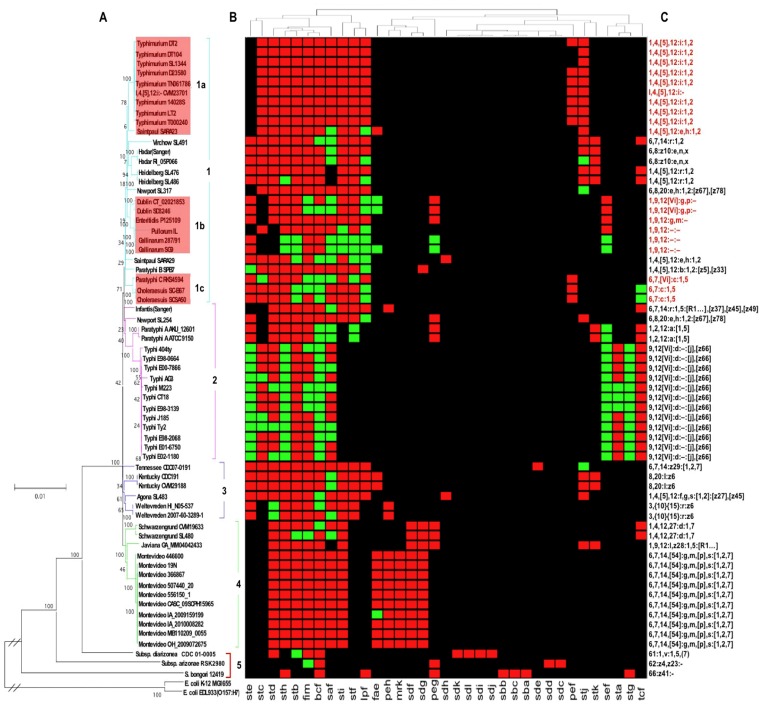
Bacteria of the genus Salmonella comprise a large and evolutionary related population of zoonotic pathogens that can infect mammals, including humans and domestic animals, birds, reptiles and amphibians. Salmonella carries a plethora of virulence genes, including fimbrial adhesins, some of them known to participate in mammalian or avian host colonization. Each type of fimbria has its structural subunit and biogenesis genes encoded by one fimbrial gene cluster (FGC). The accumulation of new genomic information offered a timely opportunity to better evaluate the number and types of FGCs in the Salmonella pangenome, to test the use of current classifications based on phylogeny, and to infer potential correlations between FGC evolution in various Salmonella serovars and host niches. This study focused on the FGCs of the currently deciphered 90 genomes and 60 plasmids of Salmonella. The analysis highlighted a fimbriome consisting of 35 different FGCs, of which 16 were new, each strain carrying between 5 and 14 FGCs. The Salmonella fimbriome was extremely diverse with FGC representatives in 8 out of 9 previously categorized fimbrial clades and subclades. Phylogenetic analysis of Salmonella suggested macroevolutionary shifts detectable by extensive FGC deletion and acquisition. In addition, microevolutionary drifts were best depicted by the high level of allelic variation in predicted or known adhesins, such as the type 1 fimbrial adhesin FimH for which 67 different natural alleles were identified in S. enterica subsp. I. Together with strain-specific collections of FGCs, allelic variation among adhesins attested to the pathoadaptive evolution of Salmonella towards specific hosts and tissues, potentially modulating host range, strain virulence, disease progression, and transmission efficiency. Further understanding of how each Salmonella strain utilizes its panel of FGCs and specific adhesin alleles for survival and infection will support the development of new approaches for the control of Salmonellosis.
沙门氏菌属的细菌包含大量进化相关的人畜共患病病原体种群,可感染哺乳动物,包括人类和家畜、鸟类、爬行动物和两栖动物。沙门氏菌携带大量毒力基因,包括菌毛粘附素,其中一些已知参与哺乳动物或禽类宿主定殖。每种菌毛都有其结构亚基和生物发生基因,由一个菌毛基因簇(FGC)编码。新基因组信息的积累为更好地评估沙门氏菌泛基因组中的 FGC 数量和类型、测试基于系统发育的现有分类法的使用以及推断各种沙门氏菌血清型和宿主小生境中 FGC 进化之间的潜在相关性提供了及时的机会。本研究集中于目前破译的 90 个沙门氏菌基因组和 60 个质粒的 FGC。分析突出了由 35 个不同 FGC 组成的菌毛组,其中 16 个是新的,每个菌株携带 5 到 14 个 FGC。沙门氏菌菌毛组非常多样化,在 9 个先前分类的菌毛群和亚群中有 FGC 代表。沙门氏菌的系统发育分析表明,通过广泛的 FGC 删除和获得可以检测到宏观进化转变。此外,通过预测或已知粘附素的等位基因变异水平可以最好地描述微进化漂移,例如 1 型菌毛粘附素 FimH,在肠沙门氏菌亚种 I 中鉴定出 67 个不同的天然等位基因。与菌株特异性的 FGC 集合一起,粘附素中的等位基因变异证明了沙门氏菌对特定宿主和组织的病理适应进化,可能调节宿主范围、菌株毒力、疾病进展和传播效率。进一步了解每个沙门氏菌菌株如何利用其 FGC 面板和特定粘附素等位基因进行生存和感染,将支持开发控制沙门氏菌病的新方法。