Department of Neuroscience, Baylor College of Medicine, One Baylor Plaza, Houston, TX 77030, USA.
Mol Neurodegener. 2012 Jun 18;7:28. doi: 10.1186/1750-1326-7-28.
Transgenic mice expressing disease-associated proteins have become standard tools for studying human neurological disorders. Transgenes are often expressed using promoters chosen to drive continuous high-level expression throughout life rather than temporal and spatial fidelity to the endogenous gene. This approach has allowed us to recapitulate diseases of aging within the two-year lifespan of the laboratory mouse, but has the potential for creating aberrant phenotypes by mechanisms unrelated to the human disorder.
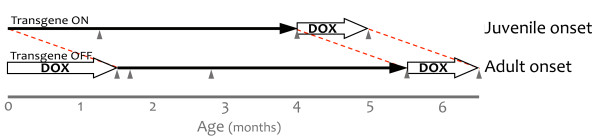
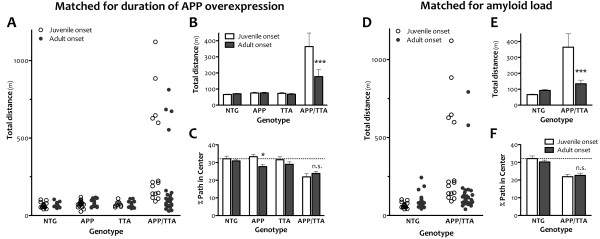
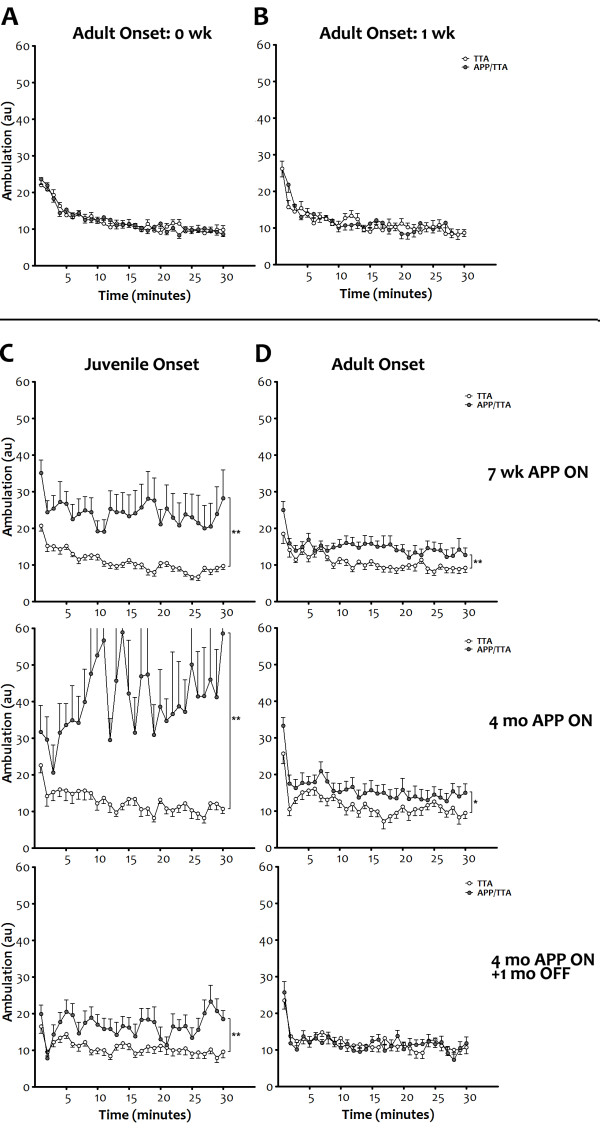
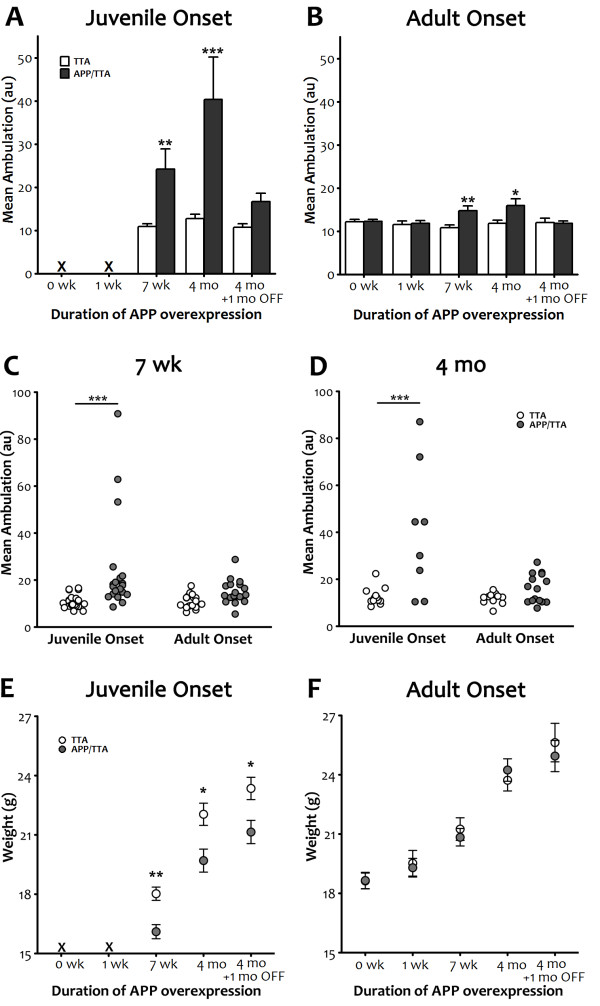
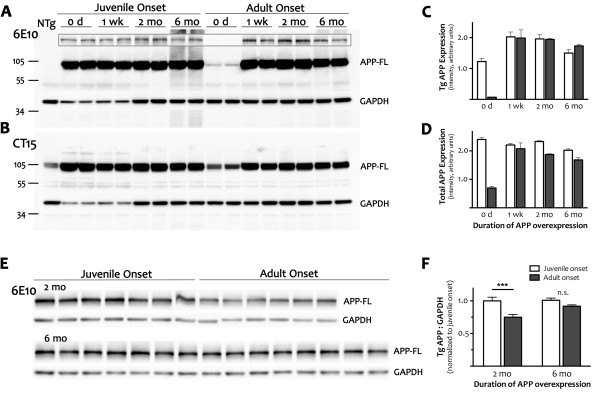
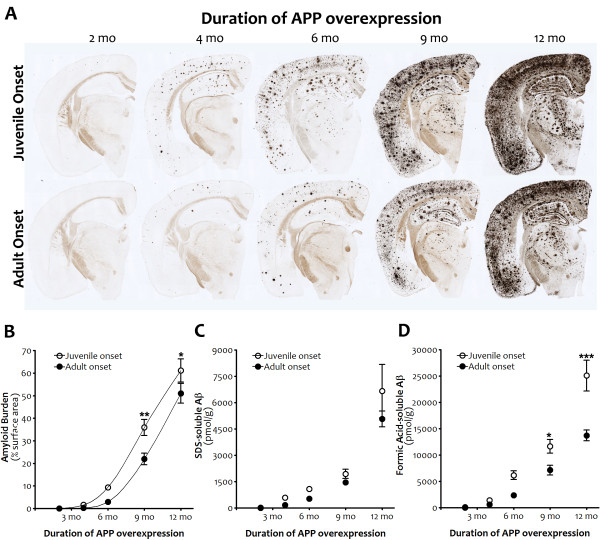
We show that overexpression of the Alzheimer's-related amyloid precursor protein (APP) during early postnatal development leads to severe locomotor hyperactivity that can be significantly attenuated by delaying transgene onset until adulthood. Our data suggest that exposure to transgenic APP during maturation influences the development of neuronal circuits controlling motor activity. Both when matched for total duration of APP overexpression and when matched for cortical amyloid burden, animals exposed to transgenic APP as juveniles are more active in locomotor assays than animals in which APP overexpression was delayed until adulthood. In contrast to motor activity, the age of APP onset had no effect on thigmotaxis in the open field as a rough measure of anxiety, suggesting that the interaction between APP overexpression and brain development is not unilateral.
Our findings indicate that locomotor hyperactivity displayed by the tet-off APP transgenic mice and several other transgenic models of Alzheimer's disease may result from overexpression of mutant APP during postnatal brain development. Our results serve as a reminder of the potential for unexpected interactions between foreign transgenes and brain development to cause long-lasting effects on neuronal function in the adult. The tet-off APP model provides an easy means of avoiding developmental confounds by allowing transgene expression to be delayed until the mice reach adulthood.
表达与疾病相关蛋白的转基因小鼠已成为研究人类神经紊乱的标准工具。转基因通常使用启动子表达,这些启动子被选择用于在整个生命过程中持续高水平表达,而不是在时间和空间上与内源性基因保持一致。这种方法使我们能够在实验室小鼠的两年寿命内重现与衰老相关的疾病,但也有可能通过与人类疾病无关的机制产生异常表型。
我们表明,在出生后早期过度表达阿尔茨海默病相关的淀粉样前体蛋白(APP)会导致严重的运动过度活跃,而通过延迟转基因的起始直到成年期,可以显著减轻这种过度活跃。我们的数据表明,在成熟过程中暴露于转基因 APP 会影响控制运动活动的神经元回路的发育。当匹配 APP 过表达的总持续时间和匹配皮质淀粉样蛋白负担时,在青少年时期暴露于转基因 APP 的动物在运动测试中比将 APP 过表达延迟到成年期的动物更活跃。与运动活动相反,APP 起始的年龄对开阔场中的触壁行为(作为焦虑的粗略衡量标准)没有影响,这表明 APP 过表达和大脑发育之间的相互作用不是单方面的。
我们的研究结果表明,tet-off APP 转基因小鼠和其他几种阿尔茨海默病的转基因模型所表现出的运动过度活跃可能是由于在出生后大脑发育过程中过度表达突变型 APP 所致。我们的研究结果提醒人们注意外来转基因与大脑发育之间可能发生的意想不到的相互作用,这些相互作用可能会对成年后神经元功能产生持久影响。tet-off APP 模型通过允许转基因表达延迟到小鼠成年期,为避免发育性混杂提供了一种简便的方法。