Prenatal Diagnosis Centre, Guangdong Women and Children Hospital, Guangzhou, Guangdong 510010, China.
BMC Med Genomics. 2012 Jun 18;5:26. doi: 10.1186/1755-8794-5-26.
The noninvasive prenatal diagnosis procedures that are currently used to detect genetic diseases do not achieve desirable levels of sensitivity and specificity. Recently, fetal methylated DNA biomarkers in maternal peripheral blood have been explored for the noninvasive prenatal detection of genetic disorders. However, such efforts have covered only chromosomal aneuploidy, and fetal methylated DNA biomarkers in maternal whole blood for detecting single-gene diseases remain to be discovered.
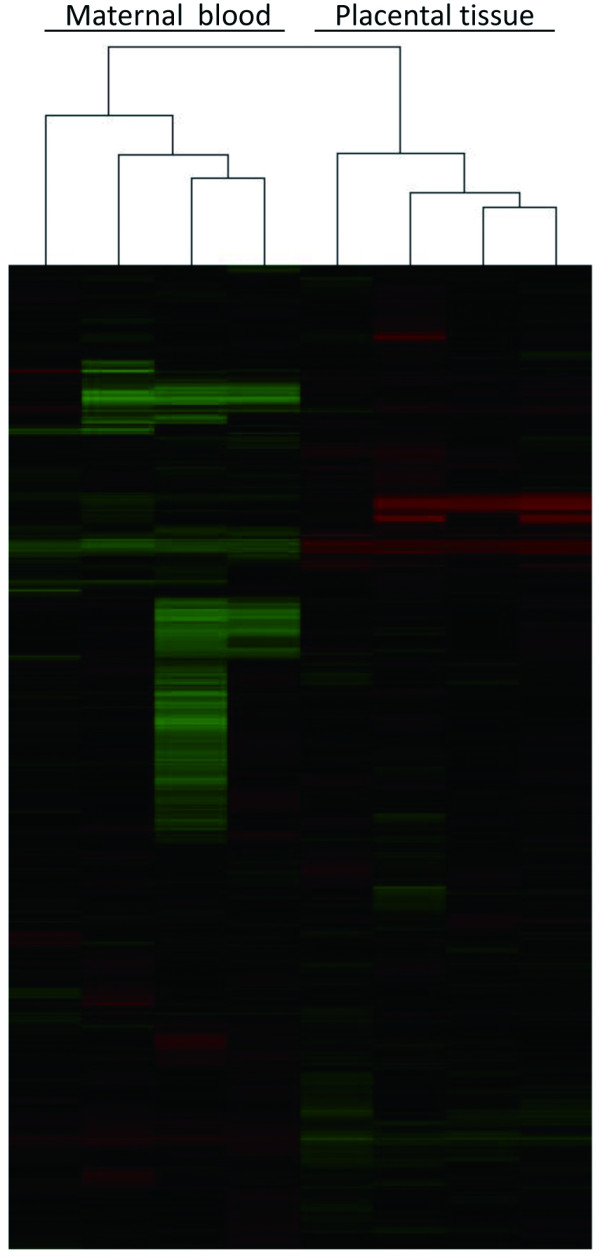
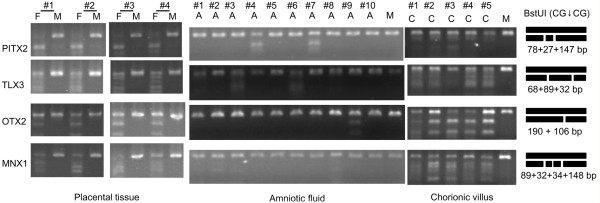
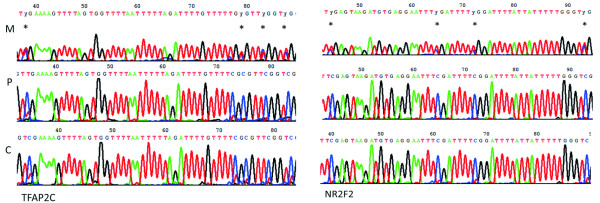
To address this issue, we systematically screened significantly hypermethylated genes in fetal tissues and compared them with maternal peripheral blood potential in an attempt to detect fetal genes in maternal peripheral blood. First, the methylated-CpG island recovery assay combined with a CpG island array was performed for four fetus-toward placental tissues and the corresponding maternal peripheral bloods. Subsequently, direct bisulfite sequencing and combined bisulfite restriction analysis (COBRA) were carried out to validate the methylation status of the hypermethylated genes that were identified by the microarray analysis.
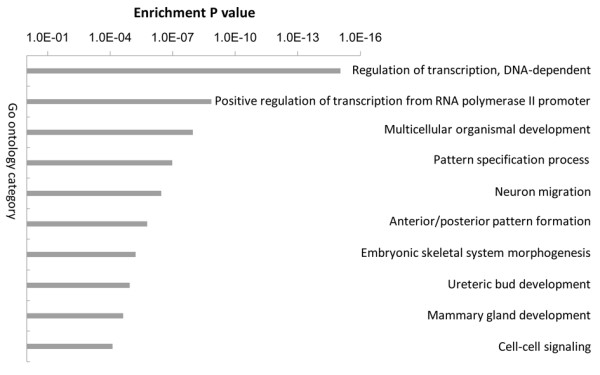
Three hundred and ten significantly hypermethylated genes in the placental tissues were detected by microarray. From the top 15 hypermethylated genes detected by microarray, two were selected for sequencing validation in placental tissue and chorionic villus samples and four were selected for COBRA validation in four placental tissues, ten amniotic fluids and five chorionic villus samples. The six selected genes were confirmed to be hypermethylated in placental tissue and chorionic villus samples, but methylation of the genes could not be detected in the amniotic fluids.
Of the many hypermethylated genes and methylation sites that were found in the fetal tissues, some have great potential to be developed into molecular markers for noninvasive prenatal diagnosis of monogenic disorders. Further clinical studies are warranted to confirm these findings.
目前用于检测遗传疾病的无创性产前诊断程序并未达到理想的灵敏度和特异性。最近,人们探索了母体外周血中的胎儿甲基化 DNA 生物标志物,以用于遗传疾病的无创性产前检测。然而,这些研究仅涵盖了染色体非整倍体,而用于检测单基因疾病的母体全血中胎儿甲基化 DNA 生物标志物仍有待发现。
为了解决这个问题,我们系统地筛选了胎儿组织中明显过度甲基化的基因,并将其与母体外周血中的潜在基因进行了比较,试图在母体外周血中检测到胎儿基因。首先,我们采用甲基化-CpG 岛回收分析联合 CpG 岛微阵列,对 4 例胎儿向胎盘组织及其相应的母体外周血进行了检测。随后,我们采用直接亚硫酸氢盐测序和联合亚硫酸氢盐限制性分析(COBRA)对通过微阵列分析鉴定出的高甲基化基因的甲基化状态进行了验证。
微阵列检测到胎盘组织中 310 个明显过度甲基化的基因。在通过微阵列检测到的前 15 个高甲基化基因中,选择了 2 个进行胎盘组织和绒毛膜组织样本的测序验证,选择了 4 个进行 4 个胎盘组织、10 份羊水和 5 份绒毛膜组织样本的 COBRA 验证。这 6 个选定的基因在胎盘组织和绒毛膜组织样本中被证实呈高甲基化状态,但在羊水样本中无法检测到这些基因的甲基化。
在胎儿组织中发现的许多高甲基化基因和甲基化位点中,有一些很有潜力被开发成单基因疾病无创性产前诊断的分子标志物。需要进一步的临床研究来证实这些发现。