University of New Mexico Health Sciences Center, Department of Neurology, Albuquerque, NM 87131, USA.
Neuroscience. 2012 Sep 18;220:277-90. doi: 10.1016/j.neuroscience.2012.06.019. Epub 2012 Jun 16.
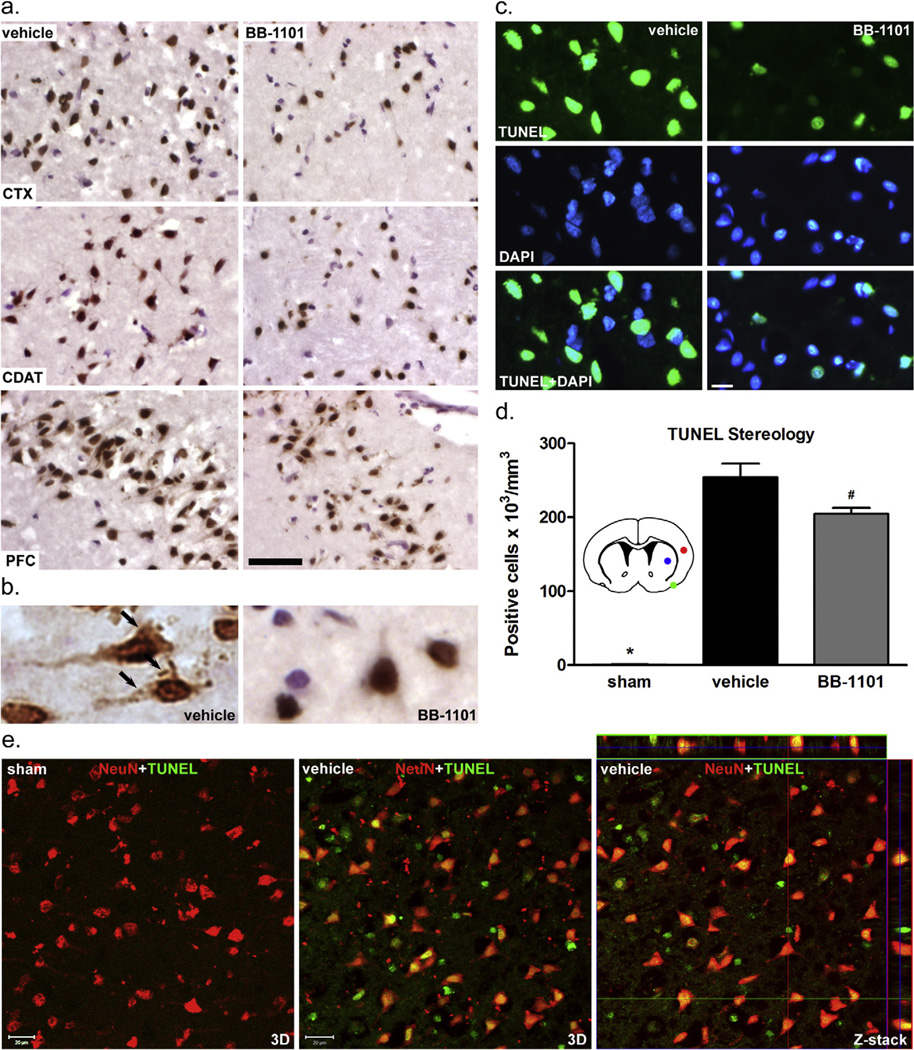
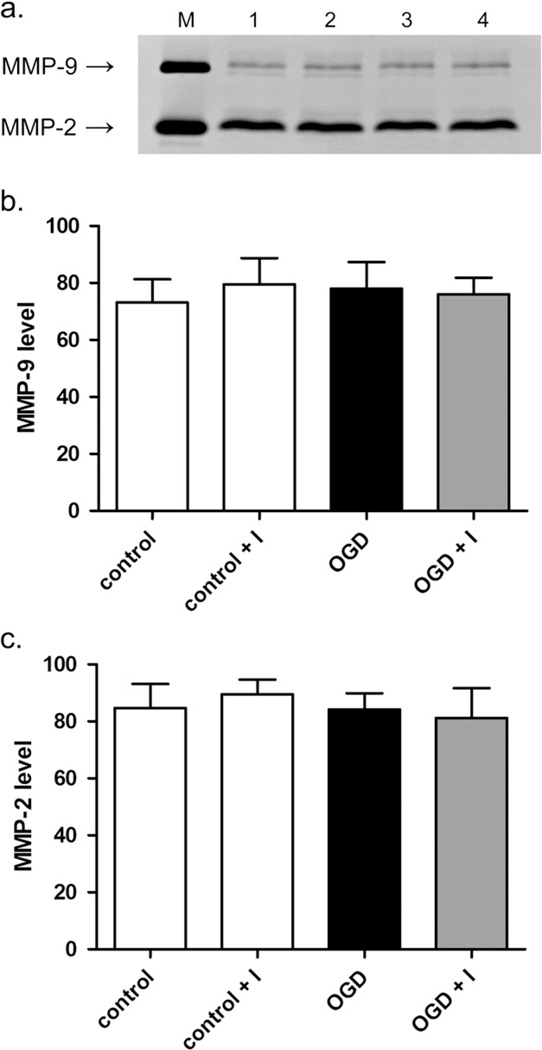
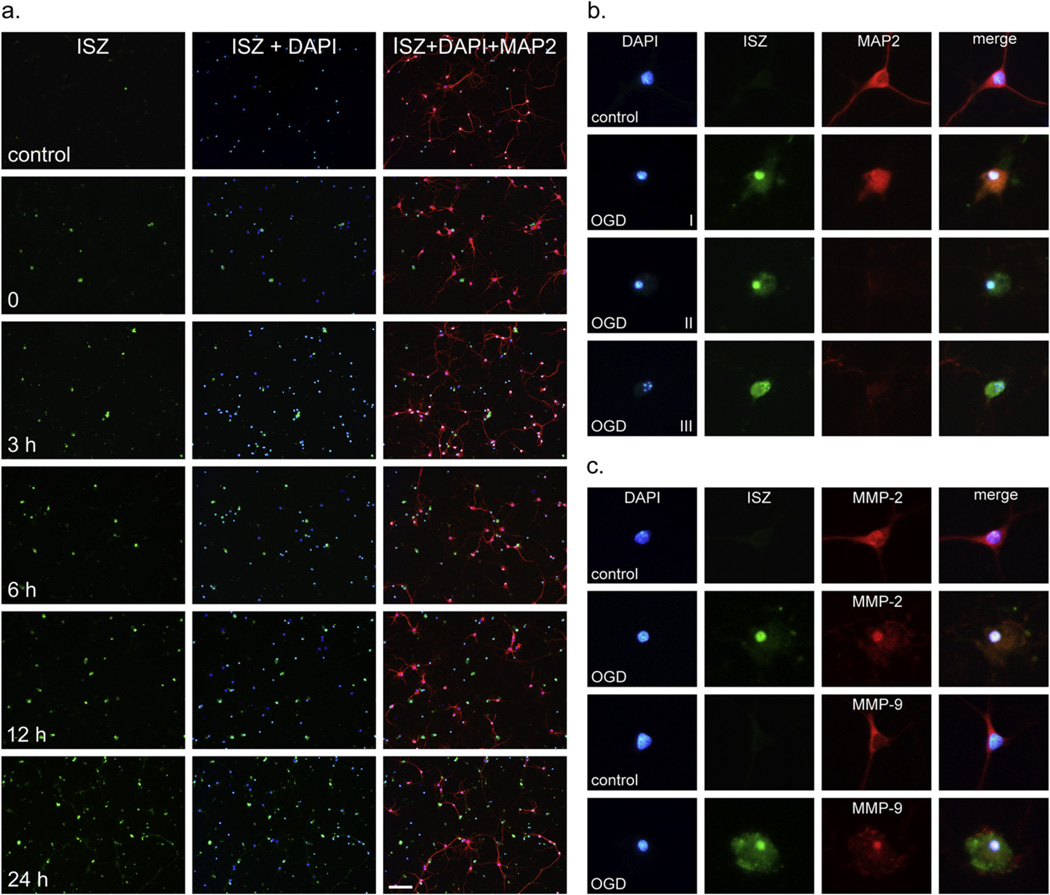
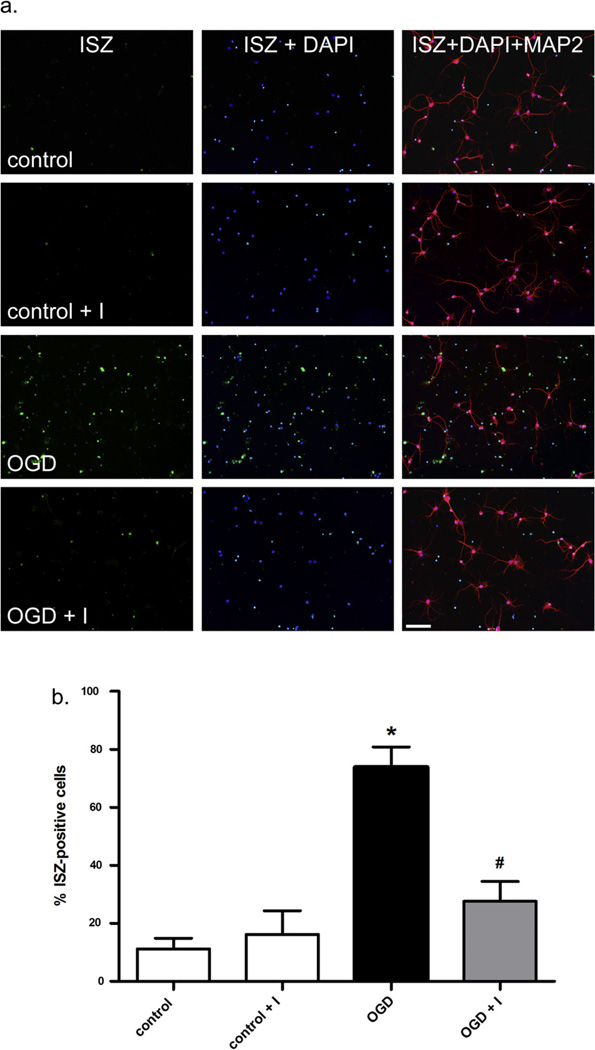
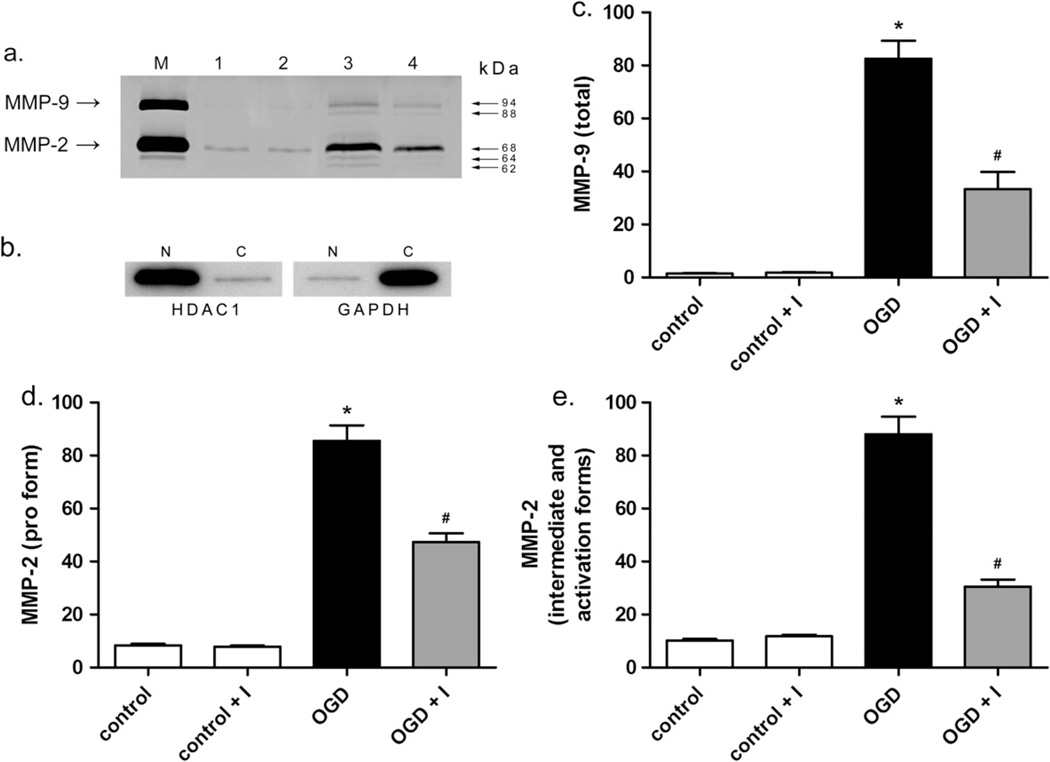
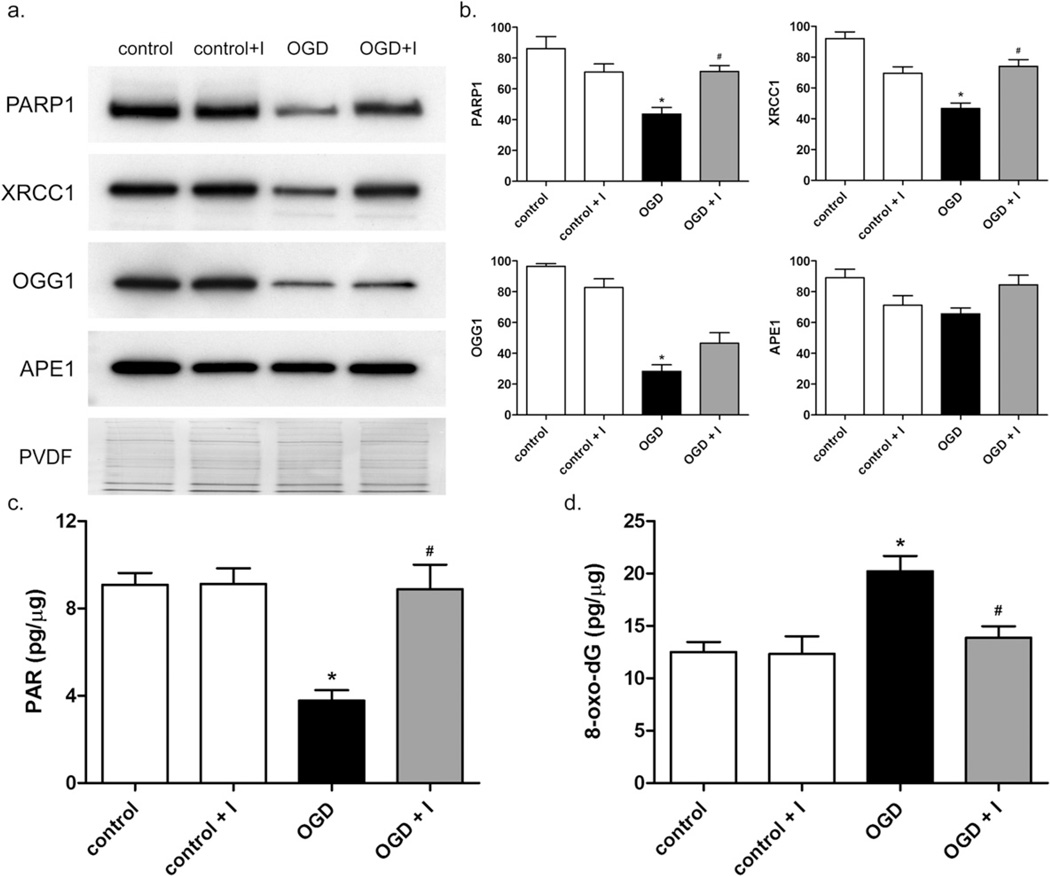
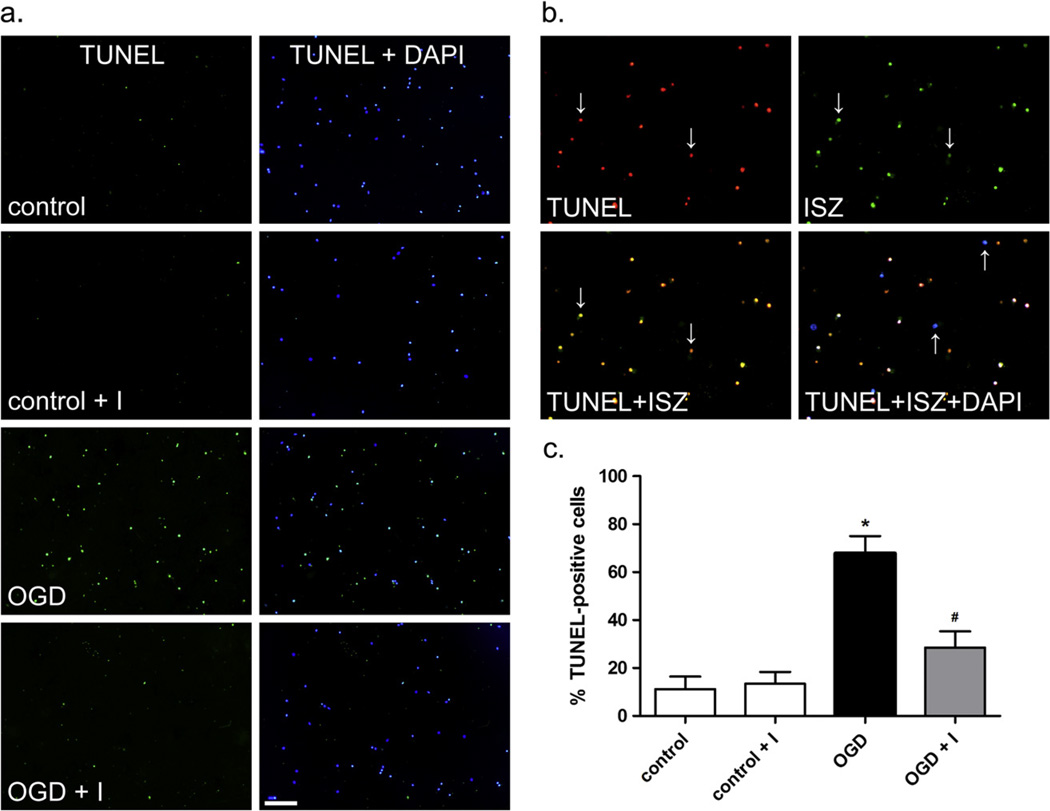
Degradation of the extracellular matrix by elevated matrix metalloproteinase (MMP) activity following ischemia/reperfusion is implicated in blood-brain barrier disruption and neuronal death. In contrast to their characterized extracellular roles, we previously reported that elevated intranuclear MMP-2 and -9 (gelatinase) activity degrades nuclear DNA repair proteins and promotes accumulation of oxidative DNA damage in neurons in rat brain at 3-h reperfusion after ischemic stroke. Here, we report that treatment with a broad-spectrum MMP inhibitor significantly reduced neuronal apoptosis in rat ischemic hemispheres at 48-h reperfusion after a 90-min middle cerebral artery occlusion (MCAO). Since extracellular gelatinases in brain tissue are known to be neurotoxic during acute stroke, the contribution of intranuclear MMP-2 and -9 activities in neurons to neuronal apoptosis has been unclear. To confirm and extend our in vivo observations, oxygen-glucose deprivation (OGD), an in vitro model of ischemia/reperfusion, was employed. Primary cortical neurons were subjected to 2-h OGD with reoxygenation. Increased intranuclear gelatinase activity was detected immediately after reoxygenation onset and was maximal at 24h, while extracellular gelatinase levels remained unchanged. We detected elevated levels of both MMP-2 and -9 in neuronal nuclear extracts and gelatinase activity in neurons co-localized primarily with MMP-2. We found a marked decrease in PARP1, XRCC1, and OGG1, and decreased PARP1 activity. Pretreatment of neurons with selective MMP-2/9 inhibitor II significantly decreased gelatinase activity and downregulation of DNA repair enzymes, decreased accumulation of oxidative DNA damage, and promoted neuronal survival after OGD. Our results confirm the nuclear localization of gelatinases and their nuclear substrates observed in an animal stroke model, further supporting a novel role for intranuclear gelatinase activity in an intrinsic apoptotic pathway in neurons during acute stroke injury.
缺血/再灌注后细胞外基质的降解是由于基质金属蛋白酶(MMP)活性升高导致的,这与血脑屏障破坏和神经元死亡有关。与它们在细胞外的特征性作用相反,我们之前报道称,在缺血性中风后 3 小时再灌注时,升高的核内 MMP-2 和 -9(明胶酶)活性会降解核内 DNA 修复蛋白,并促进神经元中氧化 DNA 损伤的积累。在这里,我们报告称,在 90 分钟大脑中动脉闭塞(MCAO)后 48 小时再灌注时,广谱 MMP 抑制剂的治疗显著降低了大鼠缺血半球中的神经元凋亡。由于脑组织中的细胞外明胶酶在急性中风期间具有神经毒性,因此核内 MMP-2 和 -9 活性对神经元凋亡的贡献尚不清楚。为了证实并扩展我们的体内观察结果,我们采用了氧葡萄糖剥夺(OGD),这是一种缺血/再灌注的体外模型。原代皮质神经元接受 2 小时的 OGD 再复氧。再复氧开始时立即检测到核内明胶酶活性增加,并在 24 小时时达到最大值,而细胞外明胶酶水平保持不变。我们在神经元核提取物中检测到 MMP-2 和 -9 水平升高,并在神经元中检测到明胶酶活性主要与 MMP-2 共定位。我们发现 PARP1、XRCC1 和 OGG1 水平升高,PARP1 活性降低。神经元用选择性 MMP-2/9 抑制剂 II 预处理后,明胶酶活性和 DNA 修复酶下调显著降低,氧化 DNA 损伤积累减少,OGD 后神经元存活增加。我们的结果证实了在动物中风模型中观察到的明胶酶的核定位及其核内底物,进一步支持了核内明胶酶活性在急性中风损伤期间神经元内在凋亡途径中的新作用。