Department of Psychology, Bloomsburg University of Pennsylvania, 400 E 2nd St, Bloomsburg, PA 17815, USA.
Psychopharmacology (Berl). 2012 Dec;224(3):377-85. doi: 10.1007/s00213-012-2762-5. Epub 2012 Jun 19.
The amphetamine derivative 3,4-methylenedioxymethamphetamine (MDMA; ecstasy) is a widely abused drug, particularly in adolescent and young adult populations. Although it was shown that MDMA-associated cues reinstate extinguished MDMA seeking in an animal relapse model, there is little information regarding the neural mechanisms underlying this behavior.
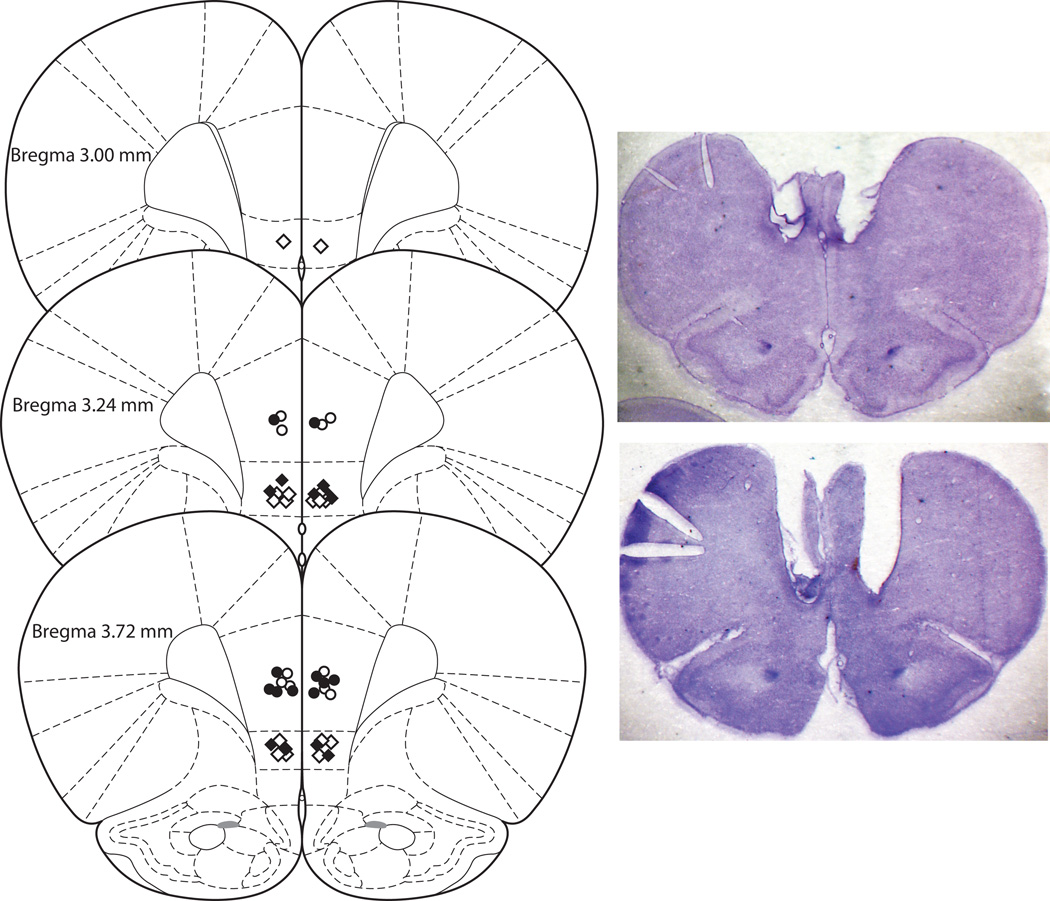
Because the medial prefrontal cortex (mPFC) plays an important role in relapse to cocaine and methamphetamine seeking, we tested the effects of lidocaine inactivation of prelimbic (PL) and infralimbic (IL) subregions of mPFC on cue-induced relapse to MDMA seeking.
Rats were trained to respond for MDMA infusions (0.50 mg/kg/infusion, i.v.) paired with a discrete cue in daily 2-h sessions. Responding was reinforced contingent on a modified fixed ratio 5 schedule of reinforcement. Cue-induced reinstatement tests were conducted after responding was extinguished in the absence of MDMA and the conditioned cues. Prior to reinstatement tests, rats received bilateral microinjections of either lidocaine (100 μg/0.5 μl/side) or physiological saline (0.5 μl/side) delivered to either PL or IL mPFC.
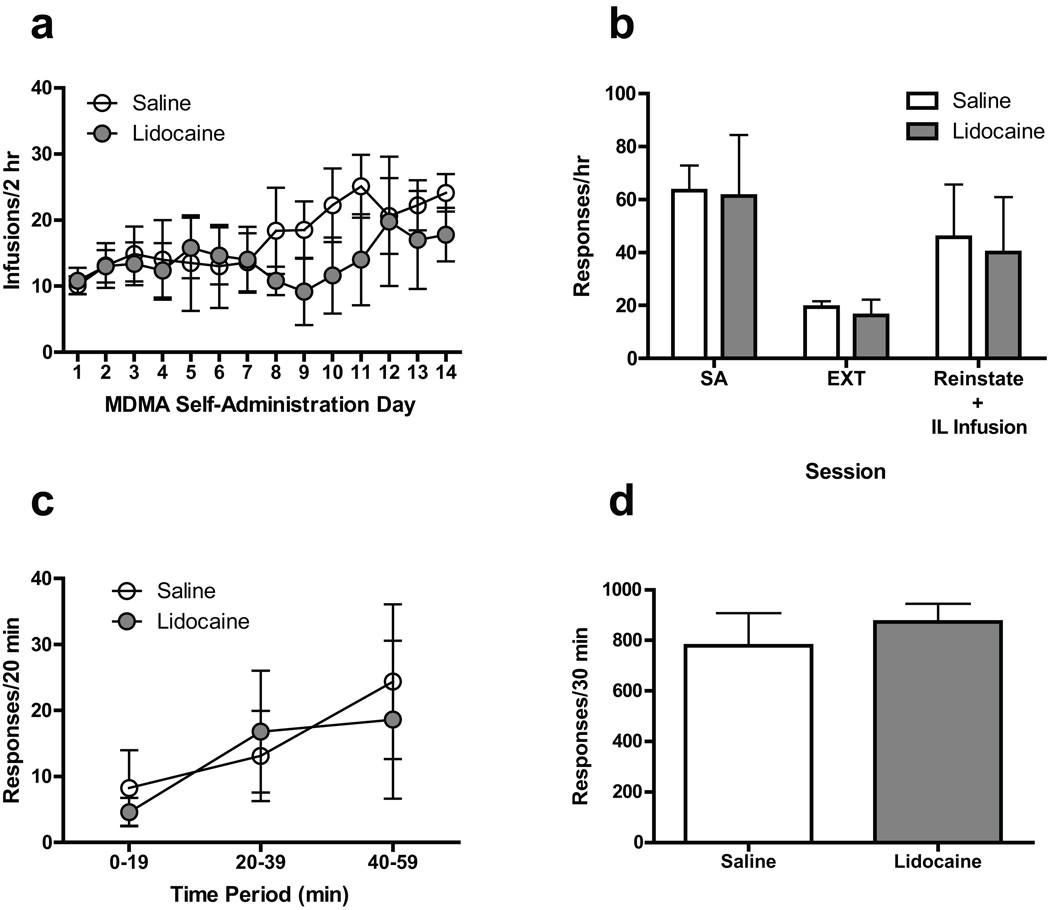
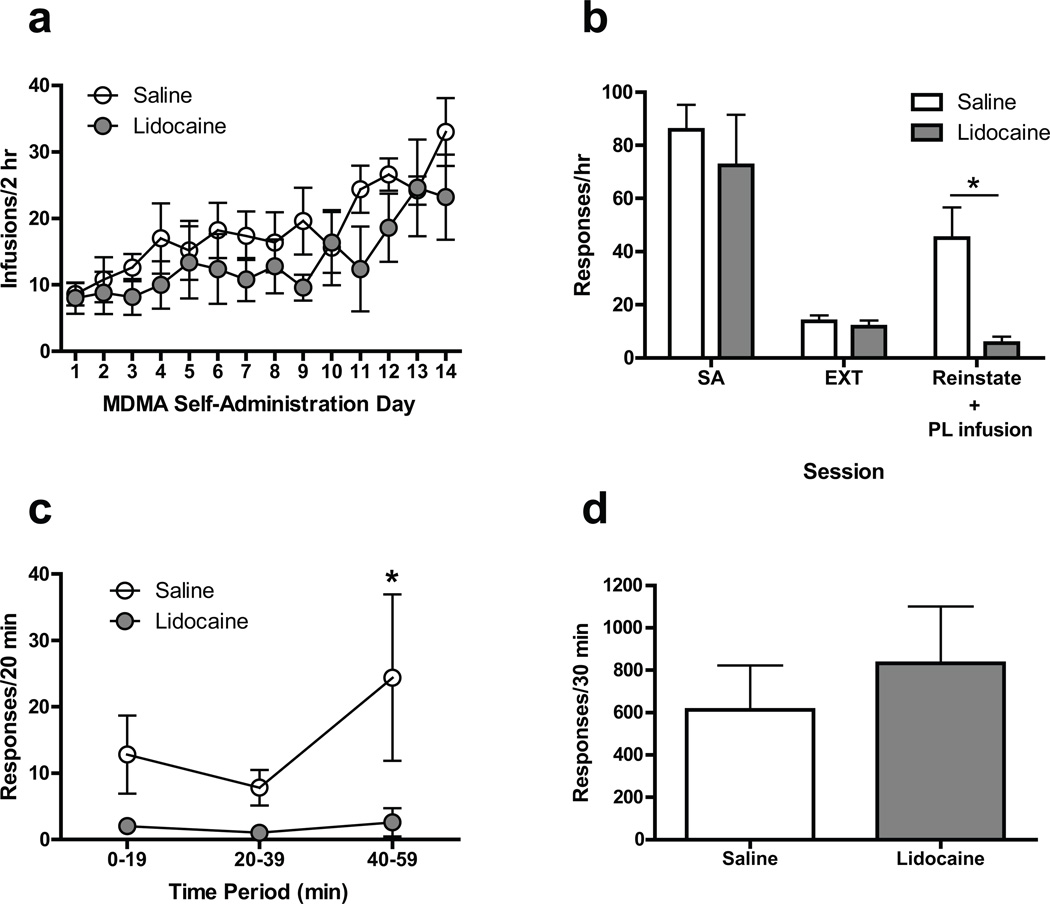
Microinjections of lidocaine into PL completely blocked reinstatement of MDMA-seeking behavior compared with saline microinjections into the same region. Lidocaine microinjections did not, however, have an effect on food-maintained responding, ruling out a nonspecific disruption of motor performance. Conversely, lidocaine inactivation of IL had no effect on reinstatement of MDMA seeking or food-maintained responding.
Our results provide direct support for PL activation in reinstatement of MDMA-seeking behavior. Moreover, akin to cocaine seeking, there appears to be differential involvement of PL and IL subregions in this behavior.
安非他命衍生物 3,4-亚甲二氧基甲基苯丙胺(MDMA;摇头丸)是一种被广泛滥用的药物,尤其是在青少年和年轻成年人中。尽管已经表明,与 MDMA 相关的线索会在动物复发模型中重新引发已被消除的 MDMA 寻求行为,但关于这种行为的神经机制知之甚少。
由于内侧前额叶皮层(mPFC)在可卡因和甲基苯丙胺寻求的复发中起着重要作用,我们测试了利多卡因失活 mPFC 的额前皮质(PL)和下边缘皮质(IL)亚区对线索诱导的 MDMA 寻求复发的影响。
大鼠接受训练以响应 MDMA 输注(0.50mg/kg/输注,静脉内),并与离散线索配对,每天进行 2 小时的会议。响应是根据修改后的固定比率 5 强化计划进行强化的。在没有 MDMA 和条件线索的情况下消除响应后,进行线索诱导的再巩固测试。在再巩固测试之前,大鼠接受双侧利多卡因(100μg/0.5μl/侧)或生理盐水(0.5μl/侧)的微注射,分别递送至 PL 或 IL mPFC。
与在同一区域中注射生理盐水相比,利多卡因微注射到 PL 中完全阻断了 MDMA 寻求行为的再巩固。然而,利多卡因微注射对食物维持的反应没有影响,排除了运动表现的非特异性破坏。相反,IL 的利多卡因失活对 MDMA 寻求或食物维持的反应没有影响。
我们的结果直接支持了 PL 激活在 MDMA 寻求行为的再巩固中的作用。此外,与可卡因寻求类似,PL 和 IL 亚区似乎在这种行为中具有不同的参与。