Department of Dermatology, University Medical Center of the Johannes Gutenberg-University, Mainz, Germany.
Front Immunol. 2012 Jun 18;3:164. doi: 10.3389/fimmu.2012.00164. eCollection 2012.
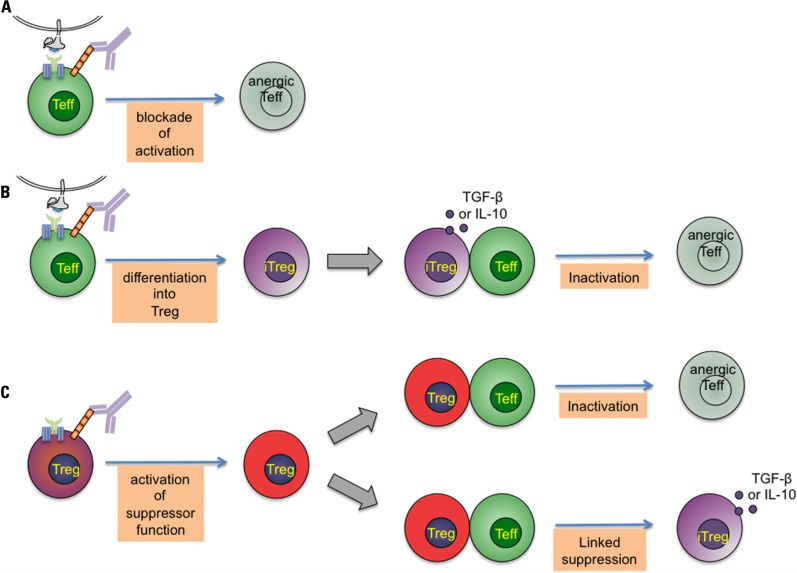
Understanding tolerance mechanisms at the cellular and molecular level holds the promise to establish novel immune intervention therapies in patients with allergy or autoimmunity and to prevent transplant rejection. Administration of mAb against the CD4 molecule has been found to be exceptionally well suited for intentional tolerance induction in rodent and non-human primate models as well as in humanized mouse models. Recent evidence demonstrated that regulatory T cells (Treg) are directly activated by non-depleting CD4 ligands and suggests Treg activation as a central mechanism in anti-CD4-mediated tolerance induction. This review summarizes the current knowledge on the role of Treg in peripheral tolerance, addresses the putative mechanisms of Treg-mediated suppression and discusses the clinical potential of harnessing Treg suppressive activity through CD4 stimulation.
了解细胞和分子水平上的耐受机制有望为过敏或自身免疫患者建立新的免疫干预治疗方法,并预防移植排斥反应。已发现针对 CD4 分子的单克隆抗体 (mAb) 非常适合在啮齿动物和非人类灵长类动物模型以及人源化小鼠模型中诱导有意耐受。最近的证据表明,调节性 T 细胞 (Treg) 可被非耗竭性 CD4 配体直接激活,并提示 Treg 激活是抗 CD4 介导的耐受诱导的中心机制。这篇综述总结了 Treg 在外周耐受中的作用的现有知识,讨论了 Treg 介导的抑制的假定机制,并探讨了通过 CD4 刺激利用 Treg 抑制活性的临床潜力。