Lou Ruvo Center for Brain Health, Department of Psychiatry and Psychology, Neurological Institute, Cleveland Clinic Foundation, Cleveland, USA.
PLoS One. 2012;7(6):e38884. doi: 10.1371/journal.pone.0038884. Epub 2012 Jun 18.
Little is known about racial and ethnic differences in individuals with sporadic Creutzfeldt-Jakob disease (sCJD). The authors sought to examine potential clinical, diagnostic, genetic, and neuropathological differences in sCJD patients of different races/ethnicities.
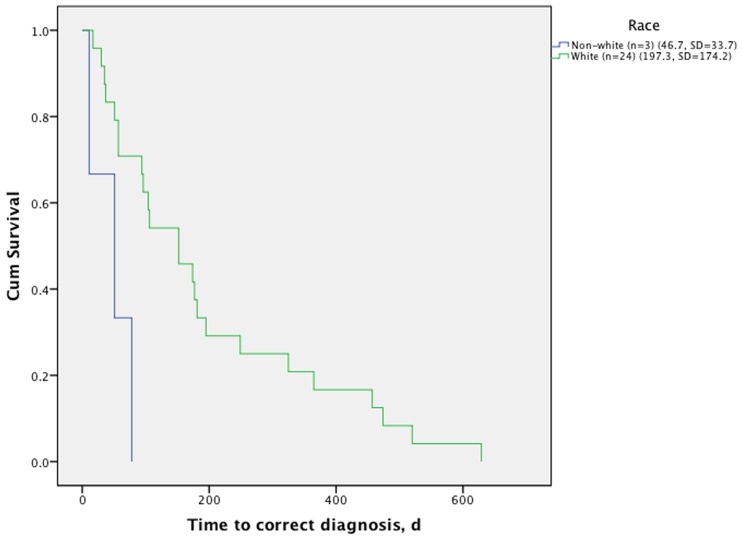
METHODOLOGY/PRINCIPAL FINDINGS: A retrospective study of 116 definite and probable sCJD cases from Johns Hopkins and the Department of Veterans Affairs Healthcare Systems was conducted that examined differences in demographic, clinical, diagnostic, genetic, and neuropathological characteristics among racial/ethnic groups. Age at disease onset differed among racial/ethnic groups. Non-Hispanic Whites had a significantly older age at disease onset compared to the other groups (65 vs. 60, p = 0.036). Non-Whites were accurately diagnosed more rapidly than Whites (p = 0.008) and non-Hispanic Whites were more likely to have normal appearing basal ganglia on brain magnetic resonance imaging (MRI) compared to minorities (p = 0.02). Whites were also more likely to undergo post-mortem evaluation compared to non-Whites (p = 0.02).
CONCLUSIONS/SIGNIFICANCE: Racial/ethnic groups affected by sCJD demonstrated differences in age at disease onset, time to correct diagnosis, clinical presentation, and diagnostic test results. Whites were more likely to undergo autopsy compared to non-Whites. These results have implications in regards to case ascertainment, diagnosis, and surveillance of sCJD and possibly other human prion diseases.
关于散发性克雅氏病(sCJD)患者的种族和民族差异知之甚少。作者试图研究不同种族/民族的 sCJD 患者在潜在的临床、诊断、遗传和神经病理学方面的差异。
方法/主要发现:对约翰霍普金斯大学和退伍军人事务部医疗保健系统的 116 例确诊和可能的 sCJD 病例进行了回顾性研究,研究了种族/民族群体之间在人口统计学、临床、诊断、遗传和神经病理学特征方面的差异。发病年龄在不同种族/民族之间存在差异。与其他群体相比,非西班牙裔白人的发病年龄明显更大(65 岁比 60 岁,p = 0.036)。非白人比白人更快地得到准确诊断(p = 0.008),与少数民族相比,非西班牙裔白人基底节在脑磁共振成像(MRI)上的正常表现更为常见(p = 0.02)。与非白人相比,白人也更有可能接受死后评估(p = 0.02)。
结论/意义:受 sCJD 影响的种族/民族群体在发病年龄、确诊时间、临床表现和诊断检测结果方面存在差异。与非白人相比,白人更有可能接受尸检。这些结果对 sCJD 及其他人类朊病毒病的病例确定、诊断和监测具有重要意义。