Department of Pain Management, Cleveland Clinic, Cleveland, OH, USA.
Anesthesiology. 2012 Aug;117(2):365-80. doi: 10.1097/ALN.0b013e318260de41.
Neuropathic pain is common and difficult to treat. Recently a technique was developed to selectively inhibit nociceptive inputs by simultaneously applying two drugs: capsaicin, a transient receptor potential vanilloid receptor-1 channel activator, and QX-314, a lidocaine derivative that intracellularly blocks sodium channels. We used this technique to investigate whether transient receptor potential vanilloid receptor 1-expressing nociceptors contribute to neuropathic pain.
The rat chronic constriction injury model was used to induce neuropathic pain in order to test the analgesic effects of both peripheral (perisciatic) and central (intrathecal) administration of the QX-314/capsaicin combination. The Hargreaves and von Frey tests were used to monitor evoked pain-like behaviors and visual observations were used to rank spontaneous pain-like behaviors.
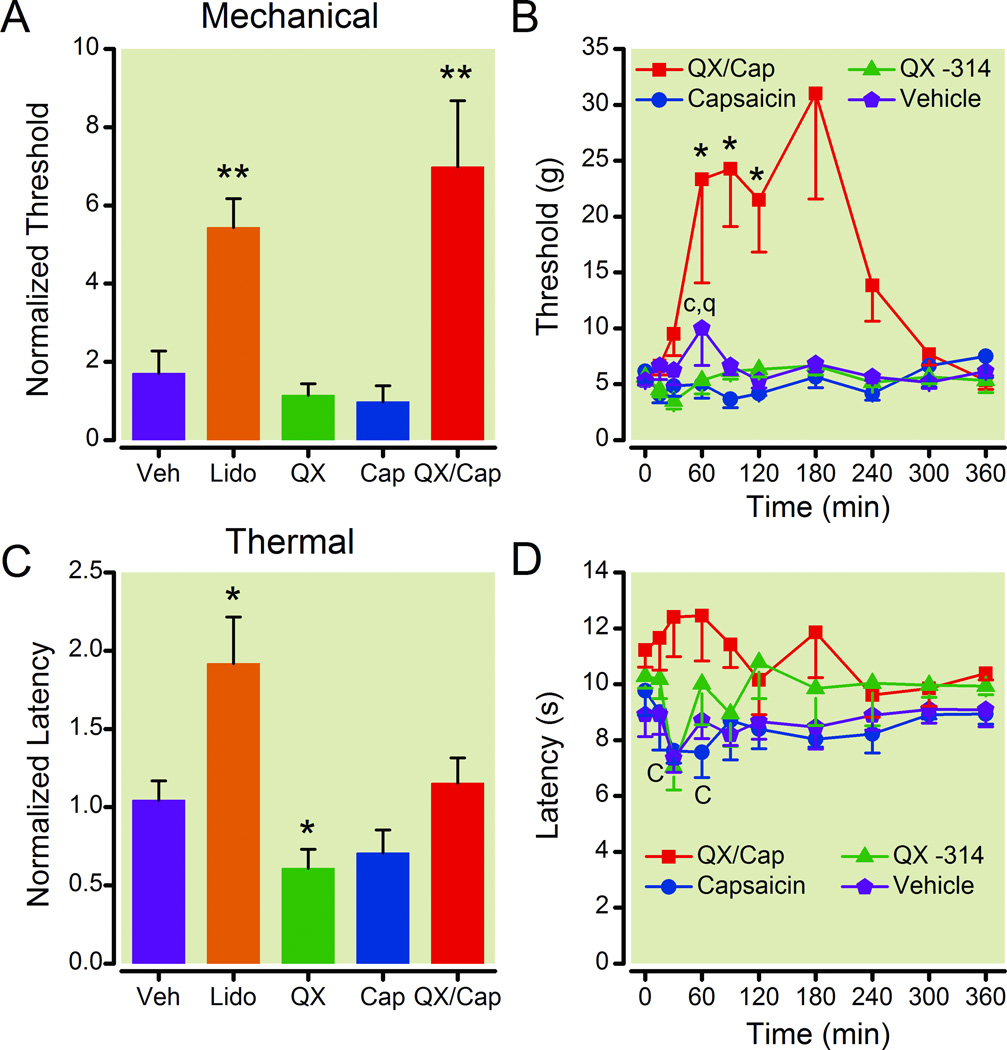
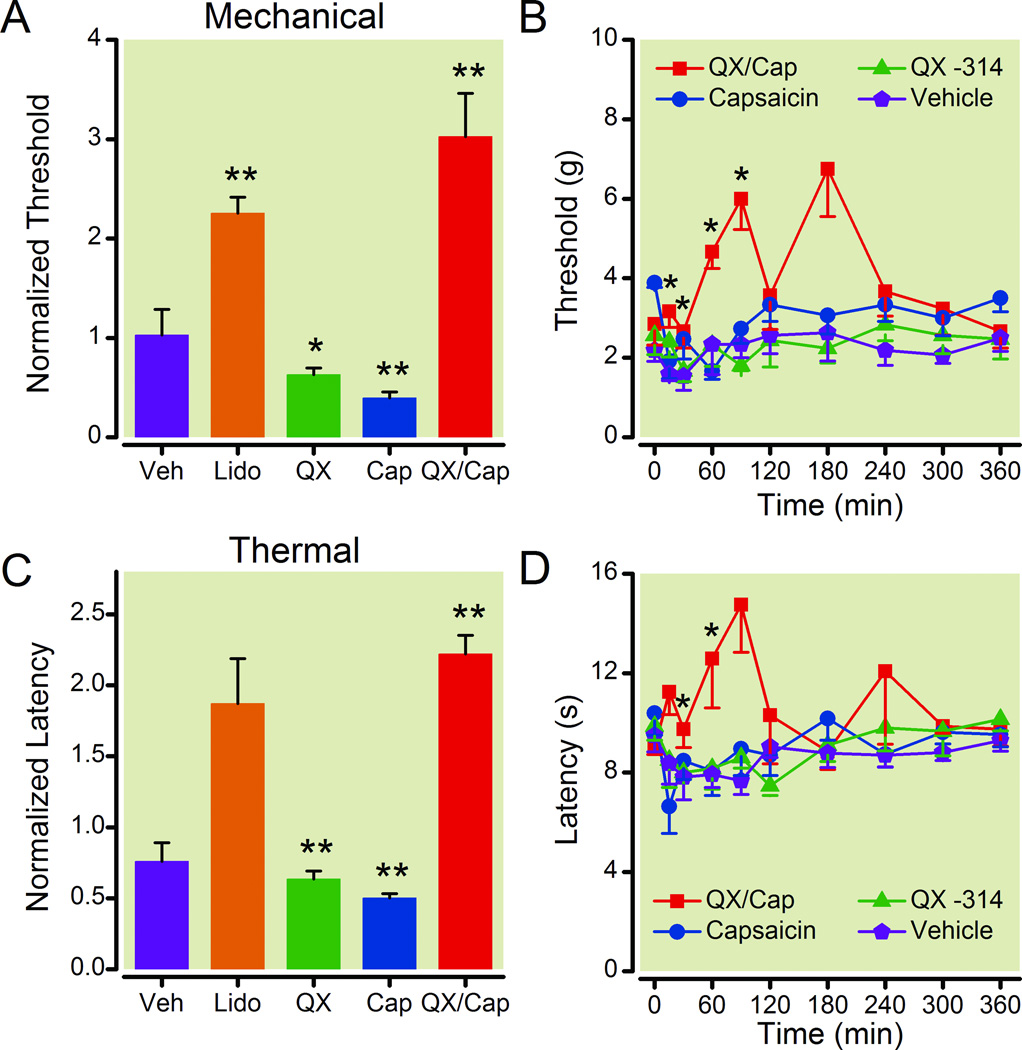
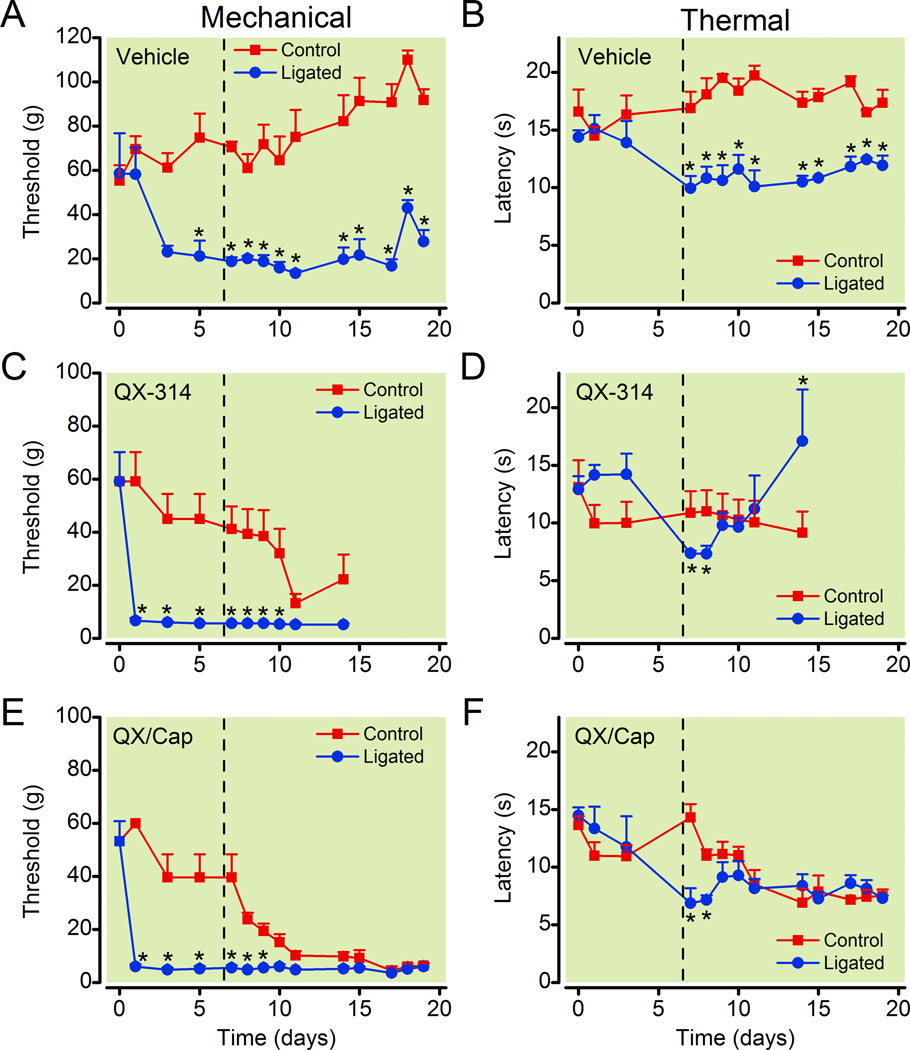
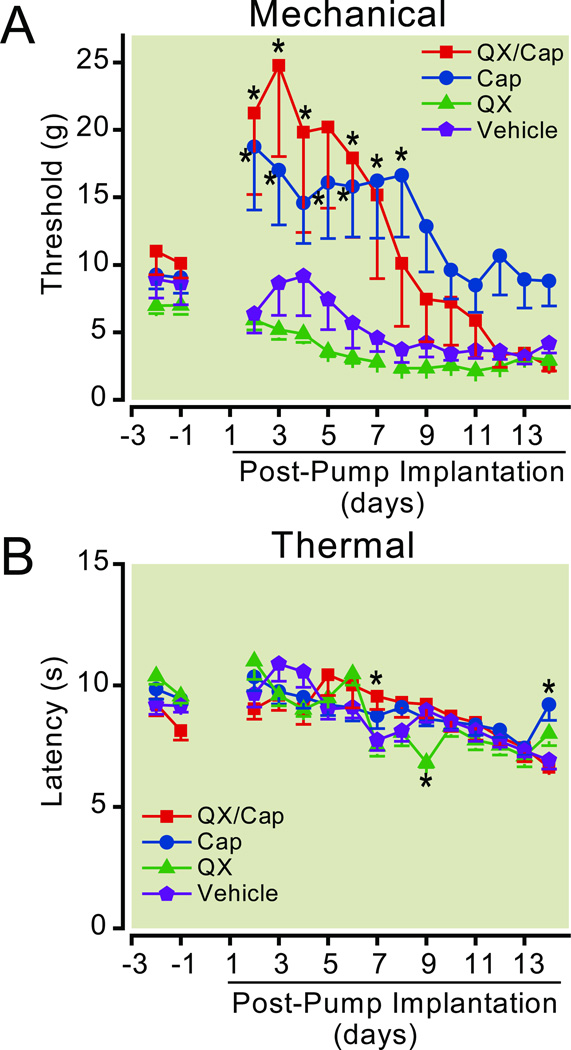
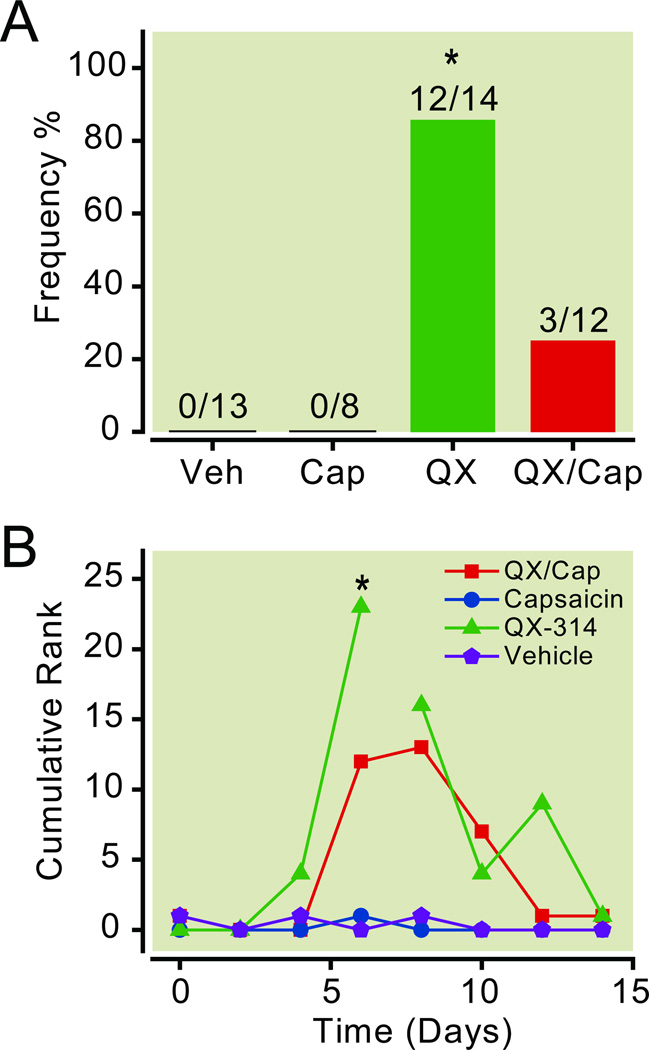
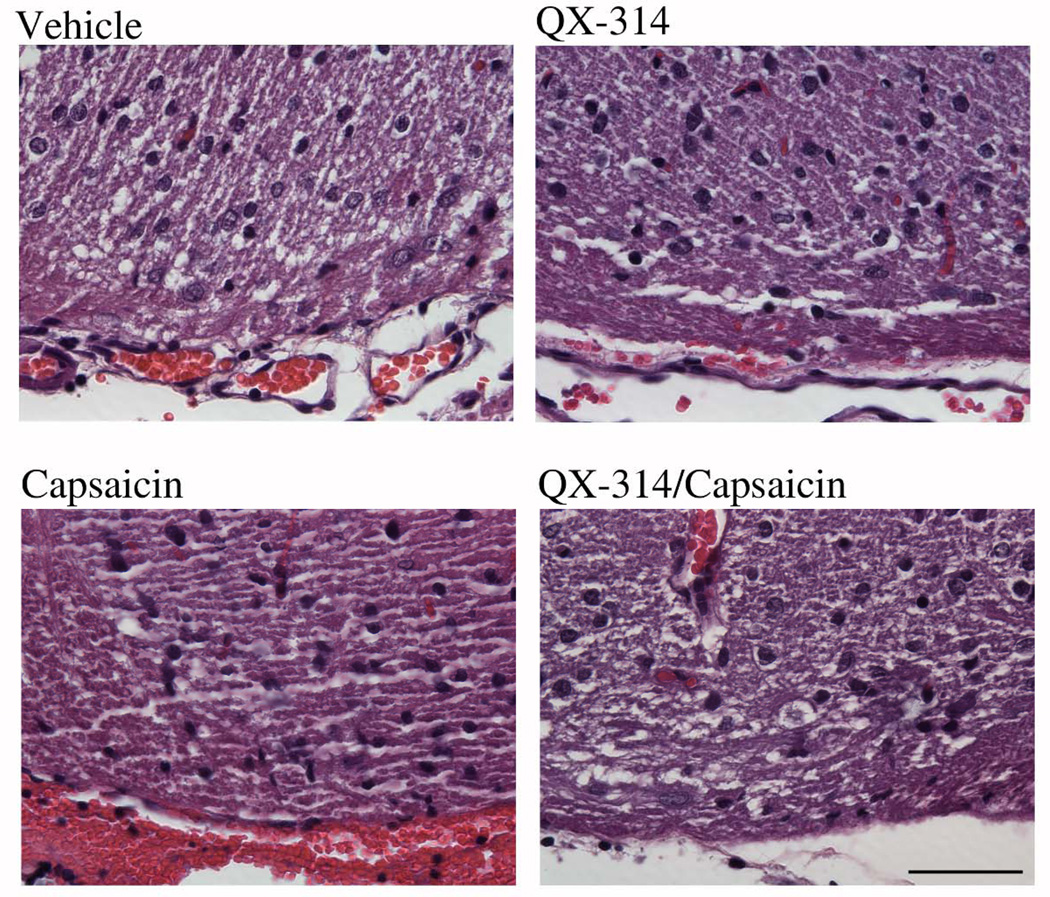
Perisciatic injections of the QX-314/capsaicin combination transiently increased the withdrawal thresholds by approximately 3-fold, for mechanical and thermal stimuli in rats (n = 6/group) with nerve injuries suggesting that peripheral transient receptor potential vanilloid receptor 1-expressing nociceptors contribute to neuropathic pain. In contrast, intrathecal administration of the QX-314/capsaicin combination did not alleviate pain-like behaviors (n = 5/group). Surprisingly, intrathecal QX-314 alone (n = 9) or in combination with capsaicin (n = 8) evoked spontaneous pain-like behaviors.
Data from the perisciatic injections suggested that a component of neuropathic pain was mediated by peripheral nociceptive inputs. The role of central nociceptive terminals could not be determined because of the severe side effects of the intrathecal drug combination. We concluded that only peripheral blockade of transient receptor potential vanilloid receptor 1-expressing nociceptive afferents by the QX-314/capsaicin combination was effective at reducing neuropathic allodynia and hyperalgesia.
神经病理性疼痛很常见且难以治疗。最近开发了一种技术,通过同时应用两种药物来选择性抑制伤害性传入:辣椒素,一种瞬时受体电位香草素受体 1 通道激活剂,和 QX-314,一种利多卡因衍生物,可在细胞内阻断钠通道。我们使用该技术来研究瞬时受体电位香草素受体 1 表达的伤害感受器是否与神经病理性疼痛有关。
使用大鼠慢性缩窄性损伤模型诱导神经病理性疼痛,以测试外周(perisciatic)和中枢(intrathecal)给予 QX-314/辣椒素组合的镇痛效果。使用 Hargreaves 和 von Frey 测试监测诱发的痛觉样行为,并用视觉观察来对自发痛觉样行为进行分级。
外周给予 QX-314/辣椒素组合后,大鼠(n = 6/组)神经损伤后的机械和热刺激的缩足阈值短暂增加了约 3 倍,这表明外周瞬时受体电位香草素受体 1 表达的伤害感受器参与了神经病理性疼痛。相比之下,鞘内给予 QX-314/辣椒素组合并未减轻痛觉样行为(n = 5/组)。令人惊讶的是,鞘内给予 QX-314 单独(n = 9)或与辣椒素联合(n = 8)会引起自发痛觉样行为。
外周注射的结果表明,神经病理性疼痛的一个组成部分是由外周伤害性传入介导的。由于鞘内药物组合的严重副作用,无法确定中枢伤害性末端的作用。我们得出的结论是,只有通过 QX-314/辣椒素组合对瞬时受体电位香草素受体 1 表达的伤害性传入进行外周阻断才能有效减轻神经病理性痛觉过敏和痛觉过度。