Department of Cell Biology and Anatomy, University of North Texas Health Science Center, Fort Worth, TX 76107, USA.
Cell Death Dis. 2012 Jun 28;3(6):e332. doi: 10.1038/cddis.2012.54.
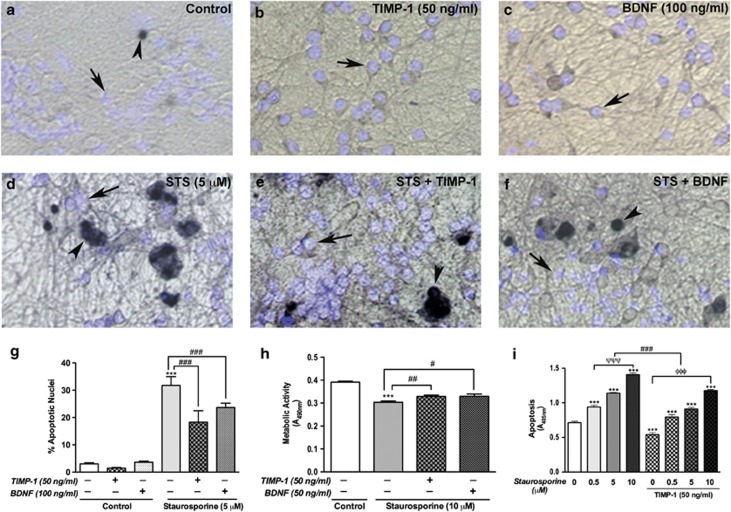
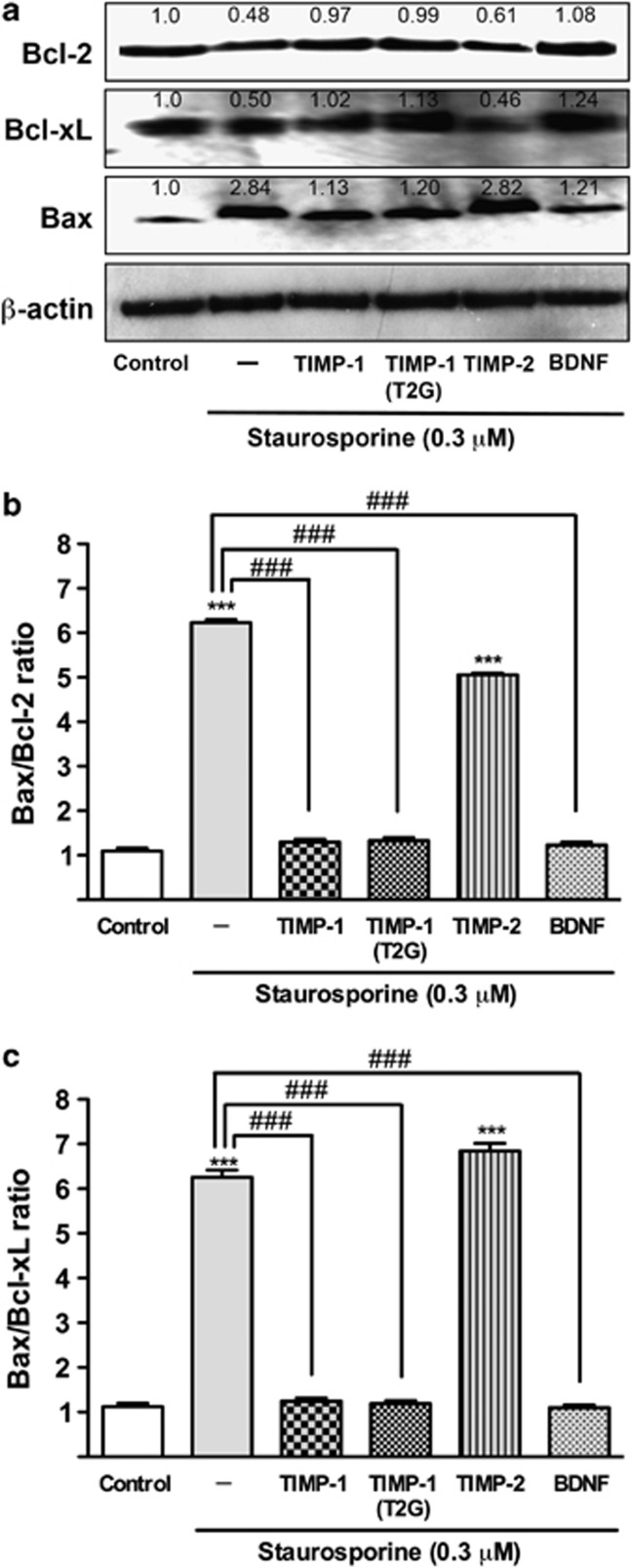
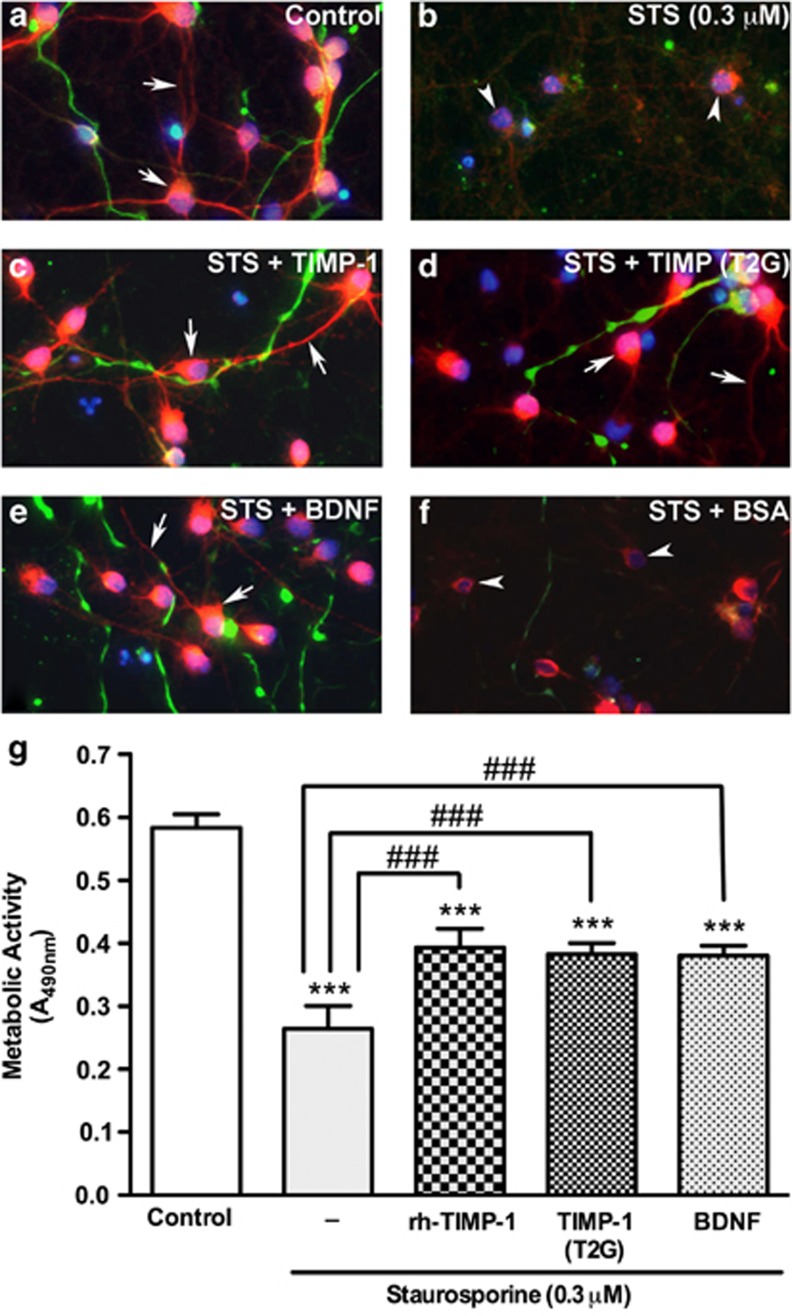
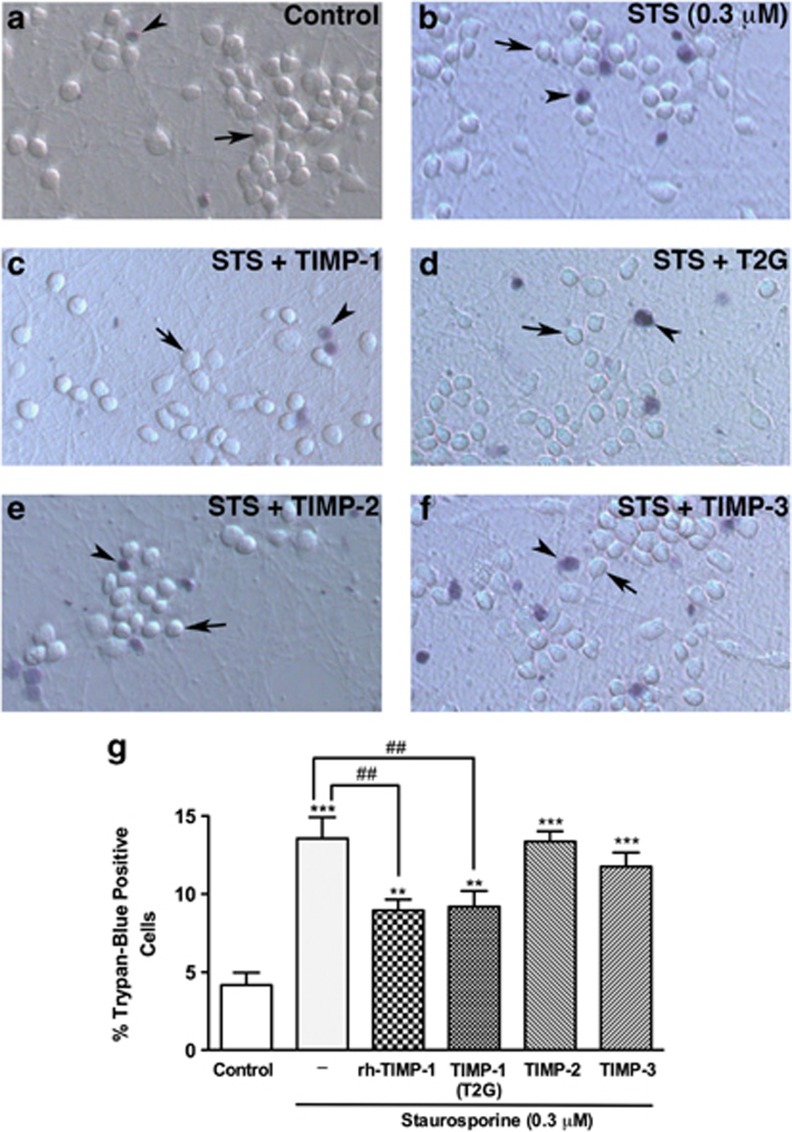
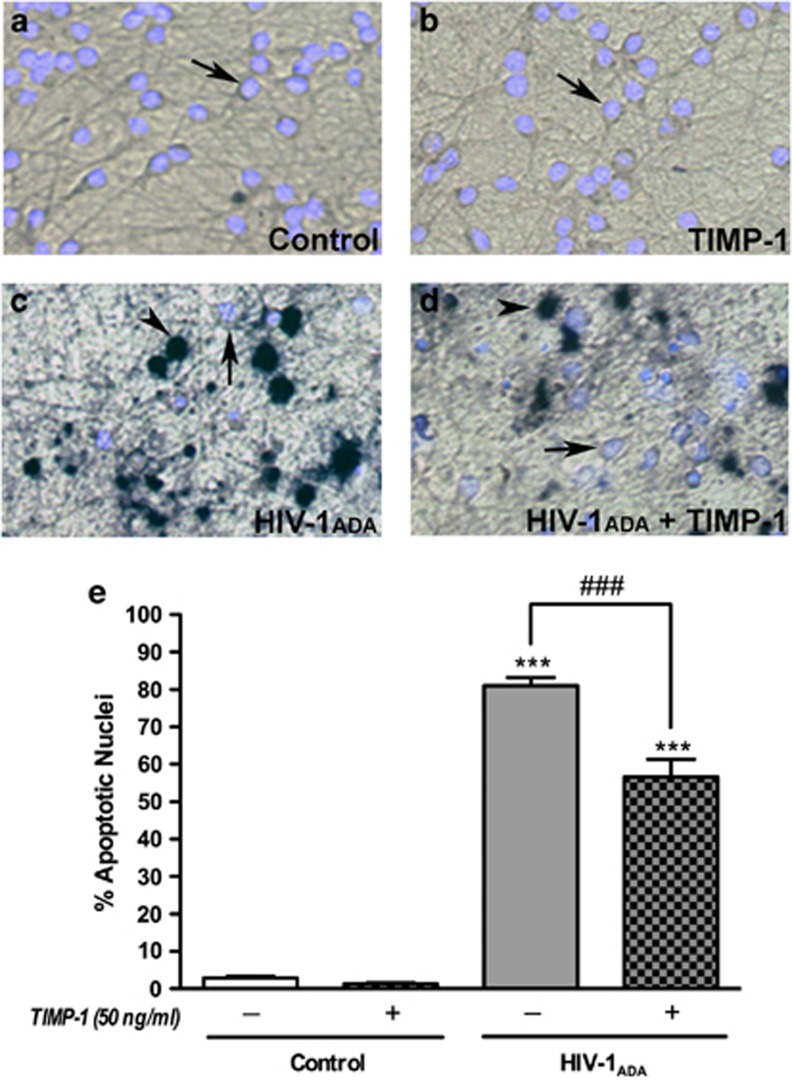
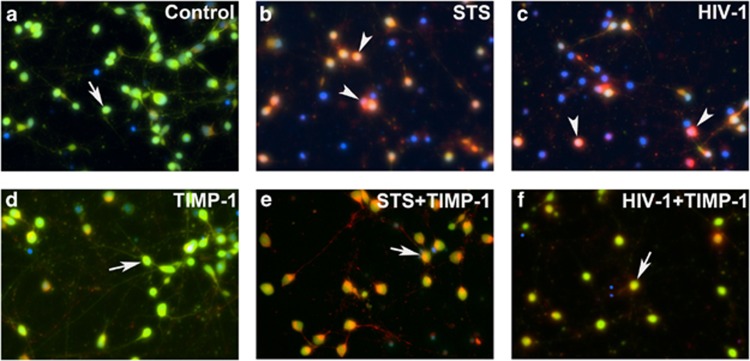
HIV-1-associated dementia (HAD)-relevant proinflammatory cytokines robustly induce astrocyte tissue inhibitor of metalloproteinases-1 (TIMP-1). As TIMP-1 displays pleotropic functions, we hypothesized that TIMP-1 expression may serve as a neuroprotective response of astrocytes. Previously, we reported that chronically activated astrocytes fail to maintain elevated TIMP-1 expression, and TIMP-1 levels are lower in the brain of HAD patients; a phenomenon that may contribute to central nervous system pathogenesis. Further, the role of TIMP-1 as a neurotrophic factor is incompletely understood. In this study, we report that staurosporine (STS) and HIV-1(ADA) virus, both led to induction of apoptosis in cultured primary human neurons. Interestingly, cotreatment with TIMP-1 protects neurons from apoptosis and reverses neuronal morphological changes induced by these toxins. Further, the anti-apoptotic effect was not observed with TIMP-2 or -3, but was retained in a mutant of the N-terminal TIMP-1 protein with threonine-2 mutated to glycine (T2G) that is deficient in matrix metalloproteinase (MMP)-1, -2 and -3 inhibitory activity. Therefore, the mechanism is specific to TIMP-1 and partially independent of MMP-inhibition. Additionally, TIMP-1 modulates the Bcl-2 family of proteins and inhibits opening of mitochondrial permeability transition pores induced by HIV-1 or STS. Together, these findings describe a novel function, mechanism and direct role of TIMP-1 in neuroprotection, suggesting its therapeutic potential in HAD and possibly in other neurodegenerative diseases.
HIV-1 相关痴呆(HAD)相关促炎细胞因子可强烈诱导星形胶质细胞组织金属蛋白酶抑制剂-1(TIMP-1)。由于 TIMP-1 具有多种功能,我们假设 TIMP-1 表达可能是星形胶质细胞的神经保护反应。先前,我们报道慢性激活的星形胶质细胞无法维持升高的 TIMP-1 表达,并且 HAD 患者大脑中的 TIMP-1 水平较低;这一现象可能有助于中枢神经系统发病机制。此外,TIMP-1 作为神经营养因子的作用尚未完全了解。在这项研究中,我们报告说,星形孢菌素(STS)和 HIV-1(ADA)病毒均可诱导培养的原代人神经元凋亡。有趣的是,TIMP-1 共处理可保护神经元免受凋亡,并逆转这些毒素诱导的神经元形态变化。此外,这种抗凋亡作用不能用 TIMP-2 或 -3 观察到,但在 N 端 TIMP-1 蛋白的突变体中保留下来,该突变体中的苏氨酸-2 突变为甘氨酸(T2G),该突变体缺乏基质金属蛋白酶(MMP)-1、-2 和 -3 抑制活性。因此,该机制是 TIMP-1 特有的,部分独立于 MMP 抑制。此外,TIMP-1 调节 Bcl-2 蛋白家族,并抑制 HIV-1 或 STS 诱导的线粒体通透性转换孔的开放。总之,这些发现描述了 TIMP-1 在神经保护中的新功能、机制和直接作用,表明其在 HAD 中的治疗潜力,并且可能在其他神经退行性疾病中具有治疗潜力。