Wang Zheng, O'Shaughnessy Thomas J, Soto Carissa M, Rahbar Amir M, Robertson Kelly L, Lebedev Nikolai, Vora Gary J
Center for Bio/Molecular Science and Engineering, Naval Research Laboratory, Washington, DC, United States of America.
PLoS One. 2012;7(6):e38749. doi: 10.1371/journal.pone.0038749. Epub 2012 Jun 7.
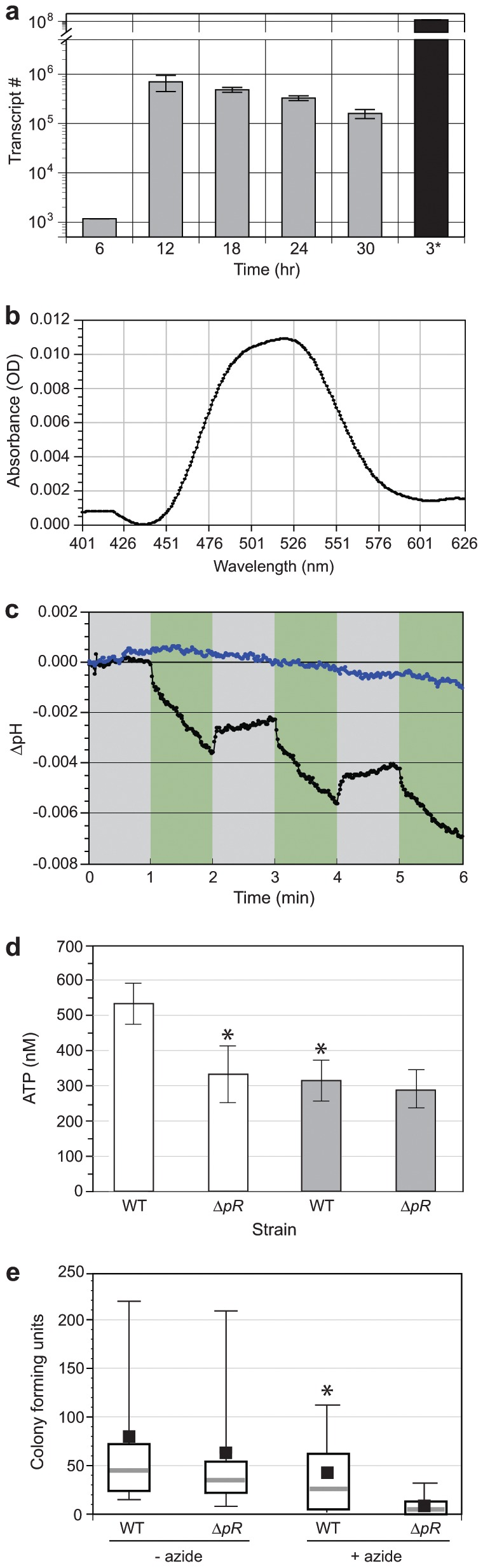
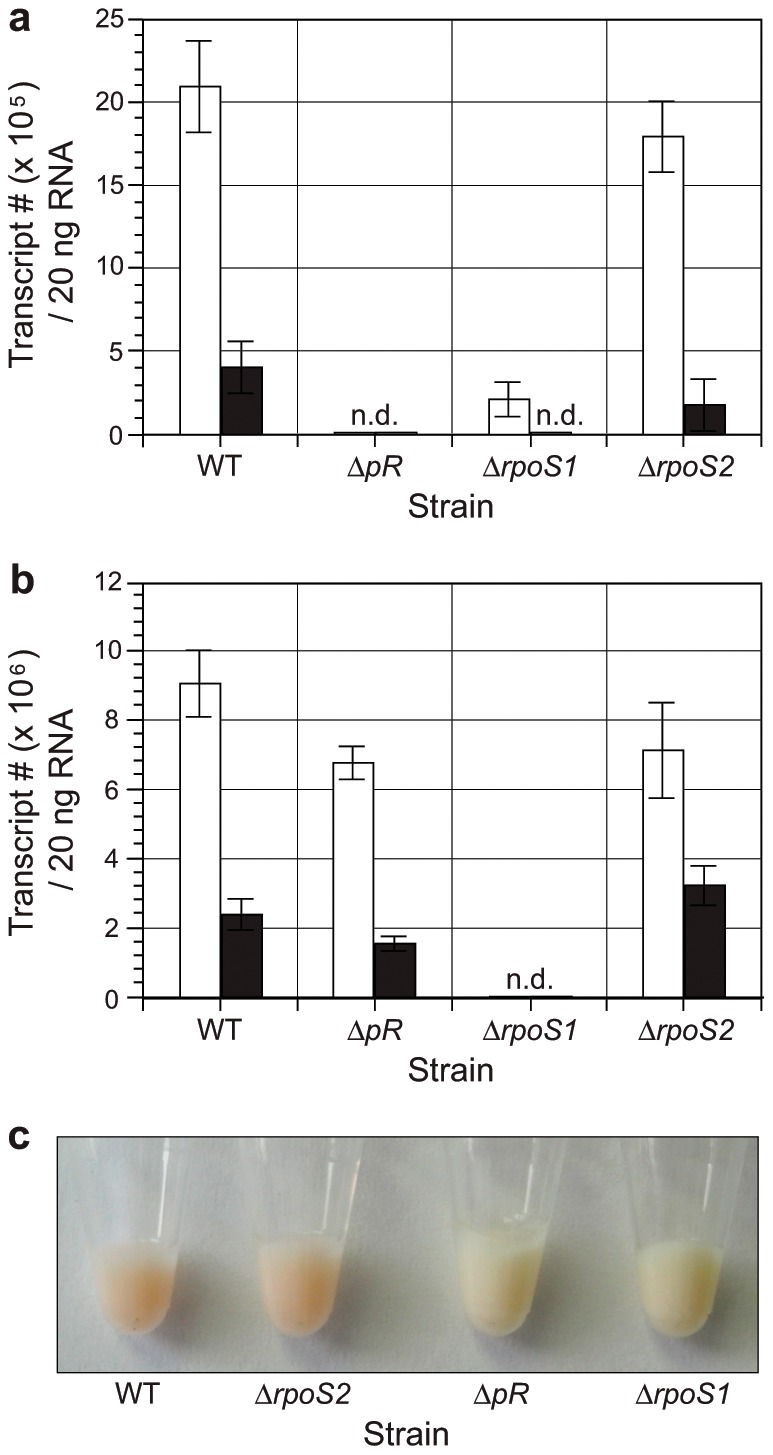
Proteorhodopsins (PRs) are retinal-binding photoproteins that mediate light-driven proton translocation across prokaryotic cell membranes. Despite their abundance, wide distribution and contribution to the bioenergy budget of the marine photic zone, an understanding of PR function and physiological significance in situ has been hampered as the vast majority of PRs studied to date are from unculturable bacteria or culturable species that lack the tools for genetic manipulation. In this study, we describe the presence and function of a horizontally acquired PR and retinal biosynthesis gene cluster in the culturable and genetically tractable bioluminescent marine bacterium Vibrio campbellii. Pigmentation analysis, absorption spectroscopy and photoinduction assays using a heterologous over-expression system established the V. campbellii PR as a functional green light absorbing proton pump. In situ analyses comparing PR expression and function in wild type (WT) V. campbellii with an isogenic ΔpR deletion mutant revealed a marked absence of PR membrane localization, pigmentation and light-induced proton pumping in the ΔpR mutant. Comparative photoinduction assays demonstrated the distinct upregulation of pR expression in the presence of light and PR-mediated photophosphorylation in WT cells that resulted in the enhancement of cellular survival during respiratory stress. In addition, we demonstrate that the master regulator of adaptive stress response and stationary phase, RpoS1, positively regulates pR expression and PR holoprotein pigmentation. Taken together, the results demonstrate facultative phototrophy in a classical marine organoheterotrophic Vibrio species and provide a salient example of how this organism has exploited lateral gene transfer to further its adaptation to the photic zone.
视紫质(PRs)是一类结合视黄醛的光蛋白,可介导光驱动的质子跨原核细胞膜转运。尽管它们数量众多、分布广泛且对海洋光合层的生物能量收支有贡献,但由于迄今为止研究的绝大多数PRs来自不可培养的细菌或缺乏基因操作工具的可培养物种,因此对其原位功能和生理意义的理解受到了阻碍。在本研究中,我们描述了在可培养且遗传易处理的发光海洋细菌坎氏弧菌中水平获得的一个PR和视黄醛生物合成基因簇的存在及功能。使用异源过表达系统进行的色素沉着分析、吸收光谱分析和光诱导测定确定了坎氏弧菌PR是一种功能性吸收绿光的质子泵。通过原位分析比较野生型(WT)坎氏弧菌和同基因ΔpR缺失突变体中PR的表达和功能,发现ΔpR突变体中明显缺乏PR膜定位、色素沉着和光诱导质子泵浦。比较光诱导测定表明,在有光的情况下WT细胞中pR表达明显上调,且存在PR介导的光磷酸化,这导致在呼吸应激期间细胞存活率提高。此外,我们证明了适应性应激反应和稳定期的主调节因子RpoS1正向调节pR表达和PR全蛋白色素沉着。综上所述,这些结果证明了一种典型的海洋有机异养弧菌物种具有兼性光养能力,并提供了一个突出的例子,说明这种生物体如何利用横向基因转移来进一步适应光合层。