Department of Life Sciences, Center for Neuroscience and Cell Biology (CNC), University of Coimbra, Coimbra, Portugal.
PLoS One. 2012;7(6):e38867. doi: 10.1371/journal.pone.0038867. Epub 2012 Jun 22.
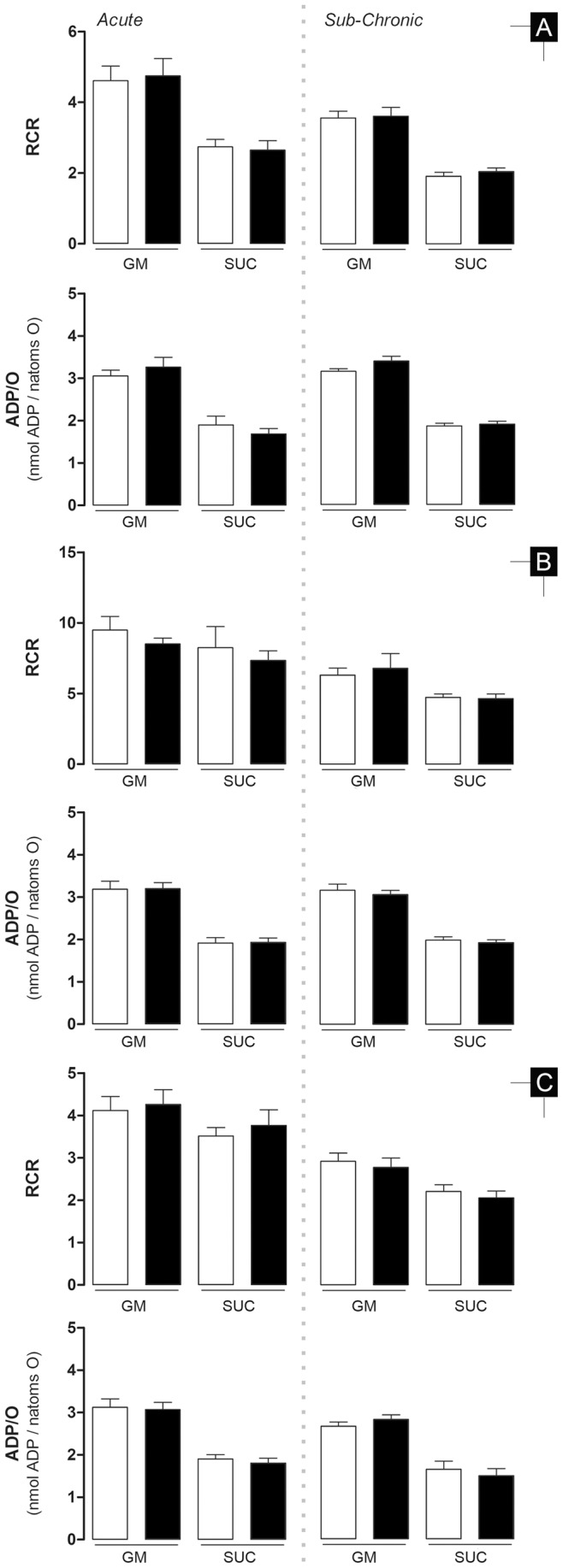
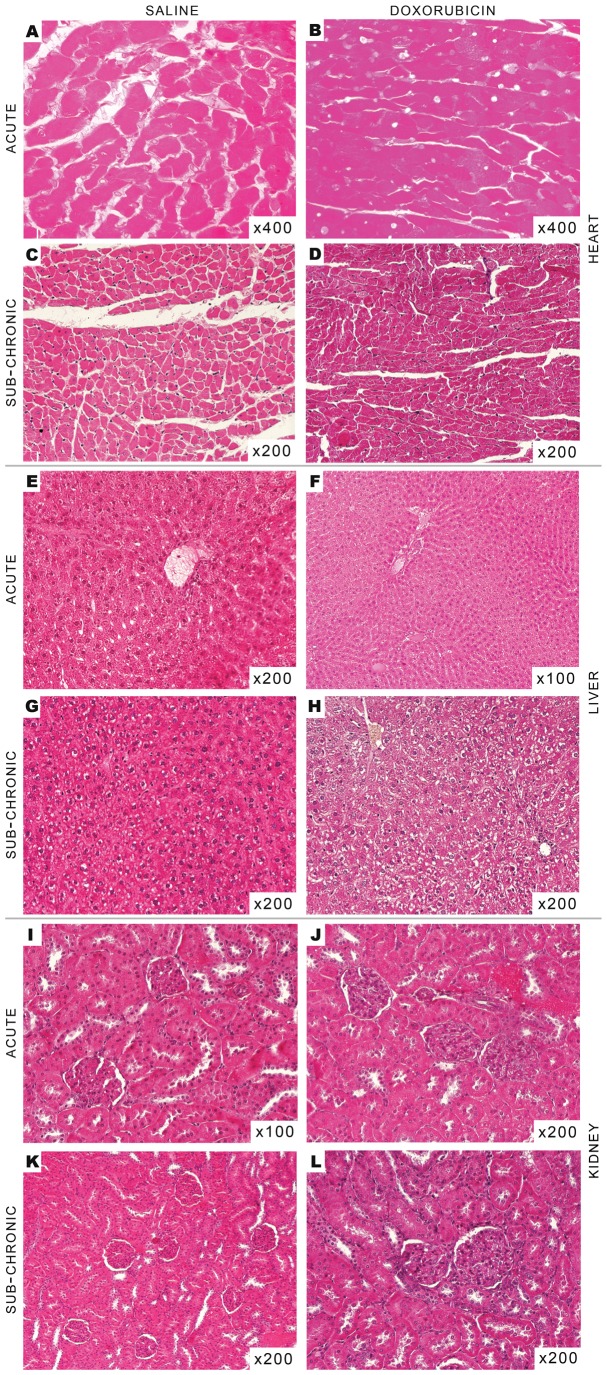
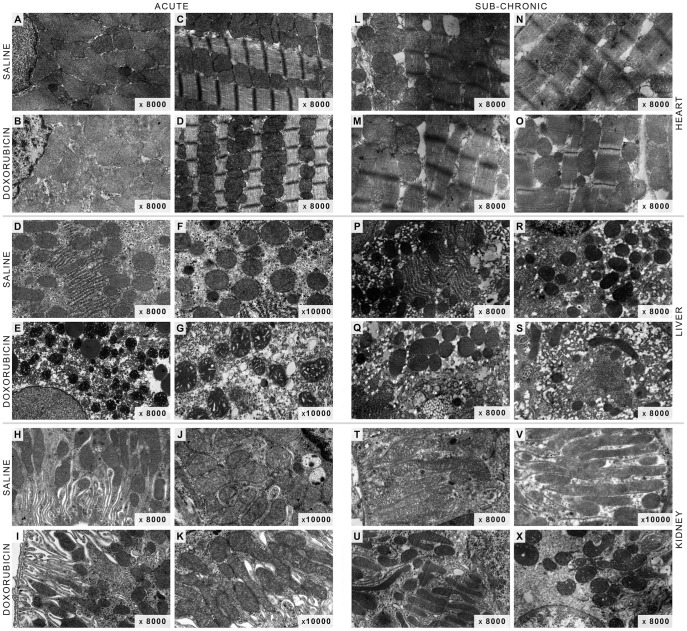
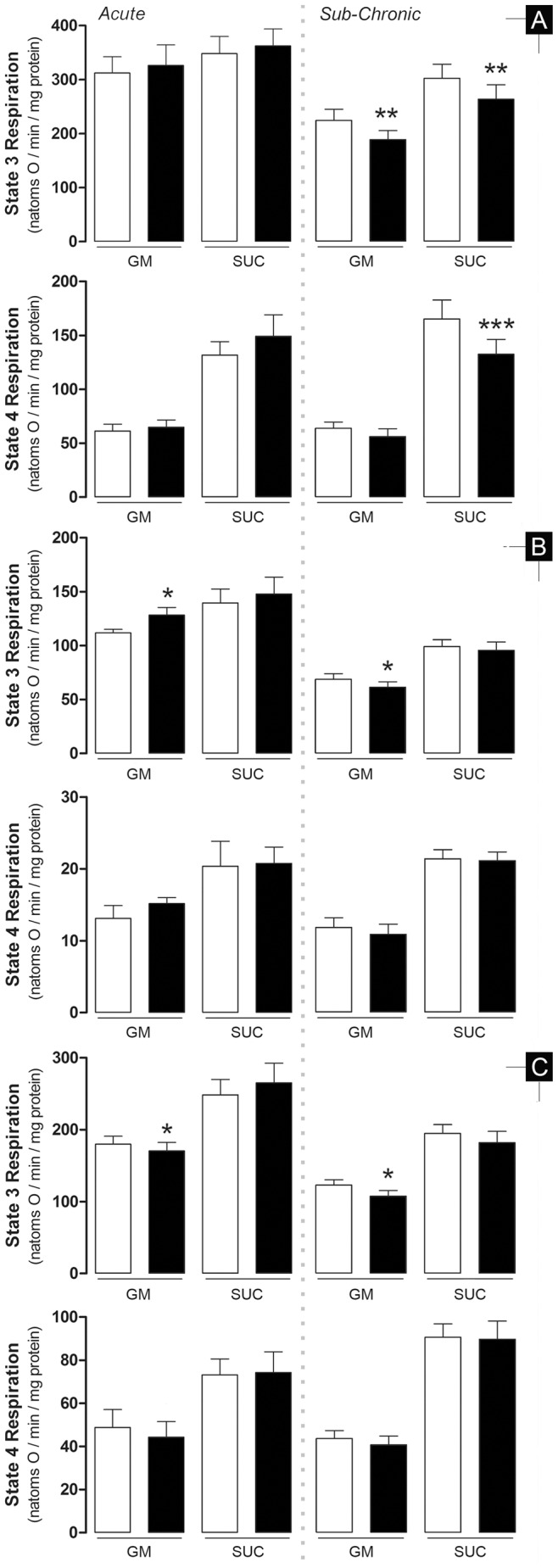
Although doxorubicin (DOX) is a very effective antineoplastic agent, its clinical use is limited by a dose-dependent, persistent and cumulative cardiotoxicity, whose mechanism remains to be elucidated. Previous works in animal models have failed to use a multi-organ approach to demonstrate that DOX-associated toxicity is selective to the cardiac tissue. In this context, the present work aims to investigate in vivo DOX cardiac, hepatic and renal toxicity in the same animal model, with special relevance on alterations of mitochondrial bioenergetics. To this end, male Wistar rats were sub-chronically (7 wks, 2 mg/Kg) or acutely (20 mg/Kg) treated with DOX and sacrificed one week or 24 hours after the last injection, respectively. Alterations of mitochondrial bioenergetics showed treatment-dependent differences between tissues. No alterations were observed for cardiac mitochondria in the acute model but decreased ADP-stimulated respiration was detected in the sub-chronic treatment. In the acute treatment model, ADP-stimulated respiration was increased in liver and decreased in kidney mitochondria. Aconitase activity, a marker of oxidative stress, was decreased in renal mitochondria in the acute and in heart in the sub-chronic model. Interestingly, alterations of cardiac mitochondrial bioenergetics co-existed with an absence of echocardiograph, histopathological or ultra-structural alterations. Besides, no plasma markers of cardiac injury were found in any of the time points studied. The results confirm that alterations of mitochondrial function, which are more evident in the heart, are an early marker of DOX-induced toxicity, existing even in the absence of cardiac functional alterations.
虽然多柔比星(DOX)是一种非常有效的抗肿瘤药物,但由于其具有剂量依赖性、持续性和累积性的心脏毒性,其临床应用受到限制,其机制仍有待阐明。以前在动物模型中的研究未能采用多器官方法来证明 DOX 相关毒性对心脏组织具有选择性。在这种情况下,本研究旨在同一动物模型中研究 DOX 心脏、肝脏和肾脏毒性,特别关注线粒体生物能学的改变。为此,雄性 Wistar 大鼠接受亚慢性(7 周,2mg/kg)或急性(20mg/kg)DOX 处理,分别在最后一次注射后一周或 24 小时处死。线粒体生物能学的改变在不同组织中显示出与治疗相关的差异。在急性模型中,心脏线粒体没有观察到改变,但在亚慢性治疗中检测到 ADP 刺激的呼吸减少。在急性治疗模型中,肝线粒体的 ADP 刺激呼吸增加,而肾线粒体的呼吸减少。急性和亚慢性模型中肾线粒体的柠檬酸合酶活性(氧化应激的标志物)降低。有趣的是,心脏线粒体生物能学的改变与不存在超声心动图、组织病理学或超微结构改变并存。此外,在任何研究时间点均未发现血浆心脏损伤标志物。研究结果证实,线粒体功能的改变,在心脏中更为明显,是 DOX 诱导毒性的早期标志物,即使在没有心脏功能改变的情况下也是如此。