Instituto de Biología y Genetica Molecular (IBGM), CSIC-UVa, Valladolid, Spain.
J Neuroinflammation. 2012 Jul 2;9:154. doi: 10.1186/1742-2094-9-154.
Activation of microglia, the primary component of the innate immune response in the brain, is a hallmark of neuroinflammation in neurodegenerative disorders, including Alzheimer's disease (AD) and other pathological conditions such as stroke or CNS infection. In response to a variety of insults, microglial cells produce high levels of inflammatory cytokines that are often involved in neuronal injury, and play an important role in the recognition, engulfment, and clearance of apoptotic cells and/or invading microbes. Secreted phospholipase A2-IIA (sPLA2-IIA), an enzyme that interacts with cells involved in the systemic immune/inflammatory response, has been found up-regulated in the cerebrospinal fluid and brain of AD patients. However, despite several approaches, its functions in mediating CNS inflammation remain unknown. In the present study, the role of sPLA2-IIA was examined by investigating its direct effects on microglial cells.
Primary and immortalized microglial cells were stimulated by sPLA2-IIA in order to characterize the cytokine-like actions of the phospholipase. The hallmarks of activated microglia analyzed include: mitogenic response, phagocytic capabilities and induction of inflammatory mediators. In addition, we studied several of the potential molecular mechanisms involved in those events.
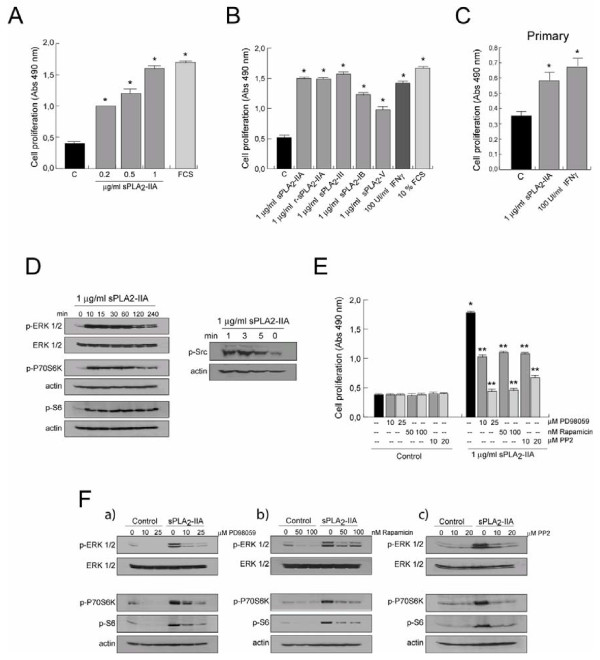
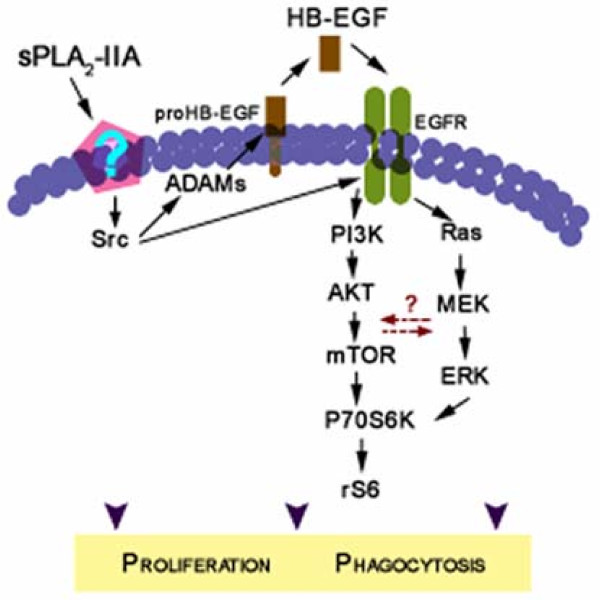
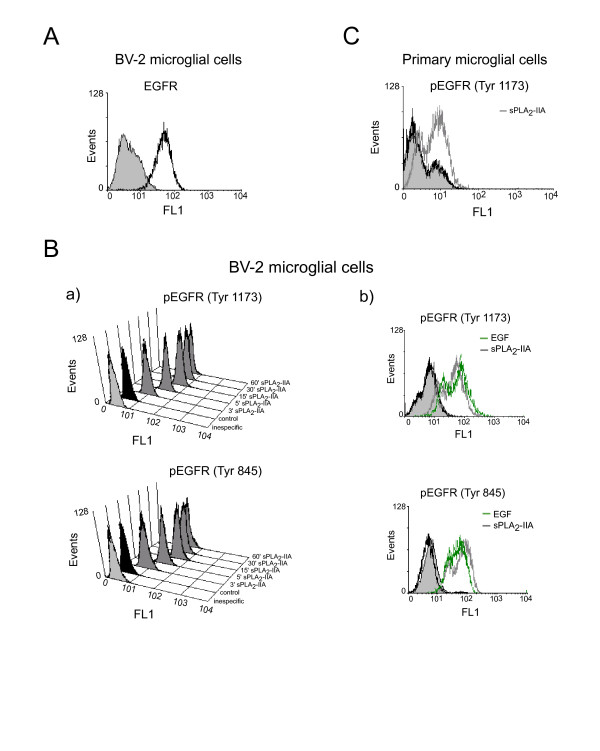
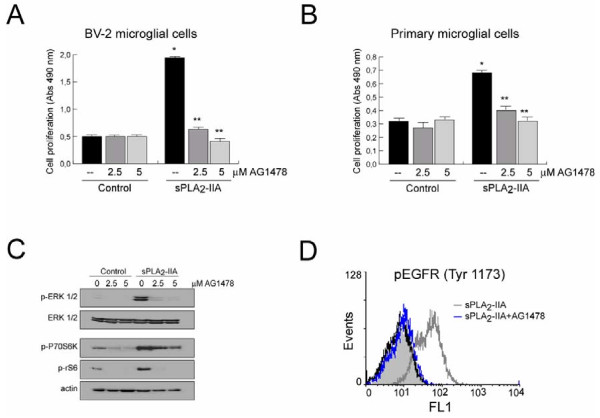
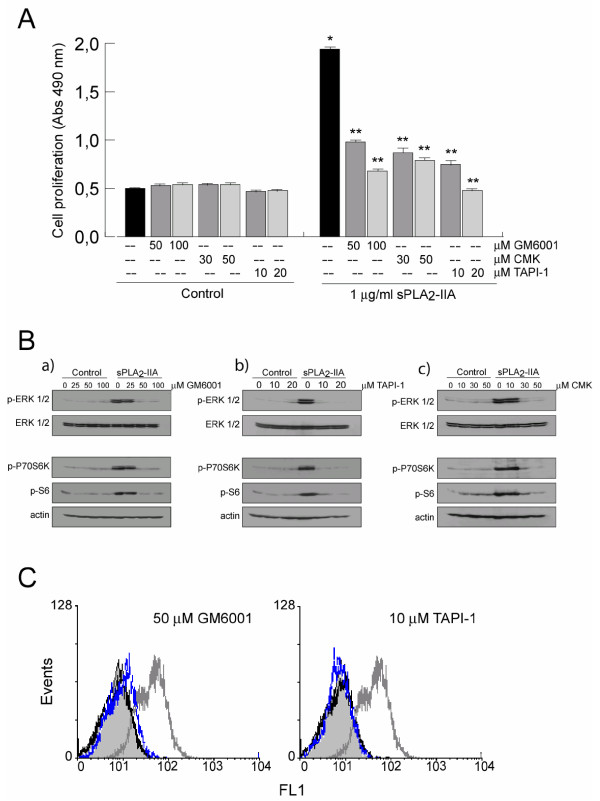
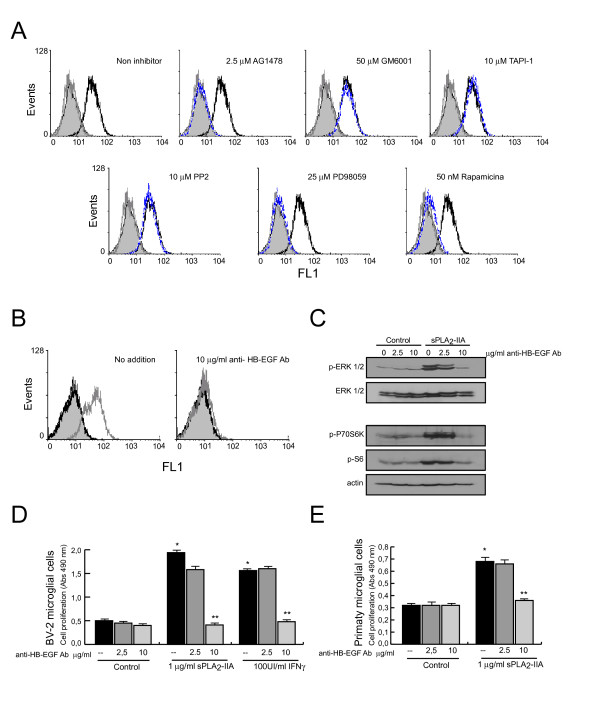
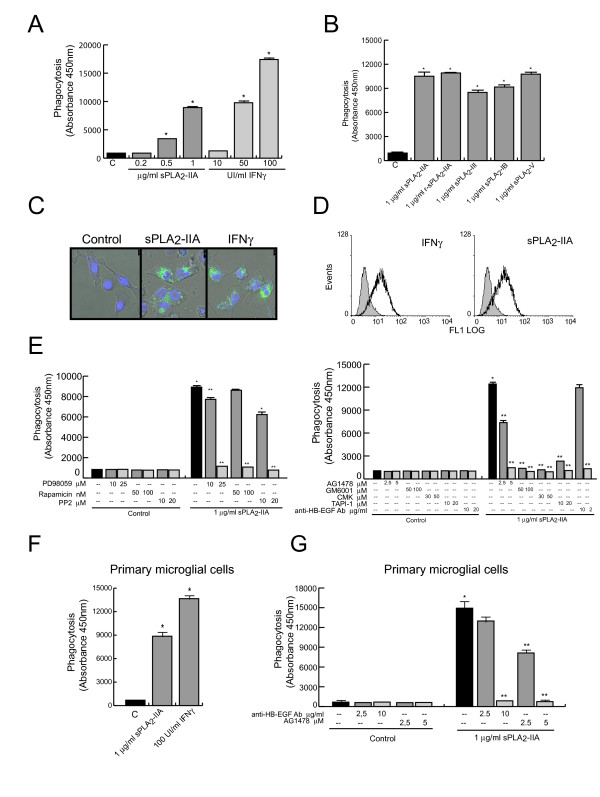
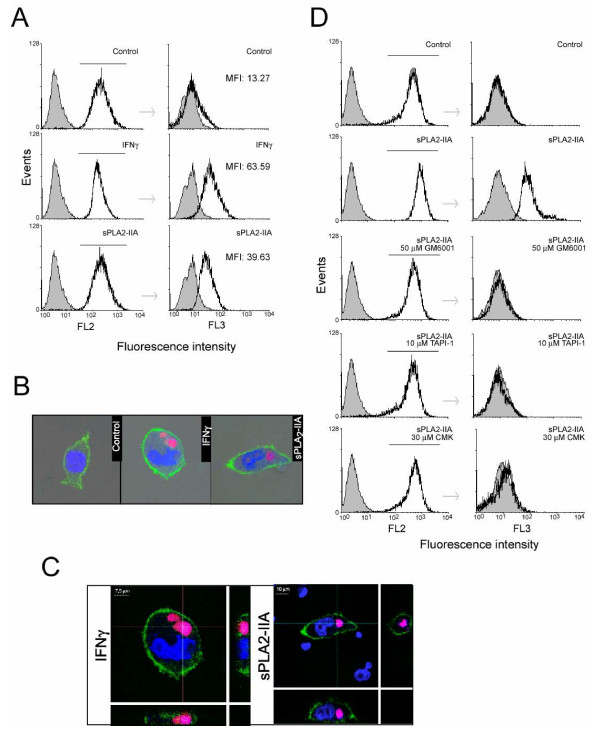
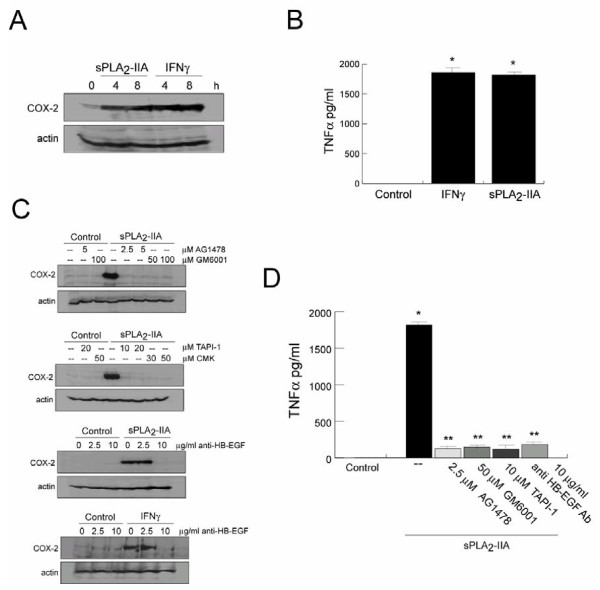
The direct exposure of microglial cells to sPLA2-IIA stimulated, in a time- and dose-dependent manner, their phagocytic and proliferative capabilities. sPLA2-IIA also triggered the synthesis of the inflammatory proteins COX-2 and TNFα. In addition, EGFR phosphorylation and shedding of the membrane-anchored heparin-binding EGF-like growth factor (pro-HB-EGF) ectodomain, as well as a rapid activation/phosphorylation of the classical survival proteins ERK, P70S6K and rS6 were induced upon sPLA2-IIA treatment. We further demonstrated that the presence of an EGFR inhibitor (AG1478), a matrix metalloproteinase inhibitor (GM6001), an ADAM inhibitor (TAPI-1), and a HB-EGF neutralizing antibody abrogated the phenotype of activated microglia induced by the sPLA2-IIA.
These results support the hypothesis that sPLA2-IIA may act as a potent modulator of microglial functions through its ability to induce EGFR transactivation and HB-EGF release. Accordingly, pharmacological modulation of EGFR might be a useful tool for treating neuroinflammatory diseases characterized by sPLA2-IIA accumulation.
小胶质细胞是大脑中固有免疫反应的主要成分,其激活是神经退行性疾病(包括阿尔茨海默病(AD)和其他病理状况如中风或中枢神经系统感染)中神经炎症的标志。小胶质细胞对各种刺激作出反应,会产生高水平的炎症细胞因子,这些细胞因子通常与神经元损伤有关,并在识别、吞噬和清除细胞凋亡和/或入侵的微生物方面发挥重要作用。分泌型 PLA2-IIA(sPLA2-IIA)是一种与参与全身免疫/炎症反应的细胞相互作用的酶,已在 AD 患者的脑脊液和大脑中发现上调。然而,尽管有几种方法,但其在介导中枢神经系统炎症中的作用仍不清楚。在本研究中,通过研究 sPLA2-IIA 对小胶质细胞的直接作用,研究了 sPLA2-IIA 的作用。分析了激活小胶质细胞的特征包括:有丝分裂反应、吞噬能力和诱导炎症介质。此外,我们还研究了参与这些事件的几种潜在分子机制。
用 sPLA2-IIA 刺激原代和永生化小胶质细胞,以表征该磷酸酶的细胞因子样作用。用 sPLA2-IIA 直接暴露小胶质细胞,以时间和剂量依赖的方式刺激其吞噬和增殖能力。sPLA2-IIA 还触发了 COX-2 和 TNFα 等炎症蛋白的合成。此外,sPLA2-IIA 处理后,EGFR 磷酸化和膜锚定肝素结合表皮生长因子样生长因子(pro-HB-EGF)的外显子脱落,以及经典存活蛋白 ERK、P70S6K 和 rS6 的快速激活/磷酸化均被诱导。我们进一步证明,EGFR 抑制剂(AG1478)、基质金属蛋白酶抑制剂(GM6001)、ADAM 抑制剂(TAPI-1)和 HB-EGF 中和抗体的存在可消除 sPLA2-IIA 诱导的激活小胶质细胞的表型。
这些结果支持 sPLA2-IIA 可能通过诱导 EGFR 转激活和 HB-EGF 释放来作为小胶质细胞功能的有效调节剂的假说。因此,EGFR 的药理学调节可能是治疗以 sPLA2-IIA 积累为特征的神经炎症性疾病的有用工具。