Muradashvili Nino, Tyagi Reeta, Lominadze David
Department of Physiology and Biophysics, School of Medicine, University of Louisville, Louisville KY, USA.
Front Physiol. 2012 May 31;3:166. doi: 10.3389/fphys.2012.00166. eCollection 2012.
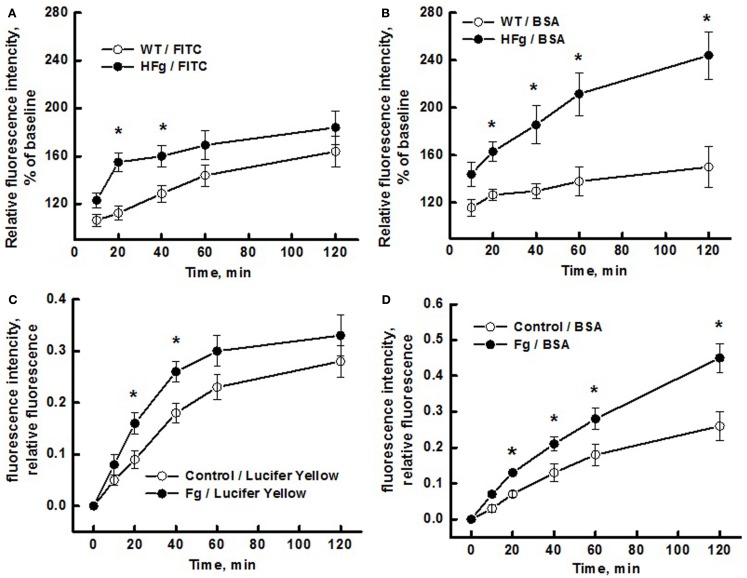
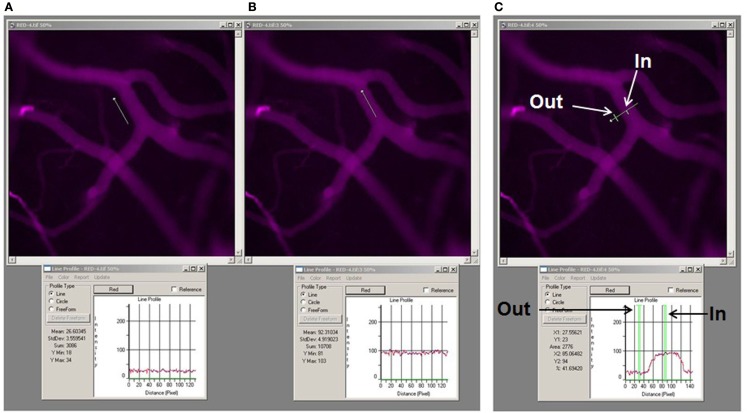
Inflammation-induced impaired function of vascular endothelium may cause leakage of plasma proteins that can lead to edema. Proteins may leave the vascular lumen through two main paracellular and transcellular pathways. As the first involves endothelial cell (EC) junction proteins and the second caveolae formation, these two pathways are interconnected. Therefore, it is difficult to differentiate the prevailing role of one or the other pathway during pathology that causes inflammation. Here we present a newly developed dual-tracer probing method that allows differentiation of transcellular from paracellular transport during pathology. This fluorescence-based method can be used in vitro to test changes in EC layer permeability and in vivo in various animal vascular preparations. The method is based on comparison of low molecular weight molecule (LMWM) transport to that of high molecular weight molecule (HMWM) transport through the EC layer or the vascular wall during physiological and pathological conditions. Since the LMWM will leak through mainly the paracellular and HMWM will move through paracellular (when gaps between the ECs are wide enough) and transcellular pathways, the difference in transport rate (during normal conditions and pathology) of these molecules will indicate the prevailing transport pathway involved in overall protein crossing of vascular wall. Thus, the novel approach of assessing the transport kinetics of different size tracers in vivo by intravital microscopy can clarify questions related to identification of target pathways for drug delivery during various pathologies associated with elevated microvascular permeability.
炎症诱导的血管内皮功能受损可能导致血浆蛋白渗漏,进而引发水肿。蛋白质可通过两种主要途径离开血管腔,即细胞旁途径和跨细胞途径。由于第一种途径涉及内皮细胞(EC)连接蛋白,第二种途径涉及小窝形成,这两种途径相互关联。因此,在导致炎症的病理过程中,很难区分这两种途径中哪一种起主要作用。在此,我们提出一种新开发的双示踪剂探测方法,该方法能够在病理过程中区分跨细胞运输和细胞旁运输。这种基于荧光的方法可用于体外测试EC层通透性的变化,也可用于体内各种动物血管制剂的测试。该方法基于比较生理和病理条件下低分子量分子(LMWM)与高分子量分子(HMWM)通过EC层或血管壁的运输情况。由于LMWM主要通过细胞旁途径渗漏,而HMWM将通过细胞旁途径(当EC之间的间隙足够宽时)和跨细胞途径移动,这些分子(在正常条件和病理状态下)运输速率的差异将表明血管壁整体蛋白质穿越过程中主要涉及的运输途径。因此,通过活体显微镜在体内评估不同大小示踪剂运输动力学的新方法,可以阐明与各种微血管通透性升高相关的病理过程中药物递送目标途径识别相关的问题。