Kamphuis Lars G, Gao Lingling, Singh Karam B
CSIRO Plant Industry, Wembley, WA, Australia.
BMC Plant Biol. 2012 Jul 4;12:101. doi: 10.1186/1471-2229-12-101.
Cowpea aphid (CPA; Aphis craccivora) is the most important insect pest of cowpea and also causes significant yield losses in other legume crops including alfalfa, beans, chickpea, lentils, lupins and peanuts. In many of these crops there is no natural genetic resistance to this sap-sucking insect or resistance genes have been overcome by newly emerged CPA biotypes.
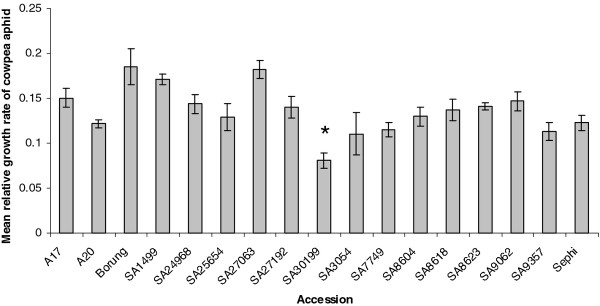
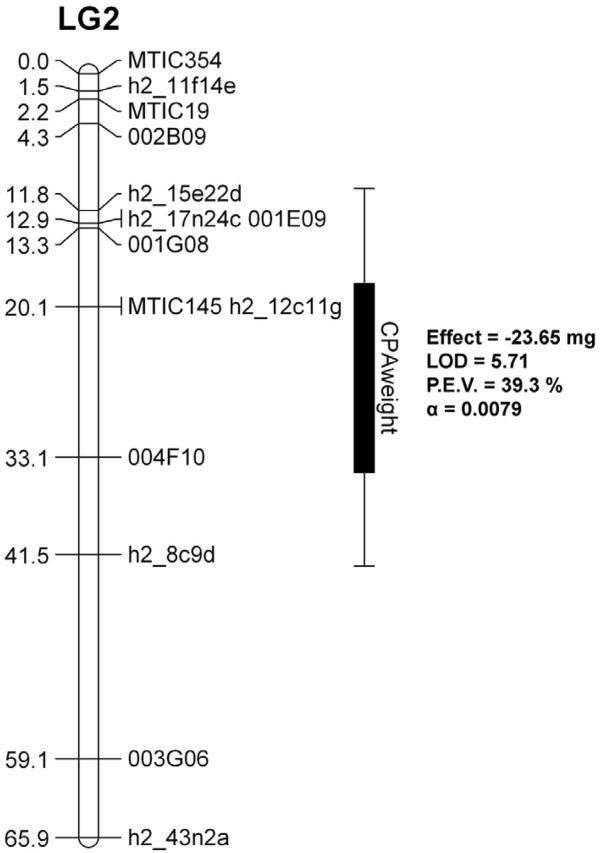
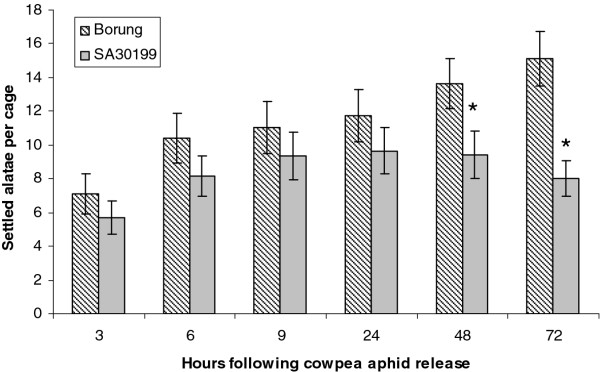
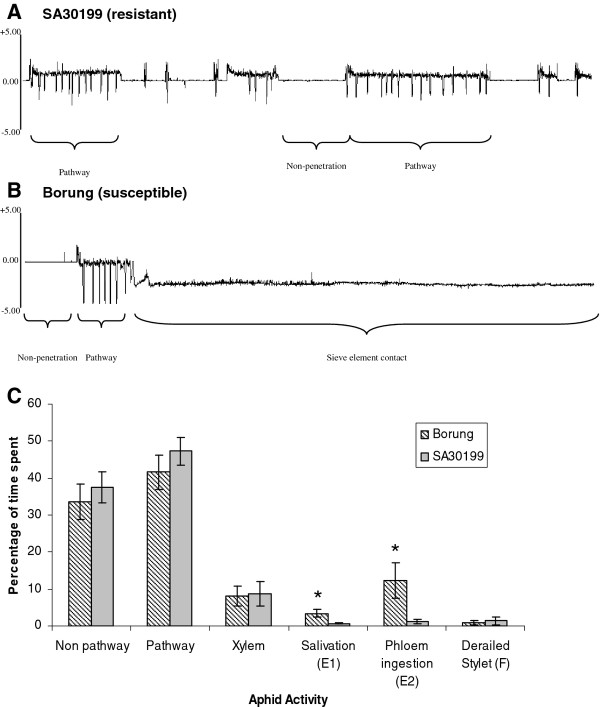
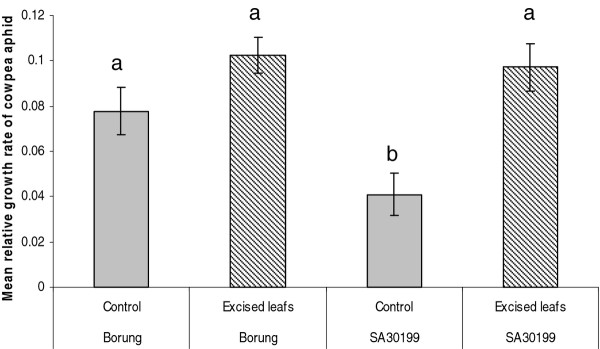
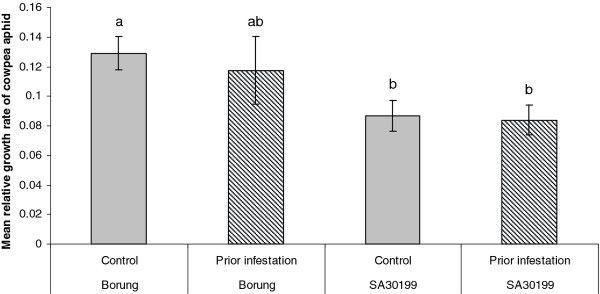
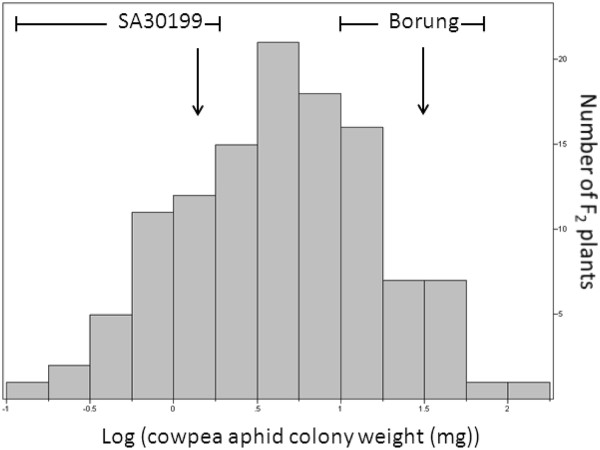
In this study, we screened a subset of the Medicago truncatula core collection of the South Australian Research and Development Institute (SARDI) and identified strong resistance to CPA in a M. truncatula accession SA30199, compared to all other M. truncatula accessions tested. The biology of resistance to CPA in SA30199 plants was characterised compared to the highly susceptible accession Borung and showed that resistance occurred at the level of the phloem, required an intact plant and involved a combination of antixenosis and antibiosis. Quantitative trait loci (QTL) analysis using a F2 population (n = 150) from a cross between SA30199 and Borung revealed that resistance to CPA is controlled in part by a major quantitative trait locus (QTL) on chromosome 2, explaining 39% of the antibiosis resistance.
The identification of strong CPA resistance in M. truncatula allows for the identification of key regulators and genes important in this model legume to give effective CPA resistance that may have relevance for other legume crops. The identified locus will also facilitate marker assisted breeding of M. truncatula for increased resistance to CPA and potentially other closely related Medicago species such as alfalfa.
豇豆蚜(Aphis craccivora)是豇豆最重要的害虫,也会给包括苜蓿、菜豆、鹰嘴豆、小扁豆、羽扇豆和花生在内的其他豆类作物造成重大产量损失。在许多这类作物中,对这种吸食汁液的昆虫没有天然的遗传抗性,或者抗性基因已被新出现的豇豆蚜生物型克服。
在本研究中,我们对南澳大利亚研究与发展研究所(SARDI)的截形苜蓿核心种质资源库的一个子集进行了筛选,与所有其他测试的截形苜蓿种质相比,在截形苜蓿种质SA30199中鉴定出对豇豆蚜具有强抗性。与高度感病的种质Borung相比,对SA30199植株中对豇豆蚜的抗性生物学特性进行了表征,结果表明抗性发生在韧皮部水平,需要完整的植株,并且涉及抗生性和抗虫性的组合。利用SA30199和Borung杂交产生的F2群体(n = 150)进行数量性状位点(QTL)分析,结果表明对豇豆蚜的抗性部分受2号染色体上一个主要的数量性状位点(QTL)控制,该位点解释了39%的抗生性抗性。
在截形苜蓿中鉴定出强豇豆蚜抗性,有助于在这种模式豆科植物中鉴定出对有效抗豇豆蚜重要的关键调控因子和基因,这可能与其他豆类作物相关。所鉴定的位点也将有助于截形苜蓿的标记辅助育种,以提高对豇豆蚜以及潜在的其他近缘苜蓿属物种(如苜蓿)的抗性。