Epithelial Pathobiology and Mucosal Inflammation Research Unit, Department of Pathology and Laboratory Medicine, Emory University, Atlanta, Georgia, USA.
Mucosal Immunol. 2013 Jan;6(1):136-45. doi: 10.1038/mi.2012.57. Epub 2012 Jul 4.
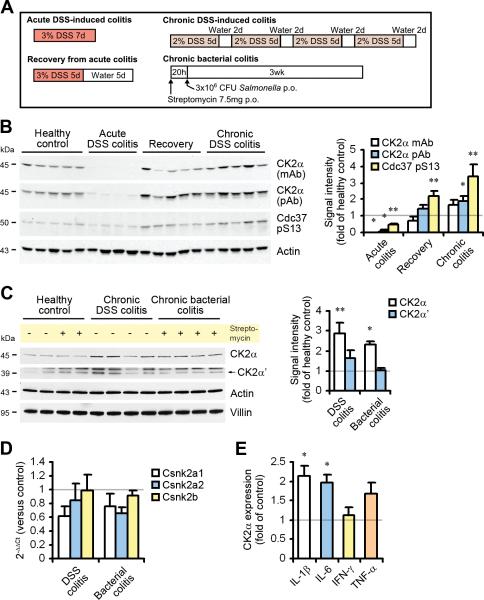
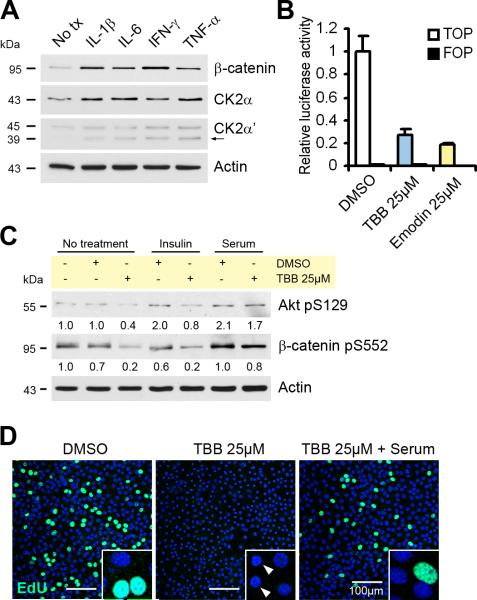
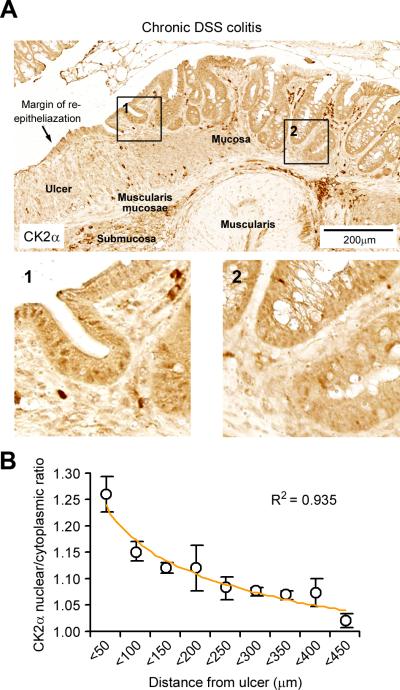
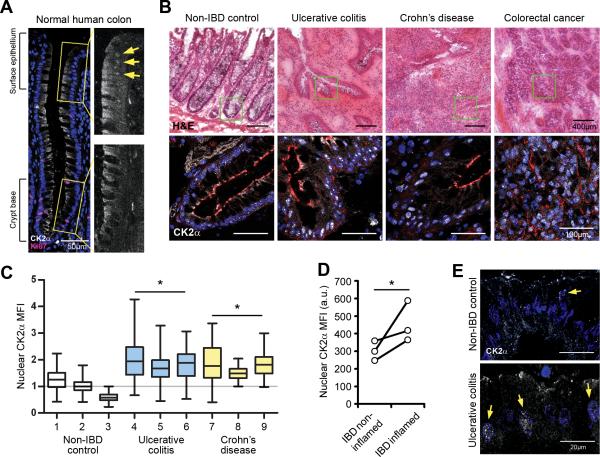
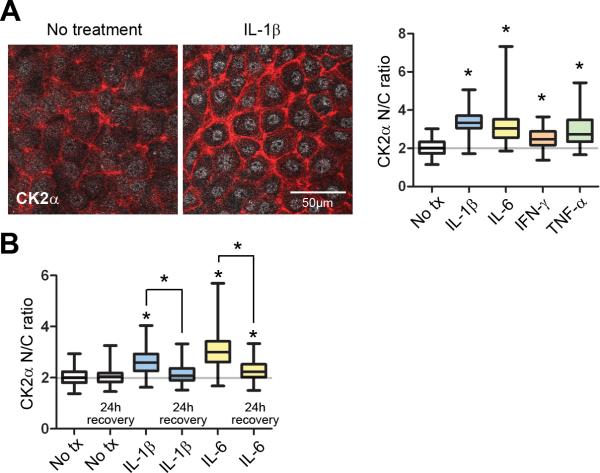
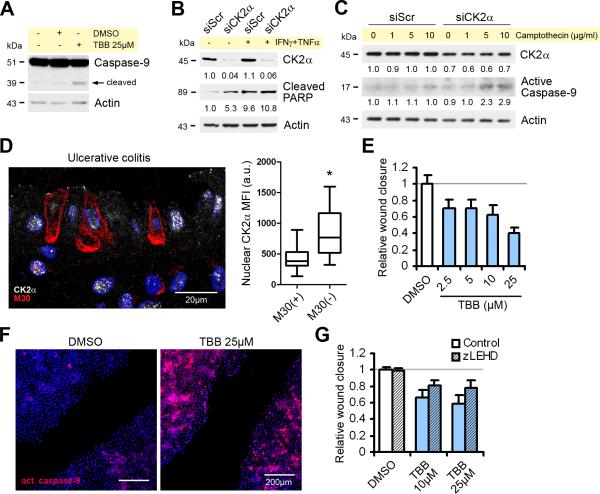
The molecular mechanisms that restore intestinal epithelial homeostasis during colitis are incompletely understood. Here, we report that during intestinal inflammation, multiple inflammatory cytokines promote the activity of a master regulator of cell proliferation and apoptosis, serine/threonine kinase CK2. Enhanced mucosal CK2 protein expression and activity were observed in animal models of chronic colitis, particularly within intestinal epithelial cells (IECs). The in vitro treatment of intestinal epithelial cell lines with cytokines resulted in increased CK2 expression and nuclear translocation of its catalytic α subunit. Similarly, nuclear translocation of CK2α was a prominent feature observed in colonic crypts from individuals with ulcerative colitis and Crohn's disease. Further in vitro studies revealed that CK2 activity promotes epithelial restitution, and protects normal IECs from cytokine-induced apoptosis. These observations identify CK2 as a key regulator of homeostatic properties of the intestinal epithelium that serves to promote wound healing, in part through inhibition of apoptosis under conditions of inflammation.
在结肠炎过程中,恢复肠道上皮细胞稳态的分子机制尚不完全清楚。在这里,我们报告在肠道炎症期间,多种炎症细胞因子促进细胞增殖和凋亡的主调控因子丝氨酸/苏氨酸激酶 CK2 的活性。在慢性结肠炎的动物模型中观察到粘膜 CK2 蛋白表达和活性增强,特别是在肠上皮细胞(IECs)中。细胞因子体外处理肠上皮细胞系导致 CK2 表达增加和其催化α亚基的核易位。同样,在溃疡性结肠炎和克罗恩病患者的结肠隐窝中也观察到 CK2α的核易位是一个突出的特征。进一步的体外研究表明,CK2 活性促进上皮修复,并保护正常的 IEC 免受细胞因子诱导的凋亡。这些观察结果表明 CK2 是肠道上皮细胞稳态特性的关键调节剂,有助于促进伤口愈合,部分通过在炎症条件下抑制细胞凋亡。